Ezra 8:30
So took the priests and the Levites the weight of the silver, and the gold, and the vessels, to bring them to Jerusalem unto the house of our God.
Translations
So took the priests and the Levites the weight of the silver, and the gold, and the vessels, to bring them to Jerusalem to the house of our God.
King James Version, KJV Cambridge Paragraph Bible
So took the priests and the Levites the weight of the silver, and the gold, and the vessels, to bring them to Jerusalem unto the house of our God.
So the priests and the Levites took the weight of the silver, and the gold, and the vessels, to bring them to Jerusalem to the house of our God.
Revised Version, American Standard Version
So the priests and the Levites received the weight of the silver and the gold, and the vessels, to bring them to Jerusalem unto the house of our God.
And the priests and the Levites took the weight of the silver, and of the gold, and of the vessels, to bring to Jerusalem to the house of our God.
And the priests and the Levites received by weight the silver and the gold and the vessels, to bring them to Jerusalem unto the house of our God.
So the priests and the Levites accepted the weight of the silver and the gold, and the utensils,—to bring to Jerusalem, unto the house of our God.
Berean Standard Bible, Majority Standard Bible
So the priests and Levites took charge of the silver and gold and sacred articles that had been weighed out to be taken to the house of our God in Jerusalem.
So the priests and the Levites received the weight of the silver, the gold, and the vessels, to bring them to Jerusalem to the house of our God.
So the priests and the Levites took the weight of silver and gold and the vessels, to take them to Jerusalem into the house of our God.
So the Priests and the Leuites receiued the weight of the siluer and of the golde, and of the vessels to bring them to Ierusalem, vnto the house of our God.
Douay-Rheims (Challoner revision)
And the priests and the Levites received the weight of the silver and gold, and the vessels, to carry them to Jerusalem to the house of our God.
Pictures
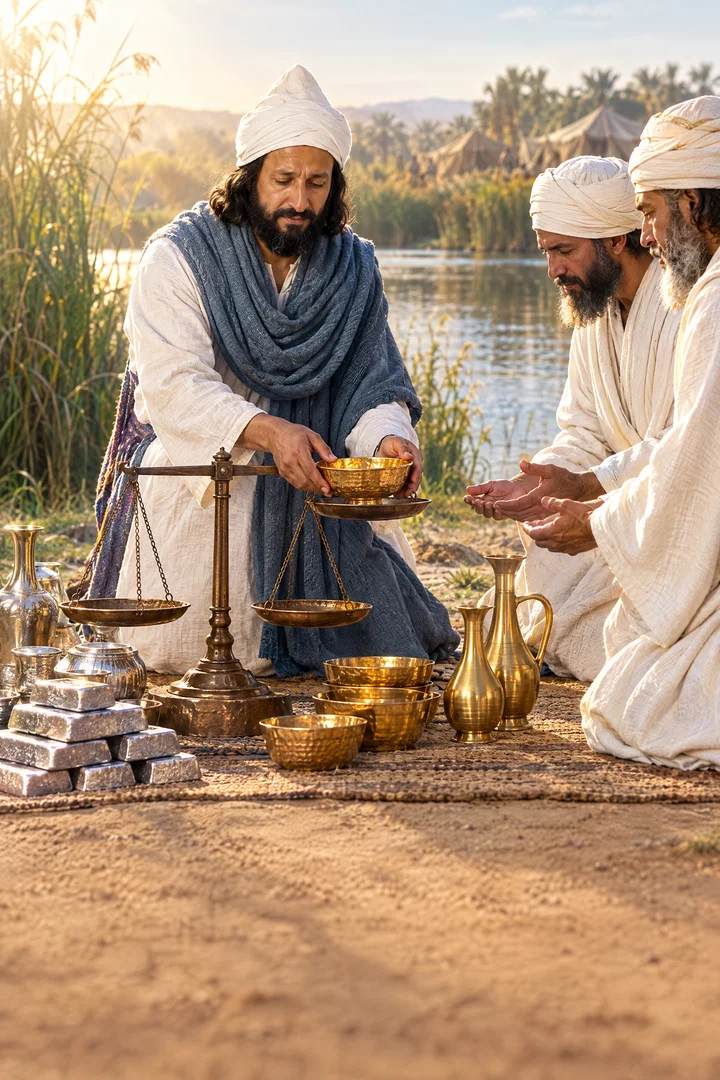
Cross-references
- Ezra 8:21-23
Then I proclaimed a fast there, at the river of Ahava, that we might afflict ourselves before our God, to seek of him a right way for us, and for our little ones, and for all our substance.
They fasted and sought God’s protection for the journey carrying the sacred valuables.
- Ezra 8:23
So we fasted and besought our God for this: and he was intreated of us.
God answered their fast and prayer for protection.
- Ezra 7:1-8
Now after these things, in the reign of Artaxerxes king of Persia, Ezra the son of Seraiah, the son of Azariah, the son of Hilkiah,
Ezra leads the later group from Babylon to Jerusalem.
Commentary
Each commentary is drawn from primary sources: the writings of Ellen G. White and Adventist pioneers and periodicals. Each commentary is separate. Its own words are not a quotation; follow the references to read the source passages.
Ellen G. White
The priests and the Levites accepted the weighed silver and gold and the vessels with the responsibility of carrying them to Jerusalem to the house of God. That sacred treasure was placed in the hands of proven and faithful men chosen for the trust. They were charged to guard it carefully along the way and to account for it in full upon arrival. Trust in God's blessing did not set aside prudence, careful stewardship, and orderly organization in His work.
Pioneers and periodicals
8 sources
The verse belongs to the second company going up from Babylon to Jerusalem, about 1,800 Israelite men organized by Ezra, a Jewish priest and scribe highly favored by Artaxerxes Longimanus. They left Babylon for Jerusalem in 457 B.C. under his decree for the rebuilding of Jerusalem and the restoration of the commonwealth and worship. Ezra was not with the first company but with this second company, and his journey from Babylon to Jerusalem carrying the final portion of the decree is part of the history of restoring Jerusalem.RH Feb 7, 1907 It belongs to the account of the return from the Babylonian captivity and the restoration of worship in Jerusalem.ST Jun 10, 1913
Together with Ezra 7:28, the surrounding account shows Ezra consulting the captive Jews and gathering them at the river Ahava before traveling.RH Apr 9, 1908 This meeting indicates that Artaxerxes' decree was issued a month or two before the journey that began on Nisan 1, about January 457 B.C.RH Apr 9, 1908
On another reckoning the verse belongs to B.C. 458, fifty-eight years after Ezra 7 in B.C. 515.ST Sep 20, 1899 The story of Esther falls in the years between, near the middle of the reign of Xerxes, about sixty years after the first return from exile and forty years after the completion of the temple.ST Sep 20, 1899 On that reckoning Xerxes' third year was in B.C. 482, Esther was made queen in his seventh year in B.C. 478, and Haman's plot was in his thirteenth year in B.C. 472.ST Sep 20, 1899
The verse records that the priests and the Levites accepted the weighed silver and gold and sacred vessels entrusted to them and became responsible for bringing them to Jerusalem to the house of God.ST Oct 4, 1899ST Oct 4, 1899ST Jun 10, 1913 The treasure had been offered for the house of God by the king and his counselors and princes and all Israel present.ST Oct 4, 1899 It was weighed into the hands of twelve chiefs of the priests as proven, faithful men.ST Oct 4, 1899 They as holy unto the Lord, with the holy vessels and freewill offering, were charged to watch, guard, and keep them and to account for them when they were weighed again before the chiefs of the priests and Levites and the princes of the fathers' houses in the chambers of the house of the Lord at Jerusalem.ST Oct 4, 1899
The helpless returning band carried the treasure safely through the dreaded land of robbers because at the river Ahava they fasted, prayed, and besought God and He was entreated, for His hand is upon all them for good that seek Him.RH Nov 14, 1912 Their safe passage proves the great blessing God gives to united and whole-hearted seeking of Him.RH Nov 14, 1912 Yet reliance on God's blessing does not replace prudence, careful stewardship, and orderly organization in God's work. The verse belongs to Babylonian life in the days of Ezra and Nehemiah, whose narrative is confirmed and illuminated by discoveries in ancient lands adjoining Israel and having dealings with Israel that give information concerning its archaeology and rapid development.ST Mar 10, 1909
Sources