Genesis 2:11
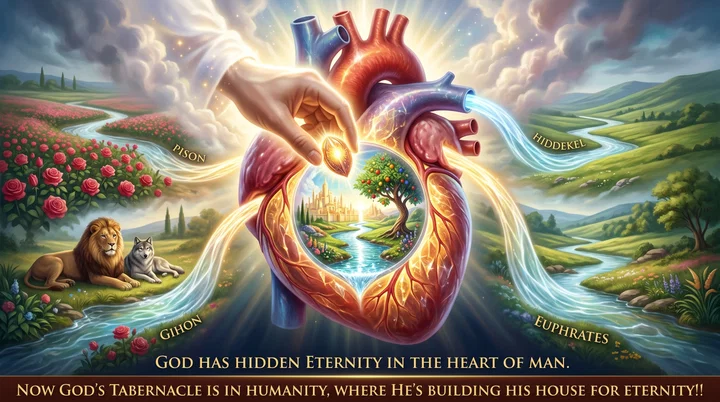
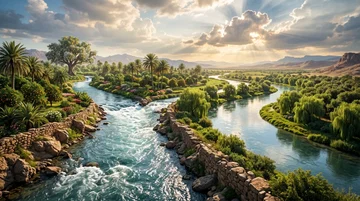
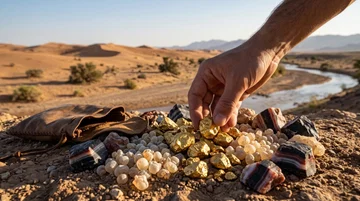
The name of the first is Pison: that is it which compasseth the whole land of Havilah, where there is gold;
Translations
The name of the first is Pison: that is it which compasses the whole land of Havilah, where there is gold;
King James Version, KJV Cambridge Paragraph Bible
The name of the first is Pison: that is it which compasseth the whole land of Havilah, where there is gold;
The name of the first is Pison, which compasseth the whole land of Havilah, where there is gold;
Revised Version, American Standard Version
The name of the first is Pishon: that is it which compasseth the whole land of Havilah, where there is gold;
the name of the one [is] Pison, it [is] that which is surrounding the whole land of the Havilah where the gold [is],
The name of the one is Pison: that is it which surrounds the whole land of Havilah, where the gold is.
The name of the one, is Pishon,—the same, is that which surroundeth all the land of Havilah, where is gold;
The name of the first river is Pishon; it winds through the whole land of Havilah, where there is gold.
The name of the first river is the Pishon; it winds through the whole land of Havilah, where there is gold.
The name of the first is Pishon: it flows through the whole land of Havilah, where there is gold;
The name of the first is Pishon, which goes round about all the land of Havilah where there is gold.
The name of one is Pishon: the same compasseth the whole land of Hauilah, where is golde.
Douay-Rheims (Challoner revision)
The name of the one is Phison: that is it which compasseth all the land of Hevilath, where gold groweth.
Pictures
Cross-references
- Revelation 22:1-2
And he shewed me a pure river of water of life, clear as crystal, proceeding out of the throne of God and of the Lamb.
The city’s river and fruit trees are compared with Eden’s river and trees.
Commentary
Each commentary is drawn from primary sources: the writings of Ellen G. White and Adventist pioneers and periodicals. Each commentary is separate. Its own words are not a quotation; follow the references to read the source passages.
Ellen G. White
12 sources
Genesis 2:11 belongs to the account of Eden, the beautiful garden home and Paradise of God that God prepared and gave to Adam and Eve, where humanity began and where God instructed Adam in sinless beauty.3T 76.3ED 14.3–4ST May 26, 1898Lt 213, 1902, par. 9–10Ms 84, 1886, par. 5–6 The first river is Pison, also called Pishon, which compasses the whole land of Havilah where there is gold, showing that Eden stood in a land enriched with gold and silver and precious stones, with four rivers running by it and every tree pleasant to the sight and good for food planted in it.Ms 77, 1896, par. 1ED 14.3–4 The river, the land, and the gold are left without further explanation.3T 76.3
The gold of Havilah was part of the rich minerals, precious metals, and precious stones placed in the earth to enrich it for the good of people and to remind them of God, and the things of nature are an expression of God's love.Lt 213, 1902, par. 9–1010MR 368.2–369.2 Adam was created with mind and will and moral faculties after the similitude of God's mind and will and was placed to dress and keep the garden in the pleasant employment of caring for it as the first to labor together with God, not apart from God and opposed to His law, with nothing interposing between Adam and Eve and their Maker.Ms 77, 1896, par. 1 Eden was a wonderful provision of love with everything in nature pure and undefiled, with fruits, flowers, and beautiful lofty trees flourishing and everything Adam and Eve required abundantly supplied, showing the holy and happy estate of humanity in Paradise, connected with God and beloved by God.Ms 20, 1898, par. 2–3PP 82.1
The place where the first Adam began in purity and holiness was the place where Christ as the second Adam began, yet the first Adam was in every way more favorably situated than Christ.Ms 20, 1898, par. 2–3 Adam and Eve were placed with permission to eat of every tree but one, and their loyalty was tested by prohibiting the fruit of the tree of knowledge.Ms 20, 1898, par. 2–3ST May 26, 1898 Under the smallest test of obedience Adam listened to Satan's insinuated doubts and accusations against God and accepted the forbidden fruit from Eve, and by transgressing God's law they ate, sinned, were excluded from Eden, and lost it, losing a holy, sinless, pure, undefiled nature, opening the floodgates of woe upon the world, and leaving depraved posterity.Ms 20, 1898, par. 2–3ST May 26, 1898Ms 84, 1886, par. 5–6Ms 120, 1899, par. 13–14 Adam lived among people for nearly a thousand years as a witness to the results of sin and faithfully sought to stem the tide of evil in obedience to the command to instruct his posterity in the way of the Lord, carefully treasuring what God had revealed, repeating it to succeeding generations to his children and children's children to the ninth generation, describing Paradise, repeating the history of the fall, telling of the sufferings by which God had taught him the necessity of strict adherence to His law, and explaining the merciful provisions for salvation, yet few gave heed and often he was met with bitter reproaches for the sin that had brought woe upon his posterity.PP 82.1
That Eden glory remained in the world before the Flood in giant forests, blooming gardens resembling Eden, fountains, streams, lakes, and the precious things of the mountains and valleys, with the curse resting lightly, but the inhabitants looked on those gifts as exclusively their own as if they themselves had brought them into existence and made the very treasures meant to remind them of God the means of forgetting Him in ingratitude and disobedience to His law, bringing the curse and the destruction of the Flood upon themselves.10MR 368.2–369.2 Eden in its original perfection cannot be expected on this earth now because sin has desecrated the earth and something mars even the most desirable place, yet the things of nature though marred by sin still speak of that Eden home.Lt 213, 1902, par. 9–10Ms 35, 1894, par. 13 The Eden home where humanity began will be restored in grand beauty in the hereafter, with garden and field life free of sin's blight and sorrow and open to study, given to the faithful as their own to cultivate under the supervision of God, when the earth shall be filled with the praise of the Lord, and Christ drew illustrations and lessons from nature in simple, appropriate, sympathetic, and cheerful teaching that joined truth to familiar associations and sympathies.ED 303.4–5Lt 213, 1902, par. 9–10Ms 120, 1899, par. 13–14
Jesus Christ paid the price to ransom humanity from the hands of Satan so the obedient may be brought back to that Eden home.Ms 84, 1886, par. 5–6 Those who search the Scriptures, place themselves in right relation to God, refuse to transgress as Adam and Eve did, obey all God's requirements, overcome as Christ overcame by perfect obedience to His Father's commandments, faithfully cultivate the soul now and become skillful workers in God's vineyard through faith and love and patience, and bend their own footsteps heavenward will be brought back to it, point others to it, and be prepared for entrance into restored Eden and for work in the garden of God.Ms 84, 1886, par. 5–6Ms 120, 1899, par. 13–14
Sources
Pioneers and periodicals
72 sources
The Pison is the first of the four heads into which the river going out of Eden was parted, compassing the whole land of Havilah where there is gold.ST Apr 7, 1914ST Jul 28, 1881ST Sep 12, 1911 Its name means spreading or dispersive, describing the character of the stream rather than fixing a present locality, and that land holds good gold with bdellium and the onyx stone and other precious materials.ST Nov 28, 1906ST Jun 30, 1898RH May 7, 1901ST Mar 17, 1909 It belongs to the literal, historical account of creation, describing a real stream and garden and material ground as the detailed record of the work concerning the first pair.ST Apr 7, 1914ST Jan 31, 1911ST Dec 20, 1910ST May 22, 1879ST Jul 28, 1881 The Flood overflowed and perished that former order and obliterated the place of Eden, so these rivers cannot be identified with any that exist today.ST Nov 28, 1906 The verse shows the first home richly provided for comfort and happiness, lost through transgression and the curse, transplanted to the city of God, and to be restored on earth again when the New Jerusalem comes down.ST Aug 27, 1894ST Sep 26, 1878ST Jun 16, 1898RH May 22, 1866
Name and River Course
The Pison is the first of the four heads into which the river that went out of Eden to water the garden was parted.ST Apr 7, 1914ST Jul 28, 1881ST Sep 12, 1911ST Jun 30, 1898 It compasses the whole land of Havilah, flowing around it where gold is found.ST Apr 7, 1914ST Jul 28, 1881ST Sep 12, 1911 The four rivers flowed from a single source in Eden, arising from one great fountain and spreading into streams that watered the land.ST Sep 12, 1911 The pre-Flood rivers sent branches outward to water the earth, unlike the present pattern in which small streams flow into larger rivers.ST Sep 12, 1911
The name Pison means to spread or dispersive. River names in Genesis describe the character of their streams rather than fixing a present locality as a proper name.ST Nov 28, 1906ST Mar 17, 1909 Later streams may have reused such names because of their meanings or the belief that they were the original rivers. By themselves such names would not identify a river in the post-Flood world, since the Flood changed the earth's arrangement, overflowed and perished the former arrangement of earth and heavens, and left no present locality matching the description.ST Nov 28, 1906ST Mar 17, 1909
The gold of Havilah is good.ST Jun 30, 1898 The land also holds bdellium and the onyx stone.ST Jun 30, 1898 These precious materials with gold and precious stones were created for a purpose, intended for Adam and his descendants to use in building a city around Eden, and Christ uses them to build the heavenly city brought down to earth, with the stones of Eden reflected in the foundations of the New Jerusalem.RH May 7, 1901
Eden's River System
A single great fountain or river at the center of Eden parted into four heads, the first being Pison which compassed the whole land of Havilah where there is gold.ST Sep 12, 1911ST Jan 31, 1911 That central flow divided and then kept continually subdividing outward until the whole earth was watered, carrying life-giving water across the earth from Eden planted on the earth's highest elevation.ST Jan 31, 1911ST Oct 31, 1906 This outward spreading is the reverse of rivers since the Flood, which begin up in hills and mountains and grow larger by tributaries flowing inward into larger rivers.ST Sep 12, 1911ST Jan 31, 1911 The division of Eden's river into four is the pattern for picturing the river of the New Jerusalem as branching into streams along the city's streets.ST Jan 31, 1911RH May 22, 1866
The arrangement was a perfect irrigation system with no waste, serving the garden's beauty, glory, and convenience and spreading perpetual verdure along its verdant banks.ST Aug 27, 1894ST Jan 31, 1911RH Nov 14, 1854 Its valuable natural features included fine gold in Havilah, and its waters flowed outward to water and beautify the earth.ST Aug 27, 1894RH Nov 14, 1854RH Dec 7, 1911 Present rivers are damaged and imperfect by contrast, washing the richness of the soil into the salt sea.ST Jan 31, 1911RH Dec 7, 1911 Those Eden rivers remain only a faint reminder of Eden and symbolize the future river of life.ST Jan 31, 1911RH Dec 7, 1911 In the new earth the same divine system will return, with a perennial fountain welling up from the throne of God on Mount Zion and parting into streams to water all the earth in its onward flow.ST Jan 31, 1911
The bright crystal river rolled far beyond the garden itself to the distant land of Havilah, where Pison compassed the whole land.RH Nov 14, 1854 Its fellow divided heads flowed outward with it to Ethiopia and Assyria.RH Nov 14, 1854 This was in the eastward garden God planted in Eden, amid every pleasant tree and the tree of life.RH Nov 14, 1854
Location After the Flood
The former arrangement of earth and heavens was overflowed with water and perished in the Deluge, destroying the world's former order and obliterating the location of Eden.ST Nov 28, 1906ST Mar 17, 1909ST Jan 18, 1899ST Jan 31, 1911 The present arrangement of the earth's surface is different, with rivers since the Flood beginning up in hills and mountains and growing larger by tributaries, so the rivers of Eden cannot be identified with any that exist today.ST Jan 18, 1899ST Jan 31, 1911 No present locality matches the description given of Pison compassing the whole land of Havilah where there is gold, and its place cannot be proved from present rivers or present geography.ST Nov 28, 1906ST Mar 17, 1909 The name Pison was given for its meaning of spreading or dispersive and not as a proper name to fix present locality, for river names described the character of their streams.ST Nov 28, 1906ST Mar 17, 1909
Attempts to locate Eden by identifying its four river heads with present rivers such as the Euphrates, Tigris, and Indus cannot establish its place, because the pre-Flood arrangement of land and water perished and the rivers did not flow then as they do now.ST Mar 17, 1909ST Jan 18, 1899 River names described their streams and would not by themselves identify a post-Flood river, and later streams may have reused those names because of their meanings or the belief that they were the original rivers.ST Nov 28, 1906ST Mar 17, 1909 The geography of the antediluvian world with its four rivers branching from one near Paradise cannot be identified with the geography of the world since the Flood, even though one antediluvian river bore the name Euphrates.ST Oct 25, 1877RH Feb 14, 1871 Therefore the commonly supposed location of Eden within the present Turkish empire gives no ground for fixing the beginning of the day's westward circuit in western Asia.ST Oct 25, 1877RH Feb 14, 1871
In contrast, the garden region is placed in Mesopotamia, especially the valley of the Euphrates and Tigris, making that valley one of the great, choice garden spots of earth.RH Oct 5, 1911ST Jan 14, 1913 It is set in the historic land around Babylon in Turkish Arabia, on the plain seen for miles from the mounds of Babylon with Ezekiel's tomb to the west, the Tower of Babel to the south, and the arch of Ctesiphon to the east.ST Jan 21, 1913 That plain in Nebuchadnezzar's time was a waving mass of verdure, grain and fruit traversed everywhere by canals of water and dotted with cities, and modern irrigation works and the German-Bagdad Railway are an effort to reclaim this historic land and make the Garden of Eden over again.ST Jan 21, 1913ST Jan 21, 1913 The garden is described as lying between Annah and Hitt on the upper Euphrates, a place of Bible history now become a battleground of modern times, on the route from Constantinople to Bombay toward India and the Persian Gulf where the Euphrates is to be bridged.RH Aug 19, 1915ST Jan 21, 1913 Sin has made this garden spot what it is today, a land of a few decadent cities and occasional villages instead of a prosperous land supporting 12,000,000 people with its bitumen, plaster, and fertility.ST Jan 14, 1913
Creation Narrative Setting
Genesis 2:11 belongs to the second account of the same creation described in Genesis 1, not to a separate creation that contradicts it.ST Aug 9, 1910ST Jan 31, 1911RH Apr 11, 1871ST Jun 28, 1877ST Aug 9, 1910 Genesis 1 through Genesis 2:3 gives the general account, while Genesis 2:4-25 gives the particular account concerning the first pair.ST Aug 9, 1910ST Jan 31, 1911 The short account sketched briefly in two verses of Genesis 1 is then painted in full in detail in Genesis 2, and the contrast between the concise narrative and the detailed narrative is an apparent difference between whole and part, not a real discrepancy or contradiction.RH Apr 11, 1871ST Jun 28, 1877 The second chapter is just as literal as the first, describing a literal stream of water with its four natural branches as literal as the earth, the man, and the garden, and this Mosaic creation record is affirmed by Jesus.ST Jan 31, 1911ST Aug 9, 1910
Genesis 2:4-25, including this verse, tells in particulars about the earth and man before the fall.ST Dec 20, 1910 It is part of the account of events that took place on the sixth day of creation.ST May 22, 1879ST Oct 13, 1909ST Feb 28, 1911 It is the particularized account of God's work in the Garden of Eden and in the creation of the first pair, summarized in Genesis 1:27, which follows and supplements the general account of creation and the first week given in Genesis 1:1 to 2:3, belonging to the work done before God said of all His work that it was very good, since consecutive chapters do not always mean consecutive time.ST Oct 13, 1909ST Feb 28, 1911
The second narrative is a patriarchal narrative woven by Moses into his history and set side by side with the first narrative of creation with all its divergences and contrasts, each account left to tell its own story with no editorial explanation to adjust or harmonize them.ST Jun 14, 1877 This exhibits perfect simplicity, guileless confidence, and the artlessness of conscious truth rather than the care of a forger to remove discrepancy.ST Jun 14, 1877
Literal History and Authority
Genesis 2:11 belongs to the account of creation and the early history of the world, which is real history and not fiction or religious poetry.ST Apr 7, 1914ST Jul 28, 1881RH Aug 23, 1906 The river that watered Eden was a literal stream of water with four natural branches, as literal as the earth, the man, and the garden, and Genesis 2:4-24 gives the particular account concerning the first pair while Genesis 1 through Genesis 2:3 gives the general account, the second chapter being just as literal as the first.ST Jan 31, 1911ST Jul 31, 1879 It is part of Moses' factual, inspired record of the beginnings of the world, not mere tradition, myth, poem, allegory, fable, poetic fancy, or hidden allegory, and its truthfulness is foundational to the Bible and the Christian faith.ST Jul 28, 1881ST Aug 25, 1881 Eden was made of material ground, and even the tree of life grew out of the ground.ST Jul 31, 1879
It belongs to Moses' creation record affirmed by Jesus and not contradicting Genesis 1, upheld as accepted truth all through the Bible with Christ and His apostles referring to it, and standing as a trustworthy foundation for the gospel.ST Aug 25, 1881ST Aug 9, 1910RH Apr 1, 1909 The early Genesis record preserves the primeval traditions in a form closer to their original form than other versions, as the Mosaical Paradise remembered in the traditions of the nations and in the story of the Garden of the Hesperides.ST Dec 7, 1915ST Jan 18, 1905RH Mar 26, 1861 Its opening chapters are confirmed by ancient traditions and monuments and by geological discoveries that challenge evolutionary geology.ST Dec 7, 1915RH Jul 4, 1912
The reliability of this creation record underlies the fourth commandment and the whole system of morality and religion, for if the first two chapters of Genesis are not true the commandments claiming to come from God are forged.ST Jul 28, 1881ST Jul 28, 1881 Genesis 2 is closely connected to the fourth commandment and the identity of the Sabbath day.ST Aug 25, 1881 The Mosaic account of creation is fact and not fable, interwoven into the very warp and woof of Bible doctrine and history, and to reject it would require regarding Moses and the other biblical writers as either credulous or deliberately deceptive, and Christ as part of the deception.RH Apr 1, 1909ST Jul 28, 1881
Geological and Darwinian doctrines of evolution set aside that account as utterly unworthy of belief, and to disown it undermines the whole Bible structure of doctrine and authority and destroys the credibility of the revelation, while denying its historic character through evolutionary theories undermines confidence in the Bible as a whole.RH Aug 23, 1906RH Apr 1, 1909 Theological and modernist handling prunes the Word by human wisdom, treating the first and second chapters of Genesis as too deep for theology to interfere with and forcing them back by science into theology's own proper field where the Bible is no longer believed to mean what it says, even to dismissing Jonah and creation.RH Aug 23, 1906ST Jan 6, 1887 Against claims of thirty, forty, or seventy thousand years from a tertiary skull, of millions of years, and of successive geological ages with ordered changes in life, the Mosaic record gives man as created about six thousand years ago, with human remains belonging only in the post-tertiary, made in six literal days in absolute perfection for earth's new sovereign.RH Oct 25, 1870ST Sep 17, 1902 That Edenic brightness departed when one apparently small sin committed about six thousand years ago let in innumerable intruders spreading destruction until the sin-cursed earth bears only faint traces of primitive fertility, and though sinless nature was made in six literal days, her restoration must be preceded by a long dismal period of seven thousand years.ST Sep 17, 1902
Eden's Provision and Glory
The first home was richly and beautifully provided for comfort and happiness, with valuable natural features including fine gold in the land of Havilah encircled by Pison as one of the river channels.ST Aug 27, 1894ST Sep 26, 1878ST Dec 3, 1874 That provision embraced lofty summits, green valleys, forests, flowers, oceans, brooks, skies, gentle beasts, birds, breezes, and fragrance, made in absolute perfection for earth's new sovereign.ST Aug 27, 1894ST Sep 26, 1878 Paradise was thus prepared for humanity in innocence when the earth was founded, showing that the earth was made to be humanity's inhabited home, and God's purpose that it be inhabited by a righteous people remains in force despite sin's curse.ST Sep 26, 1878ST Sep 4, 1893ST Dec 3, 1874 Eden is described as a garden with the tree of life and the river of the water of life, where man was given everything for life and comfort.ST Aug 27, 1894ST Dec 3, 1874RH Apr 15, 1873
God fitted up the beautiful home and provided the tree of life to perpetuate life as long as man should be obedient.ST Jan 23, 1879RH Apr 15, 1873 Free access was given to the tree of life, with only one tree prohibited under penalty of death in the day of eating, so that as long as he was obedient and did not transgress the command he should live.ST Jan 23, 1879RH Apr 15, 1873
The gold and precious stones of Havilah were part of the abundant estate given to humanity, where precious resources were readily available for a purpose.RH May 7, 1901RH Apr 23, 1901 They were intended for Adam and his descendants to use in building a city around Eden, and Christ uses them to build the heavenly city which He brings down to earth for humanity.RH May 7, 1901RH Apr 23, 1901 The stones of Eden are thus reflected in the foundations of the New Jerusalem.RH May 7, 1901
The river Pishon flowing around Havilah, a land known for gold, with its rich surroundings, was part of Eden's beautiful landscape and served the garden's beauty, glory, and convenience, but it was not Eden's glory.ST Aug 27, 1894 The Sabbath, pointing to God's throne and rule, was its glory. The creation account to which the verse belongs is literal and authoritative and is closely connected to the fourth commandment and the identity of the Sabbath day.ST Aug 25, 1881
Paradise Lost and Restored
Genesis 2:11 belongs to the record of the original world before sin, which is used as the starting point for comparing creation with the promised restoration and with the Bible's closing picture of the earth made new.ST Nov 4, 1930RH Jun 15, 1916ST Dec 20, 1910 Genesis 2:8-15 shows that paradise was prepared for humanity in innocence when the earth was founded, identifying Pison as a river bordering Havilah where gold was found.ST Nov 4, 1930ST Sep 26, 1878 That Paradise contained the tree of life and was Adam and Eve's blissful home before expulsion, made for humanity at the beginning of the race.RH Mar 1, 1870ST Dec 20, 1910 It is now in the third heaven and will be part of the overcomers' reward when the saved enter the heavenly Jerusalem.RH Mar 1, 1870
Genesis 2:11 is part of the account of the first human beings living in a beautiful garden in a world God had made perfect, a home made in absolute perfection from the hand of the Creator for earth's new sovereign as a kingdom enthroned by Divine Majesty.RH May 22, 1866ST Sep 17, 1902 It was a place of happiness and purity where Adam and Eve and their descendants could have continued to live had they valued their probation, the time in which God was testing them.ST Jun 15, 1882 They were placed there with permission to eat of every tree but one, yet they ate the forbidden fruit and by that sin lost Eden and were driven from it.ST May 26, 1898ST Mar 30, 1904 Their sin opened the floodgates of woe upon the world, bringing curse upon the earth and death to living things.ST May 26, 1898RH May 22, 1866 That apparently small and insignificant sin let in one sin followed by innumerable malicious intruders spreading destruction and desolation to earth's remotest bounds, disfiguring nature until the sin-cursed earth bears only faint traces of primitive fertility and beauty.ST Sep 17, 1902 The loss of that beautiful home and dominion means home and dominion must be restored for the gospel plan to be complete, with failure in this first probation leading to another probation.ST Jun 15, 1882
Paradise, the Garden of Eden, was once on this earth as a real locality described with its rivers and lands, an exceedingly commendable paradise, and not a heavenly abode for departed souls.ST Jun 16, 1898ST Nov 4, 1880ST Apr 10, 1901 Because the first paradise was local, heaven is also a locality and not merely a spirit world unlike this world, since human nature has not changed and a paradise that is not local would be no improvement upon the original.ST Apr 10, 1901 Paradise is most emphatically the abode of the living only, not the abode of the dead.ST Jun 16, 1898 Eden is the Paradise, the bride, the Jerusalem above now in heaven, a city of vast size and surpassing glory and beauty that will come from heaven to earth.ST Sep 23, 1875 Eden is the mother of all because mankind was created from it, and since Adam was excluded from it, it stands desolate and will remain desolate until its original possessor returns through the Mediator to claim its glories, which desolate state is the desolate contrasted with the present earthly Jerusalem.ST Sep 23, 1875 The lovely garden was transplanted to the city of God in the Father's house, bought and already possessed by Christ, who has greatly enlarged and beautified it and is preparing to receive His people in that inheritance incorruptible, undefiled, and that fadeth not away.ST Jun 2, 1909 The Eden spoken of in Ezekiel 31 is not that garden cast to the nether parts of the earth or center of the earth, nor did Christ take it to heaven or to God's throne at His ascension to keep it there until He comes again.ST Jun 16, 1914 All such teaching about the Genesis garden is pure speculation wholly unwarranted by Scripture, for Ezekiel 31 is figurative prophecy against Egypt, citing Assyria overthrown by the Chaldeans as warning to Egypt, with the king of Assyria likened to a lofty cedar and the trees of Eden said to envy and to be comforted in the nether parts of the earth.ST Jun 16, 1914
Paradise will be on this earth again when the New Jerusalem comes down from heaven.ST Jun 16, 1898 Genesis 2:10-14 describes a literal river that welled up at the center of the earth at Eden and divided into four streams including Pison, then kept continually subdividing like a perfect irrigation system until the whole earth was watered with no waste.ST Jan 31, 1911 That division is the basis for comparing the river of Eden with the river in the New Jerusalem, imagined as branching into streams along the city's streets.RH May 22, 1866 Those rivers flowed outward to water and beautify the earth, offering a faint reminder of Eden and symbolizing the future river of life, though present nature and its rivers are damaged and imperfect.RH Dec 7, 1911 In the new earth the same divine system will return with a perennial fountain welling up from the throne of God on Mount Zion and parting into streams to water all the earth in its onward flow, setting earth's original perfection beside the earth made new.ST Jan 31, 1911RH Jun 15, 1916 The earth was made to be humanity's home, and God's purpose that it be inhabited by a righteous people remains in force despite sin's curse.ST Sep 4, 1893
Model Home and School
Eden stands as the model for an ideal home, a garden home furnished with beauty, fresh air, food, and room for families.RH Aug 6, 1908RH Jun 8, 1916ST Nov 5, 1912 God's original plan was for people to multiply and fill the earth in such homes amid the beauties of nature, living in peace and happiness rather than in a city.RH Aug 6, 1908RH Jun 8, 1916 That plan calls for spreading out instead of crowding into cities while large areas remain unoccupied.RH Aug 6, 1908 The garden was also a model of God's husbandry, which humanity was to spread across the earth and cultivate to the same high and glorious state.RH Dec 7, 1905
The garden was God's first ideal school, indeed the first school on earth and the home of Adam and Eve.RH Dec 18, 1913ST Jun 18, 1902 In it the garden itself was the schoolroom, nature was the lesson book, the Creator himself was the instructor, and Adam and Eve, the parents of the human family, were the students.RH Dec 18, 1913 It is pictured as lovely beyond description, with lofty trees, a river, springs, a brook, bluffs, and entire natural surroundings where people are near to God and where worn teachers may come apart to rest and be trained.RH Dec 18, 1913ST Jun 18, 1902
Sources