Job 42:15
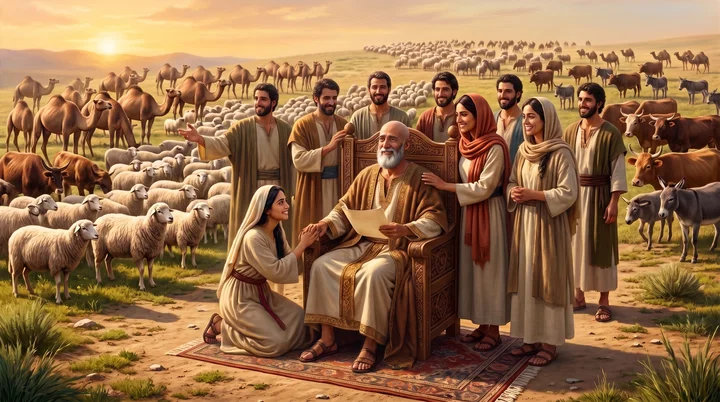
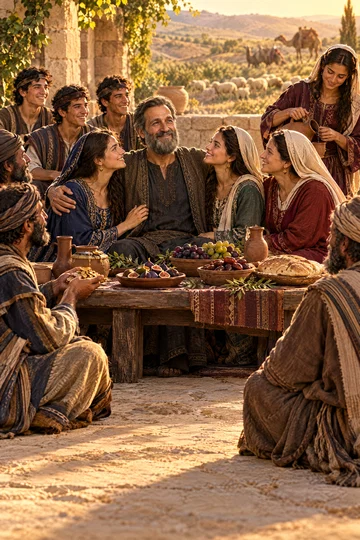
And in all the land were no women found so fair as the daughters of Job: and their father gave them inheritance among their brethren.
Translations
And in all the land were no women found so fair as the daughters of Job: and their father gave them inheritance among their brothers.
King James Version, KJV Cambridge Paragraph Bible, Webster Bible, Revised Version, American Standard Version
And in all the land were no women found so fair as the daughters of Job: and their father gave them inheritance among their brethren.
And there have not been found women fair as the daughters of Job in all the land, and their father doth give to them an inheritance in the midst of their brethren.
And in all the land were no women found [ so] fair as the daughters of Job; and their father gave them inheritance among their brethren.
And there were found no women so fair as the daughters of Job, in all the land,—and their father gave them an inheritance, in the midst of their brethren.
Berean Standard Bible, Majority Standard Bible
No women as beautiful as Job’s daughters could be found in all the land, and their father granted them an inheritance among their brothers.
In all the land were no women found so beautiful as the daughters of Job. Their father gave them an inheritance among their brothers.
And there were no women so beautiful as the daughters of Job in all the earth: and their father gave them a heritage among their brothers.
In all the lande were no women found so faire as the daughters of Iob, and their father gaue them inheritaunce among their brethren.
Douay-Rheims (Challoner revision)
And there were not found in all the earth women so beautiful as the daughters of Job: and their father gave them inheritance among their brethren.
Pictures

Cross-references
- Job 42:10
And the LORD turned the captivity of Job, when he prayed for his friends: also the LORD gave Job twice as much as he had before.
God restores Job after his affliction and prayer for his friends.
- Ezekiel 14:14
Though these three men, Noah, Daniel, and Job, were in it, they should deliver but their own souls by their righteousness, saith the Lord GOD.
Both texts name Job in connection with his righteousness.
- Ezekiel 14:20
Though Noah, Daniel, and Job, were in it, as I live, saith the Lord GOD, they shall deliver neither son nor daughter; they shall but deliver their own souls by their righteousness.
Also cited as evidence that Job was historical.
- James 5:11
Behold, we count them happy which endure. Ye have heard of the patience of Job, and have seen the end of the Lord; that the Lord is very pitiful, and of tender mercy.
Job’s endurance is shown alongside the Lord’s pity and mercy.
- Job 42:6
Wherefore I abhor myself, and repent in dust and ashes.
Job’s repentance precedes the restoration of his blessings.
Commentary
Each commentary is drawn from primary sources: the writings of Ellen G. White and Adventist pioneers and periodicals. Each commentary is separate. Its own words are not a quotation; follow the references to read the source passages.
Ellen G. White
2 sources
The verse belongs to the account of God rewarding and restoring Job after severe suffering.Ms 22, 1898, par. 29Lt 10, 1879, par. 4–9 That suffering was not the result of a sinful course of life, but Satan was allowed to afflict him.Ms 22, 1898, par. 29 The affliction stripped him of earthly treasures, taking his possessions and bereaving him of his children, and covered his body with sores.Ms 22, 1898, par. 29Lt 10, 1879, par. 4–9 He became a spectacle of loathing to his friends, who wrongly blamed him and misrepresented God.Ms 22, 1898, par. 29Lt 10, 1879, par. 4–9 Job remained loyal through the affliction.Ms 22, 1898, par. 29 His restoration shows that God had not forsaken His servant, but in His own time lifted him up and rewarded him, showing him more favor than at any previous time.Ms 22, 1898, par. 29Lt 10, 1879, par. 4–9
Sources
Pioneers and periodicals
8 sources
Job 42:15 belongs to the prose epilogue, the closing section and happy ending of the book, which records the restoration of Job's prosperity.ST Jun 30, 1909STST Jun 24, 1913RH Apr 8, 1858 That restoration was set after Job repented and humbled himself, when God turned his captivity and made his latter end more prosperous than his beginning.ST Jun 30, 1909ST Mar 26, 1896 The account is treated as real history from the patriarchal period, placing Job's 210-year life as ending about 1516 B.C. on the proposed chronology, without offering a separate explanation of the daughters' beauty or inheritance.ST Jan 10, 1911
The verse records that no women in all the land were so fair as Job's daughters and that their father gave them an inheritance among their brothers.RH Apr 8, 1858 The restoration was given because Job's faith endured adversity through faithfulness, devotion to principles of right, and faith in God.ST Jun 24, 1913RH Apr 8, 1858 After Job repented, humbled himself, and gave up confidence in himself, God turned his captivity and made his latter end more prosperous than his beginning.ST Jun 30, 1909ST Mar 26, 1896
The increased blessings came only after self-confidence was given up, so that they could be received and used safely.ST Mar 26, 1896 Job was not perfect before the trial, and the distress was permitted because he needed it to become perfect.ST Mar 27, 1901 Job had lost property, sons and daughters and had cursed the day of his birth seeing no hope, yet God restored him, showing that God can help a hopeless sufferer and make his last days prosperous and happy.RH Mar 28, 1871
For sorrowing, suffering, and desponding souls the verse means to hope in God, submit patiently, and take courage from Job's example, since trials properly borne purify and prepare for the work God has to do.RH Mar 28, 1871ST Mar 27, 1901
Sources