Joshua 9:11
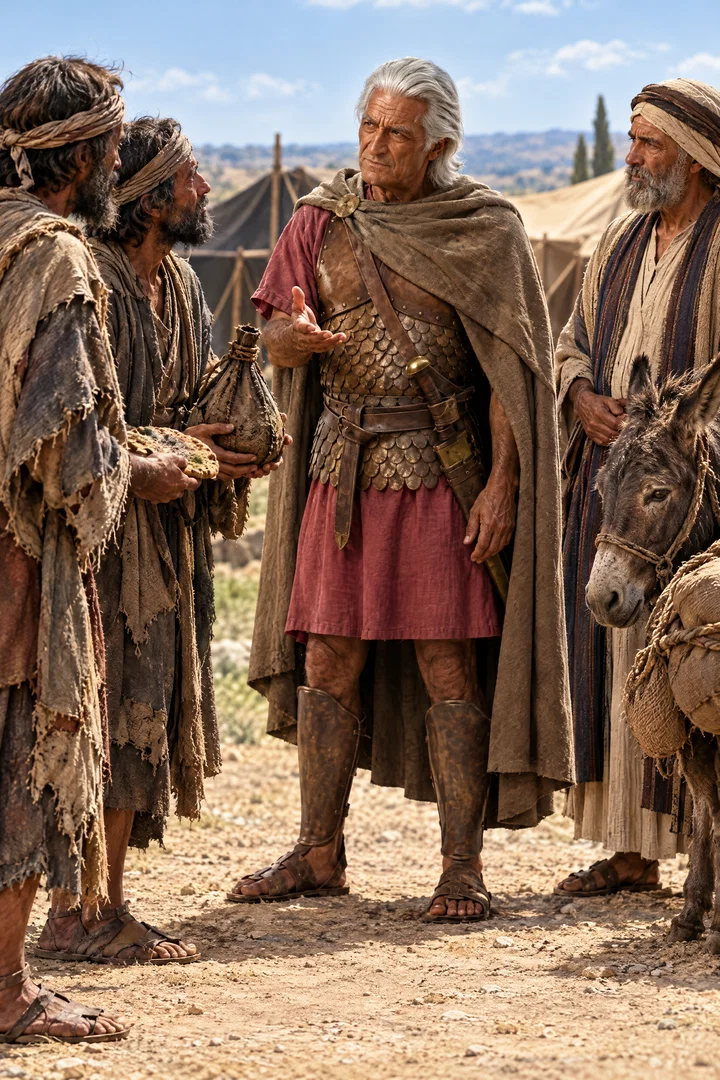
Wherefore our elders and all the inhabitants of our country spake to us, saying, Take victuals with you for the journey, and go to meet them, and say unto them, We are your servants: therefore now make ye a league with us.
Translations
Why our elders and all the inhabitants of our country spoke to us, saying, Take victuals with you for the journey, and go to meet them, and say to them, We are your servants: therefore now make you a league with us.
King James Version, KJV Cambridge Paragraph Bible
Wherefore our elders and all the inhabitants of our country spake to us, saying, Take victuals with you for the journey, and go to meet them, and say unto them, We are your servants: therefore now make ye a league with us.
Wherefore our elders, and all the inhabitants of our country spoke to us, saying, Take provisions with you for the journey, and go to meet them, and say to them, We are your servants: therefore now make ye a league with us:
And our elders and all the inhabitants of our country spake to us saying, Take provision in your hand for the journey and go to meet them, and say unto them, We are your servants: and now make ye a covenant with us.
And our elders and all the inhabitants of our country spake to us, saying, Take provision in your hand for the journey, and go to meet them, and say unto them, We are your servants: and now make ye a covenant with us.
'And our elders, and all the inhabitants of our land speak unto us, saying, Take in your hand provision for the way, and go to meet them, and ye have said unto them, Your servants we [are], and now, make with us a covenant;
And our elders and all the inhabitants of our country spoke to us, saying, Take victuals in your hand for the way, and go to meet them, and say to them, We are your servants, and now make a covenant with us.
So our elders and all the inhabitants of our land spake unto us, saying—Take ye, in your hand, provision for the journey, and go your way to meet them,—then shall ye say unto them, Your servants, we are. Now, therefore, solemnise with us a covenant.
Berean Standard Bible, Majority Standard Bible
So the elders and inhabitants of our land told us, ‘ Take provisions for your journey; go to meet them and say to them: We are your servants. Please make a treaty with us.’
Our elders and all the inhabitants of our country spoke to us, saying, ‘ Take supplies in your hand for the journey, and go to meet them. Tell them, “ We are your servants. Now make a covenant with us.”’
So the responsible men and all the people of our country said to us, Take food with you for the journey and go to them, and say to them, We are your servants: so now make an agreement with us.
Wherefore our elders, and all the inhabitants of our countrey spake to vs, saying, Take vitailes with you for the iourney, and go to meete them, and say vnto them, Wee are your seruants: now therefore make ye a league with vs.
Douay-Rheims (Challoner revision)
And our ancients, and all the inhabitants of our country said to us: Take with you victuals for a long way, and go meet them, and say: We are your servants, make ye a league with us.
Pictures
Cross-references
- 2 Samuel 21:1-2
Then there was a famine in the days of David three years, year after year; and David enquired of the LORD. And the LORD answered, It is for Saul, and for his bloody house, because he slew the Gibeonites.
Saul’s violation of Israel’s league with the Gibeonites brought famine and other consequences.
- Deuteronomy 7:2
And when the LORD thy God shall deliver them before thee; thou shalt smite them, and utterly destroy them; thou shalt make no covenant with them, nor shew mercy unto them:
The Gibeonite covenant went against God’s command.
- Joshua 10:10-11
And the LORD discomfited them before Israel, and slew them with a great slaughter at Gibeon, and chased them along the way that goeth up to Beth-horon, and smote them to Azekah, and unto Makkedah.
The Lord fought for Gibeon after Israel’s covenant with them.
- Joshua 2:11
And as soon as we had heard these things, our hearts did melt, neither did there remain any more courage in any man, because of you: for the LORD your God, he is God in heaven above, and in earth beneath.
A heathen woman confesses that Israel’s God is the true God.
Commentary
Each commentary is drawn from primary sources: the writings of Ellen G. White and Adventist pioneers and periodicals. Each commentary is separate. Its own words are not a quotation; follow the references to read the source passages.
Ellen G. White
4 sources
The verse preserves the charge given by the elders and all the inhabitants of the country to their envoys to take provisions for the journey, go to meet Israel, present themselves as Israel's servants, and ask for a league or treaty.PP 505.1–3RH Jun 17, 1915PK 369.1–2 The envoys carried out those instructions by claiming to have been sent from a distant country with provisions for a long journey.PP 505.1–3 That claim of distant origin was a deception, for they were in fact Israel's near neighbors, and they resorted to it because they knew they could not successfully resist Israel.PP 505.1–3
The verse stands within the account of Israel's unwise treaty with the Gibeonites, a treaty that brought punishment upon Israel because counsel of God was neglected and not sought.ST Jul 27, 1882 The Gibeonites' request for a covenant through these envoys led to their renouncing heathenism, joining themselves to Israel, and sharing in the blessings of the covenant.RH Jun 17, 1915PK 369.1–2
Sources
Pioneers and periodicals
9 sources
The verse records the Gibeonites acting on the instructions of their elders and all the inhabitants of their country to offer themselves to Israel as servants and to press Israel to make a league or covenant with them.RH Jun 17, 1915RH May 26, 1868RH Oct 22, 1861 The request was craft and deception to gain Israel's protection and alliance.RH May 26, 1868ST Oct 27, 1898 Their worn provisions and clothing falsely suggested they had come from a distant country when they were actually nearby neighbors, and the deception was discovered soon after the league was made.RH Oct 22, 1861
As a consequence the Gibeonites were made and assigned to be hewers of wood and drawers or carriers of water.RH Mar 3, 1863ST Oct 27, 1898 That servitude was political subjection and public service, not chattel slavery or anything like American slavery.RH Mar 3, 1863 No Israelite owned a Gibeonite or had personal interest in one, and they remained personally free, possessing their own lands, living in their own city, occupying their own houses, and possessing their own wives and husbands and children.RH Mar 3, 1863 Their continued flourishing with political rights confirms this.RH Mar 3, 1863 The curse pronounced upon Canaan therefore meant only political servitude and cannot be pleaded to justify American slavery.RH Mar 3, 1863
In this account the Gibeonites renounced heathenism, joined Israel, and shared in the blessings of the covenant.RH Jun 17, 1915 The account shows the result of failing to seek God, trusting outward appearances, and neglecting to ask counsel of God, which deceived Israel into the unwise treaty and brought punishment.ST Jul 27, 1882 It warns against agreeing to a course without first seeking God's direction.RH Aug 8, 1907 The mistake and its resulting foreign presence handicapped Israel for centuries.
The consequences affected all Israel and many later generations, keeping Israel from driving out all the heathen as God had designed, yet God did not remove Joshua from leadership.ST Apr 15, 1903 Placing themselves in the train of Israel as servants by a league means an outward joining without a true share, going with Israel outwardly while having no title to Israel's portion, consolations, and rewards.RH Sep 26, 1865 It pictures almost Christians who are regular and moral, free from glaring sins, diligent in means of grace, loving gospel preaching and religious company, and agreeing with truth, yet with no movement of heart, no going forward, and no life and heat and reality.RH Sep 26, 1865 They dwell near the borders so their side cannot be discerned, in a state that is unsatisfactory and unsafe and calls them to awake to danger and strive to enter in.RH Sep 26, 1865
Sources