Luke 11:43
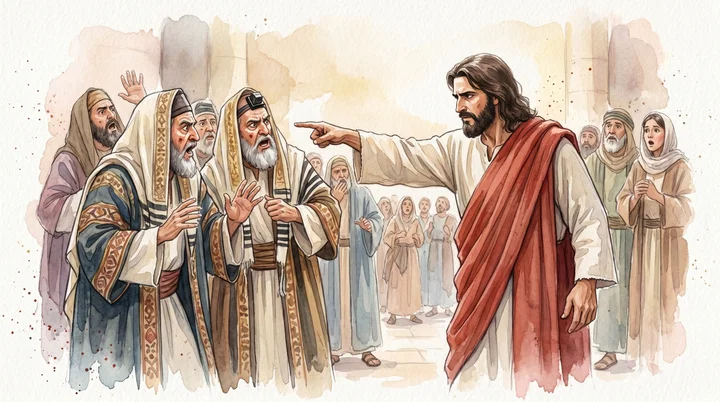
Woe unto you, Pharisees! for ye love the uppermost seats in the synagogues, and greetings in the markets.
Translations
Woe to you, Pharisees! for you love the uppermost seats in the synagogues, and greetings in the markets.
King James Version, KJV Cambridge Paragraph Bible
Woe unto you, Pharisees! for ye love the uppermost seats in the synagogues, and greetings in the markets.
Woe to you, Pharisees! for ye love the uppermost seats in the synagogues, and greetings in the markets.
Revised Version, American Standard Version
Woe unto you Pharisees! for ye love the chief seats in the synagogues, and the salutations in the marketplaces.
'Woe to you, the Pharisees, because ye love the first seats in the synagogues, and the salutations in the market-places.
Woe unto you, Pharisees, for ye love the first seat in the synagogues and salutations in the market-places.
Alas for you, the Pharisees! because ye love the first seats in the synagogues, and the salutations in the market-places!
Woe to you Pharisees! You love the chief seats in the synagogues and the greetings in the marketplaces.
Woe to you Pharisees! For you love the chief seats in the synagogues and the greetings in the marketplaces.
Woe to you Pharisees! For you love the best seats in the synagogues and the greetings in the marketplaces.
A curse is on you, Pharisees! for your desires are for the most important seats in the Synagogues and for words of respect said to you in the market-place.
Wo be to you, Pharises: for ye loue the vppermost seats in the Synagogues, and greetings in the markets.
Douay-Rheims (Challoner revision)
Woe to you, Pharisees, because you love the uppermost seats in the synagogues, and salutations in the marketplace.
Pictures
Cross-references
- Matthew 23:6-7
And love the uppermost rooms at feasts, and the chief seats in the synagogues,
Jesus rebukes the Pharisees’ love of honored seats and public greetings.
- Matthew 23:23-33
Woe unto you, scribes and Pharisees, hypocrites! for ye pay tithe of mint and anise and cummin, and have omitted the weightier matters of the law, judgment, mercy, and faith: these ought ye to have done, and not to leave the other undone.
Jesus’ rebuke exposes the Pharisees’ hypocrisy and warns of judgment.
- John 5:44
How can ye believe, which receive honour one of another, and seek not the honour that cometh from God only?
Seeking honor from people instead of God hinders belief.
- Luke 16:15
And he said unto them, Ye are they which justify yourselves before men; but God knoweth your hearts: for that which is highly esteemed among men is abomination in the sight of God.
Both warn against seeking human esteem when God knows the heart.
Commentary
Each commentary is drawn from primary sources: the writings of Ellen G. White and Adventist pioneers and periodicals. Each commentary is separate. Its own words are not a quotation; follow the references to read the source passages.
Ellen G. White
4 sources
The woe is pronounced upon the Pharisees because they loved public honor above faithfulness, finding delight in taking the most prominent seats in the synagogues and in receiving respectful greetings in the marketplaces.Lt 244, 1906, par. 7–8RH Mar 25, 1902 It exposes a love of prestige in worship and in public life as the motive that governed religious leaders.Lt 244, 1906, par. 7–8RH Mar 25, 1902 Such craving for the uppermost places and for deference from men stands at the center of the rebuke.Lt 244, 1906, par. 7–8RH Mar 25, 1902
It belongs to Christ's wider rebuke of leaders who outwardly claimed to worship God while they failed to keep His law.SPBC 142.2RH Mar 25, 1902 Their human inventions and traditions displaced sacred things, and their handling of Scripture distorted its meaning.SPBC 142.2RH Mar 25, 1902 This love of status was therefore not an isolated fault but part of a broader pattern of rebellion in which human authority was set above divine requirement.SPBC 142.2RH Mar 25, 1902
The same woe is directed against those who set themselves up as judges over others while themselves breaking God's law.SPBC 142.2Lt 38, 1896, par. 36–37 It condemns the assumption of the office of judge and censor over fellow believers.SPBC 142.2Lt 38, 1896, par. 36–37 In particular it falls upon those who sit in judgment upon persons moved by the Holy Spirit to declare God's Word.SPBC 142.2Lt 38, 1896, par. 36–37
That Pharisaic spirit is condemned wherever it reappears in the use of deceptive tactics and reliance on lawyers to get one's own way.Lt 244, 1906, par. 7–8 Such maneuvering resembles the Pharisees' love of status and stands opposed to Christ's truthful and loving way.Lt 244, 1906, par. 7–8 To choose scheming and self-exaltation over openness, truthfulness, and love is to come under the same woe.Lt 244, 1906, par. 7–8
Sources
Pioneers and periodicals
13 sources
Jesus pronounces woe upon the Pharisees because they loved public honor, seeking the chief seats in the synagogues and delighting in respectful greetings in the marketplaces.ST Jan 19, 1882ST Jun 18, 1894ST May 17, 1899 Spoken while dining with religious formalists, it upholds spiritual religion by reproving hypocrisy and formality in leaders who outwardly claimed to worship God while their traditions distorted Scripture.RH Mar 25, 1902RH Apr 21, 1859 Their love of prominence was love of praise from people, which is given only for outward appearance since no person can see the heart, so attending only to what is outward is sin and receiving honor from one another without seeking the honor from God alone makes belief impossible.ST Jun 18, 1894ST Jun 18, 1894 The formal religion thus reproved was marked by desire for status and praise, yet these solemn warnings are given not to condemn but to lead people to seek God's kingdom and righteousness.ST Jun 18, 1894ST May 17, 1899ST Feb 10, 1898
Meaning and Setting
The woe falls on the Pharisees for loving public honor, seeking the most prominent, chief or uppermost seats in the synagogues and enjoying respectful greetings and salutations in the public markets and marketplaces.RH Mar 25, 1902ST Jan 19, 1882ST Jun 18, 1894ST May 17, 1899ST Jun 18, 1894 Their formal religion was marked by that desire for status, praise and public recognition.ST May 17, 1899ST May 17, 1899 The setting is Jesus dining with religious formalists and using the occasion to uphold spiritual religion and to reprove hypocrisy and formality.RH Apr 21, 1859
In Luke 11 the verse stands as one of the Lord's solemn rebukes against the Pharisees, coming after the lesson on prayer that opens the chapter and the miracle of casting out evil spirits.ST Apr 7, 1909 It belongs to Jesus' denunciation of the Pharisees after the Pharisee's invitation to Him, which may have been intended to draw Him into a compromising situation and find grounds to condemn Him.ST May 17, 1899ST May 17, 1899 The Pharisees' own conduct instead gave Jesus grounds to condemn them.ST May 17, 1899ST May 17, 1899 The verse belongs to Jesus' increasingly severe warnings, which continue toward the close of His ministry.ST Feb 10, 1898
Rebuke, Judgment and Application
Woe upon the Pharisees for loving the chief seats in the synagogues and the salutations in the market places is reproof of false profession, showing their formal religion to be marked by a desire for status and praise.ST Jun 18, 1894ST May 17, 1899 That seeking of public honor, delighting in the most prominent synagogue seats and respectful greetings in the markets, belongs to Christ's rebuke of leaders who outwardly claimed to worship God while their traditions distorted Scripture.RH Mar 25, 1902 Because people judge by outward appearance, those who seek praise from others attend only to what is outward, and to do so is sin.ST Jun 18, 1894 Loving public prominence and respectful greetings is loving praise and honor from people, which is given only for what appears outwardly because no person can see what is within the heart.ST Jun 18, 1894 Therefore those who love praise pay attention only to what is outward, and receiving honor from one another without seeking the honor that comes from God alone makes belief impossible.ST Jun 18, 1894
The woes against the Pharisees mark the nation's rejection of the messenger and his King, and that rejection brought judgment and destruction on the nation.ST Jun 14, 1910 These increasingly severe warnings continuing toward the close of His ministry are meant not to condemn people but to lead them to seek God's kingdom and righteousness.ST Feb 10, 1898 Learning this portion of Scripture gives acquaintance with God's word and with God Himself and affords a key to a great deal of the Bible.ST Jun 18, 1894
Sources