Luke 3:8
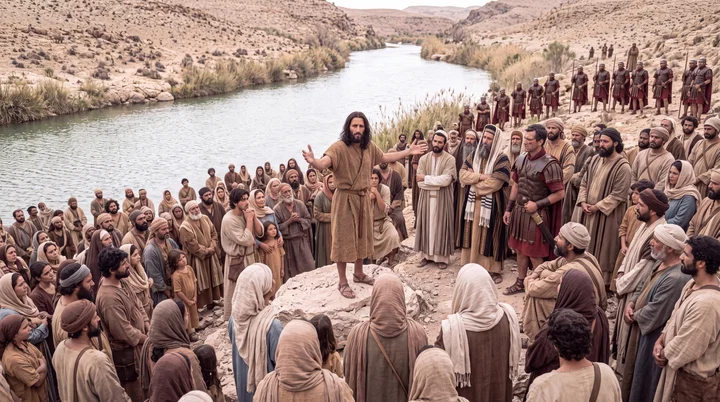
Bring forth therefore fruits worthy of repentance, and begin not to say within yourselves, We have Abraham to our father: for I say unto you, That God is able of these stones to raise up children unto Abraham.
Translations
Bring forth therefore fruits worthy of repentance, and begin not to say within yourselves, We have Abraham to our father: for I say to you, That God is able of these stones to raise up children to Abraham.
King James Version, KJV Cambridge Paragraph Bible
Bring forth therefore fruits worthy of repentance, and begin not to say within yourselves, We have Abraham to our father: for I say unto you, That God is able of these stones to raise up children unto Abraham.
Bring forth therefore fruits worthy of repentance, and begin not to say within yourselves, We have Abraham for our father: for I say to you, that God is able of these stones to raise up children to Abraham.
Revised Version, American Standard Version
Bring forth therefore fruits worthy of repentance, and begin not to say within yourselves, We have Abraham to our father: for I say unto you, that God is able of these stones to raise up children unto Abraham.
make, therefore, fruits worthy of the reformation, and begin not to say within yourselves, We have a father — Abraham; for I say to you, that God is able out of these stones to raise children to Abraham;
Produce therefore fruits worthy of repentance; and begin not to say in yourselves, We have Abraham for [ our] father, for I say unto you that God is able of these stones to raise up children to Abraham.
Bring forth, therefore, fruits worthy of repentance, and do not begin to be saying within yourselves, As our father, we have, Abraham; for, I say unto you—God is able, out of these stones, to raise up children unto Abraham.
Berean Standard Bible, Majority Standard Bible
Produce fruit, then, in keeping with repentance. And do not begin to say to yourselves, ‘ We have Abraham as our father.’ For I tell you that out of these stones God can raise up children for Abraham.
Therefore produce fruits worthy of repentance, and don’ t begin to say among yourselves, ‘ We have Abraham for our father;’ for I tell you that God is able to raise up children to Abraham from these stones!
Make clear by your acts that your hearts have been changed; and do not say to yourselves, We have Abraham for our father: for I say to you that God is able from these stones to make children of Abraham.
Bring foorth therefore fruites worthy amendment of life, and beginne not to say with your selues, We haue Abraham to our father: for I say vnto you, that God is able of these stones to raise vp children vnto Abraham.
Douay-Rheims (Challoner revision)
Bring forth therefore fruits worthy of penance; and do not begin to say, We have Abraham for our father. For I say unto you, that God is able of these stones to raise up children to Abraham.
Pictures
Cross-references 20 of 48
- Matthew 3:8-9
Bring forth therefore fruits meet for repentance:
John calls for fruit worthy of repentance and warns against relying on descent from Abraham.
- John 8:39
They answered and said unto him, Abraham is our father. Jesus saith unto them, If ye were Abraham’s children, ye would do the works of Abraham.
Abraham’s children do the works Abraham did.
- Mark 1:4-5
John did baptize in the wilderness, and preach the baptism of repentance for the remission of sins.
John preached repentance, and the people confessed their sins and were baptized.
- Matthew 1:1-16
The book of the generation of Jesus Christ, the son of David, the son of Abraham.
Both trace Jesus’ lineage to Abraham.
- Matthew 3:9
And think not to say within yourselves, We have Abraham to our father: for I say unto you, that God is able of these stones to raise up children unto Abraham.
Both warn against relying on Abrahamic descent and affirm God can raise children from stones.
- Isaiah 40:3
The voice of him that crieth in the wilderness, Prepare ye the way of the LORD, make straight in the desert a highway for our God.
Isaiah foretold John’s preparatory work.
- Luke 3:3
And he came into all the country about Jordan, preaching the baptism of repentance for the remission of sins;
John’s call to repentance provides the setting for bearing fitting fruit.
- Romans 9:8
That is, They which are the children of the flesh, these are not the children of God: but the children of the promise are counted for the seed.
Physical descent from Abraham alone does not make people children of the promise.
- Galatians 3:7
Know ye therefore that they which are of faith, the same are the children of Abraham.
Those who have faith are identified as Abraham’s children.
- Acts 2:38
Then Peter said unto them, Repent, and be baptized every one of you in the name of Jesus Christ for the remission of sins, and ye shall receive the gift of the Holy Ghost.
Both call for repentance and connect it with forgiveness of sins.
- 2 Corinthians 7:10-11
For godly sorrow worketh repentance to salvation not to be repented of: but the sorrow of the world worketh death.
Godly sorrow produces repentance shown by earnest fruits and changed conduct.
- Luke 3:16-17
John answered, saying unto them all, I indeed baptize you with water; but one mightier than I cometh, the latchet of whose shoes I am not worthy to unloose: he shall baptize you with the Holy Ghost and with fire:
The coming One baptizes with the Spirit and fire and judges by separating wheat from chaff.
- Matthew 3:10
And now also the axe is laid unto the root of the trees: therefore every tree which bringeth not forth good fruit is hewn down, and cast into the fire.
Fruitless trees face destruction, showing the judgment that follows failure to repent.
- Acts 26:20
But shewed first unto them of Damascus, and at Jerusalem, and throughout all the coasts of Judæa, and then to the Gentiles, that they should repent and turn to God, and do works meet for repentance.
Both call for deeds that demonstrate repentance.
- Matthew 3:7
But when he saw many of the Pharisees and Sadducees come to his baptism, he said unto them, O generation of vipers, who hath warned you to flee from the wrath to come?
John warns sinners to flee the coming wrath.
- Matthew 7:16-20
Ye shall know them by their fruits. Do men gather grapes of thorns, or figs of thistles?
Both texts call for fruit that shows a person’s true character.
- Galatians 3:29
And if ye be Christ’s, then are ye Abraham’s seed, and heirs according to the promise.
Those who belong to Christ are Abraham’s seed and heirs of the promise.
- Genesis 22:17
That in blessing I will bless thee, and in multiplying I will multiply thy seed as the stars of the heaven, and as the sand which is upon the sea shore; and thy seed shall possess the gate of his enemies;
God promises Abraham numerous descendants, yet ancestry alone does not establish repentance.
- Genesis 15:5
And he brought him forth abroad, and said, Look now toward heaven, and tell the stars, if thou be able to number them: and he said unto him, So shall thy seed be.
God promises Abraham descendants as numerous as the stars.
- Romans 4:11
And he received the sign of circumcision, a seal of the righteousness of the faith which he had yet being uncircumcised: that he might be the father of all them that believe, though they be not circumcised; that righteousness might be imputed unto them also:
Abraham is described as father of the faithful.
Commentary
Each commentary is drawn from primary sources: the writings of Ellen G. White and Adventist pioneers and periodicals. Each commentary is separate. Its own words are not a quotation; follow the references to read the source passages.
Ellen G. White
22 sources
John the Baptist spoke these words as the forerunner preparing the Lord's way, calling the multitudes coming for baptism to repent and prove it by a changed life.Lt 270, 1907, par. 8–13DA 97.3DA 97.2 The demand is for fruits worthy of repentance, meaning conversion must appear in words, actions and character rather than in profession alone.Ms 48, 1899, par. 14Ms 43, 1891, par. 19–20 No one may begin to plead descent from Abraham, for ancestry, religious heritage, enlightened standing and special promises give no holiness of character and no excuse for sin.Ms 48, 1899, par. 14Ms 121c, 1898, par. 9–10 True children of Abraham are known by his faith, love, obedience and righteous conduct, for God's promises are conditional on obedience and lineage without good fruit cannot secure a place in Christ's kingdom.Ms 121c, 1898, par. 9–101RED 40.1–41.12SP 50.1–51.1 God needs no man's ancestry, being able from stones to raise up children to Abraham and to raise up others to carry on His work in purity when those warned reject the light, while persistent fruitlessness brings being cut down.Lt 270, 1907, par. 8–13Ms 48, 1899, par. 14
Voice Preparing the Way
Luke 3:8 belongs to the preaching of John the Baptist as the forerunner going before the face of the Lord to prepare His ways, and it stands in Luke together with Matthew 3:1-12 and Mark 1:1-8 as the scriptural record of his call to repentance and preparation.DA 97.3DA 97.2 It was spoken to the multitudes who came to be baptized by him, exposing them as a generation of vipers needing to flee from the coming wrath and commanding changed lives that prove repentance through baptism for the remission of sins.Lt 270, 1907, par. 8–13 As the voice preparing the way of the Lord, that demand remains binding to be studied and obeyed by workers now.Lt 270, 1907, par. 8–13
It was spoken also to scribes and Pharisees who came confessing sins and asking for baptism with no real conviction of sin.DA 105.3 They came as time-servers hoping for favor with the coming Prince and for strengthened influence with the people through baptism by a popular teacher.DA 105.3 The verse scathingly rebuked that motive by demanding fruits meet for repentance as the required proof of repentance for a share in the announced kingdom.DA 105.3
The verse forbids beginning to say within yourselves that Abraham is father, since descent from Abraham cannot take the place of fruit shown by changed conduct.Ms 48, 1899, par. 14DA 93 Ancestry and religious claims cannot give pure principles or holiness of character, and religious profession or inherited privilege cannot replace obedience.Ms 121c, 1898, par. 9–101RED 40.1–41.1 Being an enlightened people with special promises does not excuse sin, and enlightened standing confers no favor when the life continues in disobedience.1RED 40.1–41.1 Turning from God's requirements to human ideas means losing the qualities that mark Abraham's children.Ms 121c, 1898, par. 9–10
True children of Abraham are marked by his faith, love, and obedience, and a claim to Abraham's name has value only when matched by righteous conduct worthy of the honored name.2SP 50.1–51.1LC1 37.11RED 37.1 God's promises and blessings are conditional on obedience, so claiming them while living in disobedience does not prevent judgment.1RED 40.1–41.1 Lineage and profession without good fruit cannot save from judgment or secure a place in Christ's kingdom, and fruit that fails to match that name cannot avert judgment.2SP 50.1–51.1LC1 37.11RED 37.1 God can raise up other children of Abraham to take the place of those who reject the light they have received, and He does not depend on them to carry on His work in purity and righteousness.2SP 50.1–51.1LC1 37.11RED 37.1
God is able of stones to raise up children unto Abraham, needing no one's ancestry to provide them.Lt 270, 1907, par. 8–13Ms 48, 1899, par. 14Ms 121c, 1898, par. 9–10DA 93 Conversion must therefore produce fruit in the life rather than continuing fruitless and disappointing Christ's expectations, and persistent fruitlessness brings the judgment of being cut down.Ms 43, 1891, par. 19–20 That power to raise up children from stones applies to influential men interested in the truth, who can become believers and must not let fear of being cast out of the synagogues keep them from confessing it.Lt 48, 1895, par. 13–15 It applies also to God's ability to have men ready for emergencies who can bring reforms even when the work faces terrible odds.Lt 84a, 1896, par. 7
Bearing Worthy Fruit
Repentance must show itself in fruits worthy of the name, meaning conversion produces a changed life whose words and actions reveal character and prove repentance genuine.Ms 48, 1899, par. 14DA 931RED 40.1–41.1 The fruitless life that goes on disappointing Christ's expectation is the opposite of what is required, and persistent fruitlessness faces being cut down.Ms 43, 1891, par. 19–20 Profession alone cannot take the place of this fruit, for conduct worthy of repentance is demanded rather than mere claim to religious standing.1RED 40.1–41.11T 321.1–2
The reformation required purges heart, mind, and soul, putting away wrong practices, making crooked paths straight and rough places smooth, and bringing pride and self-esteem low. When God's people bear such fruits worthy of repentance, all flesh shall see the salvation of God. The fruit John called for is concrete, including sharing clothing and food with those in need, dealing honestly, and treating others without violence or false accusation.1RED 40.1–41.1 More generally it turns from worldliness, pride, and selfishness, makes restitution for dishonesty, seeks peace with God, and labors for the salvation of others, rather than resting in religious standing or words alone.GC 369.1–2
Accepting truth by human reasoning does not produce this fruit when there is no sense of sin and only a feeling of condescension in accepting it.AAP 10.1 Bringing forth fit fruit requires a truly humbled heart and changed conduct.AAP 10.1 It means faithfully doing one's part and keeping the soul in the love of Jesus, since receiving God's grace does not remove responsibility to seek and respond to Him.Lt 4, 1885, par. 22 Repentance must be shown by fitting actions and not merely confessed, with the wrong repaired as far as possible.Lt 26b, 1889, par. 1–3 In one case this meant helping heal the injury done to the Health Retreat by bringing in means to relieve the financial pressure caused by the wrongdoer.Lt 26b, 1889, par. 1–3
Before Christ's first coming the call to deeds fitting repentance exposed the true character of the churches and led many to recognize backsliding, repent deeply, and humble themselves before God.SG1 133.2 The same warning calls sinners and church members before the second coming to turn from sin rather than rest in religious security, to flee coming wrath and examine their lives.GC 369.1–24SP 223.1 Every church is to bring forth such fruit in conduct.Ms 10, 1899, par. 5 John's direct rebuke of sin and warning of judgment show that the call can require plain, pointed testimony, so God's faithful preachers before Christ's second coming must speak plainly rather than smooth over wrong.1T 321.1–2
Sources
Pioneers and periodicals
54 sources
John's call was a present demand on those facing the Messiah's coming to turn from sin and prove that turn by a changed life.ST Jul 23, 1894RH Jan 9, 1908RH Jul 7, 1874 Repentance is not claimed by profession, feeling, or enthusiasm, but shown in fitting conduct that puts away wrong practices and makes the paths straight.ST Jan 10, 1900ST Jan 10, 1900RH Nov 12, 1914RH Jun 20, 1865 No one is to trust in descent from Abraham for acceptance, safety, or escape from judgment, for ancestry cannot make anyone righteous or secure.ST Jan 10, 1900ST Jan 10, 1900ST May 24, 1883ST Nov 11, 1880 God is not dependent on those first entrusted with His work, for He can raise up others to do it and even make children for Abraham from stones.ST Jul 8, 1889ST Apr 16, 1896 True children of Abraham are known not by fleshly line but by Abraham's faith producing Abraham's works in obedience and trust.ST Apr 22, 1875ST Apr 16, 1896
John's Ministry and Wording
The verse belongs to John the Baptist's preaching of repentance and his baptizing of people who confessed their sins.ST Jul 23, 1894 It was his call to a higher, holier life.RH Jan 9, 1908 It was his special present-truth message to the generation facing the Messiah's coming, a message that had to be heeded.RH Jul 7, 1874 Rejecting it meant rejecting God's counsel and losing His favor, while publicans and harlots who believed him acknowledged God's wisdom.RH Jul 7, 1874
Luke's account places Jesus' baptism in the fifteenth year of Tiberius and says Jesus was about thirty years old then.RH Apr 16, 1908 This limits Jesus' birth to no later than the beginning of 4 B.C., and probably by the end of 5 B.C.RH Apr 16, 1908 The word bring means to bring forth or produce.ST May 7, 1894 God brings the appointed ages and their developments into being through Christ.ST May 7, 1894 John stands between the Jewish and gospel dispensations.ST Apr 13, 1882
John preached at the Jordan with such demonstration of God's power in word and work that many came to hear and be baptized asking what they must do to have part in God's kingdom.ST Apr 10, 1907 His preaching met every case exactly because he knew their besetting sins, and his words brought those sins home to their hearts and searched their motives.ST Apr 10, 1907 He directed the warning both to sincere hearers and to those he called offspring of vipers.ST It was directed especially at corrupt religious leaders and those in authority.ST Sep 20, 1883 His rebuke exposed hypocrisy and the church's departure from purity, and rejecting such reproof brought God's judgments.ST Sep 20, 1883
He exposed the boastful pride of Hebrews who were proud of the blood in their veins as descendants of Abraham, Isaac and Jacob, who hold high rank in God's providential dealings with the race.RH Sep 12, 1871 He warned with heaven's authority that the ax was already at the root of the trees, making the call to produce actions matching repentance urgent.RH Jul 4, 1871 He laid the message at hearts and consciences, though judgment itself belongs to God.ST Jan 27, 1909 Correcting or rejecting his urgent message meant rejecting God's counsel.RH Jul 4, 1871
John was the prophesied messenger heralding the impending coming of the Lord indicated by prophecy.ST Aug 7, 1901 He called people to repent and turn to obedience to God and thus prepare for Christ's coming.ST Aug 7, 1901 Together with Elijah, his work and character typify the work and character of God's servants in the last days.ST Aug 7, 1901 If Israel had received Christ with all the heart in response, the destruction of the people and city would have been averted.ST Aug 7, 1901
Fruit That Proves Repentance
Repentance must be shown by changed conduct and fitting actions worthy of repentance, not merely claimed or professed.ST Jan 10, 1900ST Jan 10, 1900ST Jan 18, 1899ST Jan 10, 1900 A changed life must produce the fruit, and Christian profession alone, enthusiasm, or a claim of conversion without evidence is not enough.ST Jan 10, 1900ST Jan 10, 1900ST Jan 18, 1899ST Aug 28, 1901 Descent from Abraham cannot take the place of that fruit and gives no ground for confidence, safety, acceptance, or standing, since God can raise up Abraham's children even from stones.ST Jan 10, 1900ST Jan 10, 1900ST Jan 18, 1899ST Aug 28, 1901
Genuine repentance is sorrow for sin that leads to confessing and turning from sin, making amends in conduct, and living honestly toward God and others.RH Nov 12, 1914 It is an inward moral force working by the aid of the Holy Spirit to produce real transformation beyond tears, moans, and penances.RH Jun 5, 1900 Genuine confession includes turning away rather than continuing in the same course, and merely agreeing with religious truth is not enough.RH Jan 25, 1906RH Jan 6, 1853 Remorse or a sense of guilt alone does not prove true repentance, for people may feel deep remorse without repenting and the wicked will feel overwhelming guilt when it is too late.RH Jun 20, 1865 Pardon by itself does not make a sinner morally innocent, for a pardoned person who has not repented remains morally guilty, just as a pardoned murderer remains a murderer in moral character.RH Nov 7, 1854
The required reformation purges the heart, mind, and soul: wrong practices are put away, crooked paths are made straight, rough places are made smooth, and pride and self-esteem are brought low. When God's people bear such fruits, all flesh will see God's salvation. Bringing forth fruit requires the fallow ground of the heart to be broken up beforehand by deep heart-searching.RH Feb 8, 1912 When the heart is left unprepared and occupied with dress, personal appearance, pleasure, and resentment of deserved reproof, it remains stony ground and the seed sown cannot bring forth fruit meet for repentance.RH Feb 8, 1912
Repentance that turns from sin prepares for remission of sins.ST Jan 10, 1900 It saves from judgment when the gospel message is received and obeyed, for those who produce deeds that demonstrate repentance are saved, while those who ignore the message face being cut down, though judgment itself belongs to God.ST Jan 27, 1909 Its call to bear fruit is a personal call to a life made fruitful through righteousness and delight in God's law.ST Dec 25, 1901 These fruits are necessary preparation for the kingdom and cannot be absent from those seeking the fullness of the Spirit.RH Mar 19, 1901
Ancestry Gives No Security
John's command forbids even beginning to inwardly claim Abraham as father, because descent from Abraham gives no ground for confidence, safety, acceptance, standing, escape from judgment, or proof of character.ST Jan 10, 1900ST Jan 10, 1900ST Jan 18, 1899RH Jun 22, 1905 Ancestry does not secure acceptance, guarantee sharing in the promise, establish anyone as God's child, or replace the fruit repentance requires, for God is able to raise up children to Abraham even from stones.ST Jan 10, 1900ST Jan 10, 1900ST Jan 18, 1899ST Jan 10, 1900 Repentance must therefore be shown by changed conduct and fitting actions worthy of repentance, not merely claimed or professed, and the required reformation purges heart, mind, and soul.ST Jan 18, 1899ST Jan 10, 1900ST Aug 28, 1901 Wrong practices are put away, crooked paths are made straight, rough places are made smooth, and pride and self-esteem are brought low, and when God's people bear such fruits all flesh will see God's salvation.ST Aug 28, 1901 John's work was restoration, calling people back to God's law and to faith in the coming Christ while rejecting trust in human status or authority, and his call to bear fitting fruit was a personal call to turn from sin in preparation for remission of sins.ST Jan 10, 1900ST Aug 28, 1901
People must show repentance through their own lives rather than rely on the merits, piety, or favor of ancestors, for the fruit belongs to the branches, not the roots.ST May 24, 1883ST Nov 11, 1880ST Apr 3, 1884RH Jul 4, 1871 Religious ancestry, pious parents, church membership, profession, or long experience do not make people righteous, holy, secure, or saved.ST May 24, 1883ST Apr 3, 1884RH Jul 4, 1871 Faith is not inherited, each person needs personal conversion and renewal, and without repentance and salvation a person remains a sinner.ST May 24, 1883ST Apr 3, 1884 Those who hear the call must turn from sin and show it in conduct, producing actions that match repentance, and John's warning that the ax was already at the root of the trees made the message urgent with heaven's authority, so that correcting or rejecting it meant rejecting God's counsel.ST May 24, 1883RH Jul 4, 1871
God's people are not to judge righteousness by birthright or outward signs of the flesh, but by the works that follow repentance.RH Jun 22, 1905 Human flesh is transient and cannot itself establish righteousness, for righteousness is revealed by God even when manifested in human flesh.RH Jun 22, 1905 The warning was aimed at the coming wrath upon the Jewish people for rejecting the promised Messiah, urging works fitting repentance rather than trust in being Abraham's children.ST May 24, 1883 It called the people to spiritual repentance and readiness for the coming Messiah, not reliance on ancestry or hopes of an earthly deliverer.ST May 24, 1883RH Jul 22, 1909
God Raises Children From Stones
Luke 3:8 shows that God does not depend on people who refuse His call and is not dependent on human beings or on those claiming Abraham's heritage to fulfill His work.ST Jul 8, 1889RH Nov 23, 1905 Those entrusted with His work must do it faithfully, discerning it without selfishness, pride, prejudice, or other wrong motives, and if they fail God can raise up others to do it and can use other agencies, because the work must be done.RH Nov 23, 1905 Claiming descent from Abraham does not secure His promises, and the lesson is not to rely on past experience or on the mere claim of being God's children, but to walk faithfully in the light of truth and do God's will.ST Jul 8, 1889
People who refuse to serve as witnesses for God cannot make His word or faithfulness fail.ST If those entrusted with His message fail to proclaim it, He is able to raise children of Abraham even from stones, and if necessary even stones will bear witness to His truth.ST
That same power to raise up children to Abraham even from stones means He can restore human beings from the dust and fulfill His promise to raise them, supporting the reality of the resurrection.RH Oct 16, 1855 By His mighty living word He can make children of Abraham out of dead stones and is not dependent on a fleshly line.ST Apr 16, 1896 All men are dead stones, and every church is dead stones, without the vivifying power of God's word received by personal faith.ST Apr 16, 1896 The real test of being Abraham's children is Abraham's faith producing Abraham's works, not continuous fleshly descent, not a successive priesthood, and not outward forms, sacraments, and liturgies.ST Apr 16, 1896 If the church receives the word and lives the word she becomes the body of the living Christ, but if she fails to do this she will be utterly rejected, as were the Jews of old.ST Apr 16, 1896
True Children and Scripture Links
Physical descent from Abraham does not itself make anyone a true child of Abraham, nor does merely claiming Abraham as father or resting on the genealogy alone establish that standing.ST Apr 3, 1907ST Sep 10, 1894 Zacchaeus was counted a child of Abraham because he gladly received the Lord, and receiving Jesus brings salvation and makes a person a child of Abraham.ST Sep 10, 1894 Luke's genealogy of Christ presents that direct line of descent, yet the warning stands alongside it that ancestry alone is insufficient.ST Apr 3, 1907
Those who receive God's righteousness by faith in Christ are Abraham's true children, and descent from Abraham with membership among God's people does not remove the need for repentance or guarantee acceptance with God. Abraham's promised inheritance comes through the righteousness of faith and not through the law, so Jewish birth and position do not make a people God's own apart from faith, and God does not favor one nation exclusively. Abraham's true children are marked by faithfulness to God shown in obedience and trust, for his moral greatness lay in keeping God's commands and remaining true to principle rather than merely in his ancestry.ST Apr 22, 1875 Descent from Abraham is therefore no ground for boasting, since God can raise up children for Abraham even from stones.ST Apr 22, 1875
Luke 3 gives the literal and legal earthly lineage of Jesus through the line of promise back to David, back to Judah, back to Jacob, back to Abraham.ST Nov 7, 1906 It shows God preserved the predicted seed of the woman through Abraham, Isaac, Jacob, Judah, Jesse, David, and Solomon down to the virgin Mary.ST Nov 7, 1906 This preservation continued despite Satan seeking by deception, idolatry, error, persecution, murder, and spoil to destroy the channels through which the second Adam was to come, including all the seed of Abraham but especially the tribe of Judah and the family of David.ST Nov 7, 1906
John warned the Pharisees that if they rejected his message God could raise up children for Abraham even from stones rather than receive them into His kingdom.ST Dec 26, 1892 Claiming descent from Abraham does not secure God's promises or make God dependent on those who claim that heritage, and descent with orthodox religious standing does not prepare people to receive the Lord without repentance and heeding the warning.ST Jul 8, 1889ST Nov 15, 1899 John's message tested his hearers, so that those who accepted it and heeded the warning were prepared for the Lord, while those who relied on their ancestry and rejected it were not.ST Nov 15, 1899 The lesson is not to rely on past experience or on the mere claim of being God's children, but to walk faithfully in the light of truth and do God's will.ST Jul 8, 1889
Living Out Repentant Fruit
John's call to bear good fruit strikes at self-interest and makes generous care for others the mark of genuine repentance, for as verse 11 explains, those who have food and clothing are to share with those who have none.ST Apr 13, 1882 He stands between the Jewish and gospel dispensations, and fitting actions rather than mere claim or reliance on descent from Abraham prove the repentance he requires.ST Apr 13, 1882 When his preaching at the Jordan came with such demonstration of divine power, many came asking what they must do to have part in God's kingdom, and his word met every case exactly because it laid bare besetting sins and searched motives.ST Apr 10, 1907 Everyone who so asks what to do to be saved will be shown those besetting sins and is promised help to overcome sin and forsake all unrighteousness upon trusting and believing with all the heart, yet must not only ask but plead for will and strength to do known duty in the fear of God.ST Apr 10, 1907 Zacchaeus's resolve to give half his goods to the poor was such fruit of faith and true repentance, not a payment purchasing salvation, and because he brought it forth he received the promised blessing.ST Apr 13, 1882
Repentance must bear visible fruit in business and debts, for when a person has overreached or committed fraud in great or small matters the fruit includes making reparation to those wronged, which is necessary for one who truly seeks God and would stand in the judgment.RH Dec 24, 1867 A real change was recognized when a man who had once refused to pay his full debt returned years later and insisted on paying the balance with interest, showing that Christian profession alone is no evidence without a changed life producing fitting fruits.RH Oct 15, 1908 The same call to bring forth works meet for repentance applies to acknowledging and correcting fraud in gathering support for a Sunday-law petition, since repentance must produce fitting actions and not merely a claim of religious identity.ST Apr 15, 1889 Forgiven people should work to remove the continuing consequences of past wrongdoing, for forgiveness can be immediate while repairing the damage may require persevering effort, and correcting the effects of wrong actions belongs to the fruit itself.ST Oct 1, 1902
Genuine repentance produces tangible reformation in the life, and without such change it amounts to very little, its fruits including renewed conscientious Christian living and reform in Sabbath observance, healthful living, and simplicity of dress.RH Sep 17, 1914 Turning to the fruits of true repentance is joined with trusting in Jesus' atonement, rejecting evil, obeying God's commands, and worshiping God alone, since ancestry or religious heritage cannot take the place of changed conduct.RH Feb 18, 1875 Those who repent are to forsake and overcome their sins, for repentance is a duty commanded of all people and professing faith without corresponding change of life is not enough.RH Dec 16, 1873 The neglected duty to warn and help erring and discouraged church members is itself a sin to repent of, and its proper fruit is changed conduct including raising the standard of church membership and making decisive changes in purpose and experience.RH Apr 1, 1915 Reform likewise means recognizing past failures to stand for God, His truth, and His servants, and changing course through responsible action.RH Nov 5, 1872 Assurance of acceptance with God is joined to repentance expressed in its fruits, as a call to bring forth fruits while believing rather than yielding to fear about unworthiness.RH Apr 8, 1873
Sources