Numbers 1:44
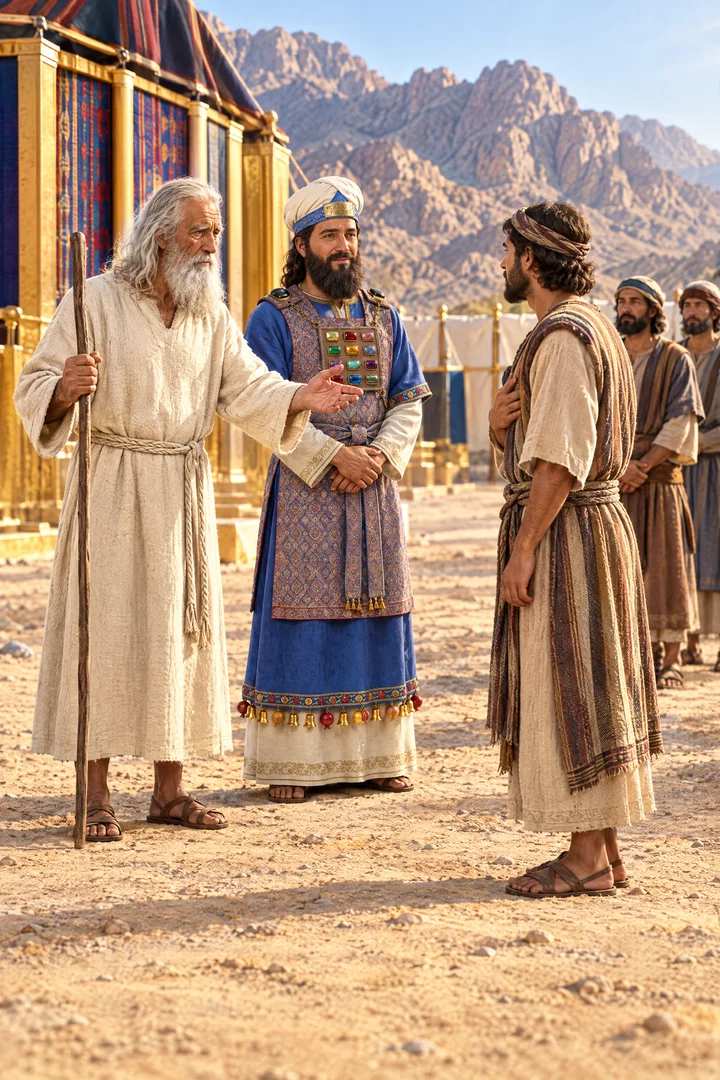
These are those that were numbered, which Moses and Aaron numbered, and the princes of Israel, being twelve men: each one was for the house of his fathers.
Translations
American King James Version, King James Version, KJV Cambridge Paragraph Bible, Webster Bible
These are those that were numbered, which Moses and Aaron numbered, and the princes of Israel, being twelve men: each one was for the house of his fathers.
These are they that were numbered, which Moses and Aaron numbered, and the princes of Israel, being twelve men: they were each one for his fathers’ house.
These are they that were numbered, whom Moses and Aaron numbered, and the princes of Israel, being twelve men: they were each one for his fathers’ house.
These [are] those numbered, whom Moses numbered — Aaron also, and the princes of Israel, twelve men — each for the house of his fathers, they have been.
These are those that were numbered, whom Moses and Aaron numbered, and the princes of Israel, the twelve men: each one was for the house of his fathers.
These, are they who were numbered, whom Moses and Aaron and the twelve princes of Israel did number, the princes acting each one for his ancestral house.
Berean Standard Bible, Majority Standard Bible
These were the men numbered by Moses and Aaron, with the assistance of the twelve leaders of Israel, each one representing his family.
These are those who were counted, whom Moses and Aaron counted, and the twelve men who were princes of Israel, each one for his fathers’ house.
These are they who were numbered by Moses and Aaron and by the twelve chiefs of Israel, one from every tribe.
These are the summes which Moses, and Aaron nombred, and the Princes of Israel, the twelue men, which were euery one for the house of their fathers.
Douay-Rheims (Challoner revision)
These era they who were numbered by Moses and Aaron, and the twelve princes of Israel, every one by the houses of their kindreds.
Pictures
Cross-references
- Numbers 26:1-2
And it came to pass after the plague, that the LORD spake unto Moses and unto Eleazar the son of Aaron the priest, saying,
A second census counts Israelite males twenty and older, compared with the first census.
- Numbers 26:64-65
But among these there was not a man of them whom Moses and Aaron the priest numbered, when they numbered the children of Israel in the wilderness of Sinai.
The second census confirms that the first generation died in the wilderness, except Caleb and Joshua.
- 2 Samuel 24:1
And again the anger of the LORD was kindled against Israel, and he moved David against them to say, Go, number Israel and Judah.
David orders a census of Israel, and the Lord’s anger is kindled.
- Revelation 7:4
And I heard the number of them which were sealed: and there were sealed an hundred and forty and four thousand of all the tribes of the children of Israel.
The numbered 144,000 are compared with Israel’s ancient census.
Commentary
Each commentary is drawn from primary sources: the writings of Ellen G. White and Adventist pioneers and periodicals. Each commentary is separate. Its own words are not a quotation; follow the references to read the source passages.
Pioneers and periodicals
14 sources
The verse records the outcome of Israel's first census at Sinai, taken by Moses and Aaron with twelve tribal princes, each counting his own ancestral house tribe by tribe.ST Mar 3, 1881RH Mar 16, 1869ST May 11, 1904 It numbered 603,550 men from twenty years old and upward who were able to go to war, leaving out the Levites, women, and those under twenty.ST Mar 3, 1881RH Mar 16, 1869ST May 11, 1904 This is the first of the two numberings that give the book of Numbers its name, taken after the tabernacle was built and before Israel left Sinai, with the second taken in the plains of Moab thirty-eight years later.RH Feb 10, 1916ST May 11, 1904RH Feb 10, 1916 It is to be compared with that second numbering in Numbers 26 to see which tribes gained or lost, for the total had changed little though the tribes themselves had shifted considerably.ST May 11, 1904STST Feb 27, 1912 Except for Caleb and Joshua, all counted here died in the wilderness for rebellion and did not inherit the land, yet the census itself was not sinful because God commanded it, unlike David's census which was ordered without the Lord's consent in proud reliance on numbers.RH Mar 16, 1869RH Sep 11, 1860
The Census at Sinai
These are those that were numbered in Israel's first census, taken by Moses and Aaron together with twelve men, the princes or leaders of the tribes, each one for the house of his fathers, for his family or tribe.ST Mar 3, 1881RH Mar 16, 1869ST May 11, 1904STST Feb 27, 1912 The numbering was done carefully tribe by tribe and by ancestral households, each tribe being numbered separately.ST Mar 3, 1881RH Mar 16, 1869STST Feb 27, 1912
The count was 603,550 adult men able to go to war, namely males from twenty years old and upward.ST Mar 3, 1881RH Mar 16, 1869ST May 11, 1904ST May 13, 1897 The Levites were excluded from this numbering, as were women and females and those under twenty.ST Mar 3, 1881RH Mar 16, 1869
This is the first of the two numberings that give the book of Numbers its name, which makes the Greek title Arithmoi, the source of the word arithmetic, fitting.RH Feb 10, 1916ST Feb 17, 1909RH Feb 10, 1916 Its opening chapters continue Leviticus before the journey narrative from Sinai toward Kadesh-barnea is resumed.RH Feb 10, 1916 In the order of Israel's story the numbering was taken at Sinai soon after leaving Egypt, after the building of the tabernacle and the establishing of its services and the sin of Nadab and Abihu, and before leaving Mount Sinai.RH Feb 10, 1916ST May 11, 1904RH Feb 10, 1916RH Apr 28, 1904 The second census was taken in the plains of Moab thirty-eight years later.RH Feb 10, 1916RH Feb 10, 1916
The census organized the counted men for the journey toward Canaan.ST Mar 3, 1881RH Mar 16, 1869 Each counted man could have received an inheritance in the promised land.ST Mar 3, 1881RH Mar 16, 1869RH Mar 16, 1869
Comparison and Lessons
This first numbering of Israel is to be set beside the second numbering in Numbers 26, taken at the end of the wilderness journey before entry into Canaan, about forty years later.ST The comparison is made to note the difference in the tribes and to see how each tribe gained or lost in number during the wilderness journey.ST The first census counted 603,550 adult men, and compared with the later census before entry into Canaan the total had changed little.ST May 11, 1904 Though the total was nearly the same, the numbers of the tribes had shifted considerably.ST May 11, 1904ST Feb 27, 1912ST Feb 22, 1910 Some tribes had greatly increased, while others had decreased.ST Feb 27, 1912ST Feb 22, 1910
Those counted at first could have entered and inherited the promised land, yet except for Caleb and Joshua all who were counted at first died in the wilderness after rebellion and did not enter and inherit it.RH Mar 16, 1869 Their death demonstrated that God fulfilled His threatened judgment.RH Mar 16, 1869 Taking a census was not itself sinful, since these censuses were commanded by God and carried out by Moses.RH Sep 11, 1860 David's later census was sinful because he ordered it without the Lord's consent and relied proudly on the size of his forces instead of trusting God.RH Sep 11, 1860
Because the census account counts males from twenty years old and upward, it provides a comparison for the question of whether children are included among the 144,000.ST May 13, 1897 The census passage, including this verse, is also an example of Scripture that spiritualist claims denounce as absurd and untrue.RH Sep 8, 1853
Sources