Numbers 26:3
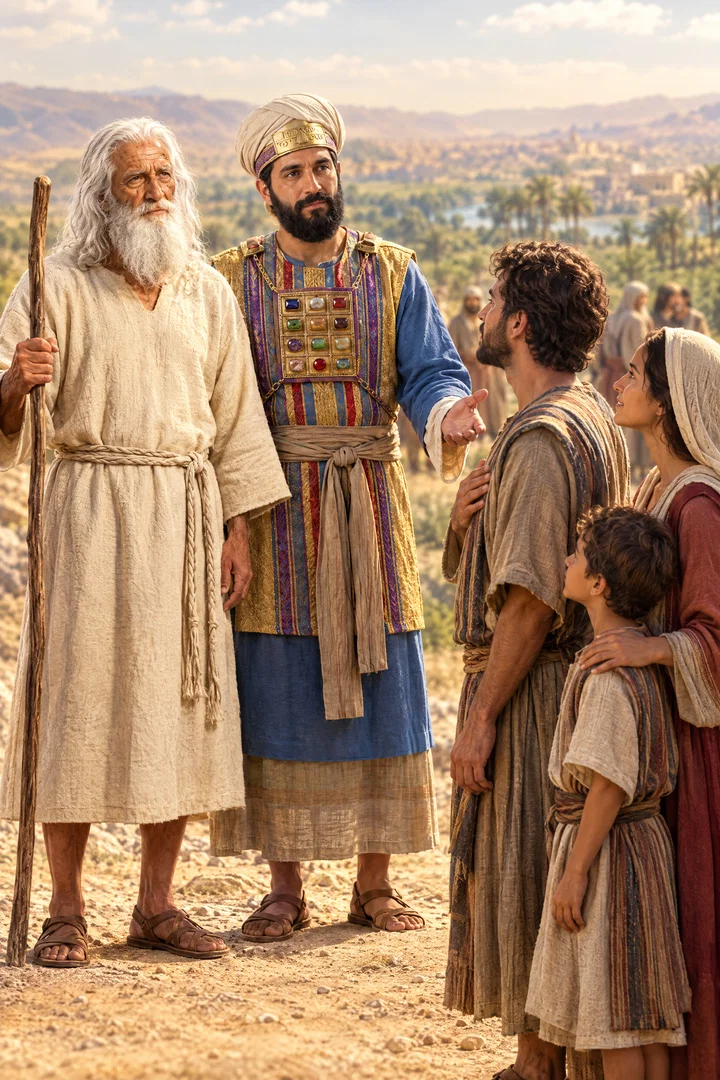
And Moses and Eleazar the priest spake with them in the plains of Moab by Jordan near Jericho, saying,
Translations
American King James Version, Webster Bible
And Moses and Eleazar the priest spoke with them in the plains of Moab by Jordan near Jericho, saying,
King James Version, KJV Cambridge Paragraph Bible
And Moses and Eleazar the priest spake with them in the plains of Moab by Jordan near Jericho, saying,
Revised Version, American Standard Version
And Moses and Eleazar the priest spake with them in the plains of Moab by the Jordan at Jericho, saying,
And Moses speaketh — Eleazar the priest also — with them, in the plains of Moab, by Jordan, [near] Jericho, saying,
And Moses and Eleazar the priest spoke with them in the plains of Moab by the Jordan of Jericho, saying,
So then Moses and Eleazar the priest spake with them, in the waste plains of Moab,—by the Jordan near Jericho saying:
Berean Standard Bible, Majority Standard Bible
So on the plains of Moab by the Jordan, across from Jericho, Moses and Eleazar the priest issued the instruction,
Moses and Eleazar the priest spoke with them in the plains of Moab by the Jordan at Jericho, saying,
So Moses and Eleazar the priest gave them the order in the lowlands of Moab by Jordan at Jericho, saying,
So Moses and Eleazar the Priest spake vnto them in the plaine of Moab, by Iorden towarde Iericho, saying,
Douay-Rheims (Challoner revision)
Moses therefore and Eleazar the priest, being in the plains of Moab upon the Jordan over against Jericho, spoke to them that were
Pictures
Cross-references
- Numbers 1:1-46
And the LORD spake unto Moses in the wilderness of Sinai, in the tabernacle of the congregation, on the first day of the second month, in the second year after they were come out of the land of Egypt, saying,
The first census is compared with the second to note changes in the tribes’ numbers.
- Numbers 1:46
Even all they that were numbered were six hundred thousand and three thousand and five hundred and fifty.
Both censuses number Israel’s adult men, contrasting the first numbering with the second.
- Numbers 1:2-3
Take ye the sum of all the congregation of the children of Israel, after their families, by the house of their fathers, with the number of their names, every male by their polls;
Moses’s other census was commanded by the Lord.
- Numbers 26:65
For the LORD had said of them, They shall surely die in the wilderness. And there was not left a man of them, save Caleb the son of Jephunneh, and Joshua the son of Nun.
names Caleb and Joshua as sole survivors
- Numbers 14:29-30
Your carcases shall fall in this wilderness; and all that were numbered of you, according to your whole number, from twenty years old and upward, which have murmured against me,
The rebellious generation is condemned to die in the wilderness and not enter the land.
Commentary
Each commentary is drawn from primary sources: the writings of Ellen G. White and Adventist pioneers and periodicals. Each commentary is separate. Its own words are not a quotation; follow the references to read the source passages.
Pioneers and periodicals
10 sources
Moses and Eleazar the priest spoke to Israel in the plains of Moab by Jordan near Jericho to introduce the second numbering of the people.RH Mar 16, 1869ST It came at the end of the forty years of wilderness wandering, nearly forty years after the first census taken soon after leaving Egypt, just before entering Canaan.ST Feb 22, 1910ST May 11, 1904 Not one man counted in the first numbering except Caleb and Joshua lived to witness this second numbering, because God fulfilled His threatened judgment by solemn oath and doomed the rebels to die in the wilderness for open rebellion.RH Mar 16, 1869ST Mar 3, 1881 It stands as instruction to those upon whom the ends of the world are come, that tokens of favor no greater than theirs will not avail if sin is carried in the heart, for God prizes character over number and cherished sin brings inevitable ruin.RH Mar 16, 1869ST May 13, 1897ST Feb 21, 1911
Setting and Census Comparison
The verse introduces the second numbering of Israel, spoken by Moses and Eleazar the priest with the people in the plains of Moab by Jordan near Jericho.RH Mar 16, 1869STST Feb 27, 1912 That second census came at the end of the forty years of wilderness wandering, nearly forty years and specifically thirty-eight years after the first census taken soon after leaving Egypt at Sinai and just before entering Canaan, with the intervening thirty-six chapters nearly covering the thirty-eight years between the enumerations.ST Feb 22, 1910ST May 11, 1904ST Feb 27, 1912 The first census at Sinai and this second census thirty-eight years later in the plains of Moab give the book its name Numbers, from the Greek Arithmoi.ST May 11, 1904RH Feb 10, 1916
The census in this chapter is to be compared with the first census in Numbers 1 to note how the tribes changed during the wilderness journey.ST Feb 22, 1910ST That comparison shows some tribes increasing and prospering while others decreased and declined, with each tribe gaining or losing to be noted.ST Feb 22, 1910ST Feb 27, 1912 Like the first numbering, it counted only adult males from twenty years old and upward, with 601,730 in all little changed from 603,550 at first, though the tribes changed considerably.ST May 11, 1904ST May 13, 1897 Most remarkably Manasseh grew almost two-thirds from 32,200 to 52,700.ST May 11, 1904
Most remarkably Simeon shrank almost two-thirds from 59,300 to 22,200, in fulfillment of Jacob's dying blessing that Simeon and Levi would be divided in Jacob and scattered in Israel.ST May 11, 1904 That scattering was fulfilled also in Levi receiving no tribal territory and being scattered for priestly duties.ST May 11, 1904 The census Moses took here was taken twice at the Lord's command and caused no trouble, unlike David's census, which was taken without the Lord's consent.RH Sep 11, 1860
Judgment Warning and Application
Of those counted in the first numbering, not one man lived to witness this second numbering except Caleb and Joshua, because every other person fell and died in the wilderness.RH Mar 16, 1869ST Mar 3, 1881 The second census thus shows that God fulfilled His threatened judgment, pronounced by solemn oath excluding the rebels from the promised land and dooming them to die for open, wanton rebellion and wickedness in their midst.RH Mar 16, 1869ST Mar 3, 1881
It stands as instruction to those upon whom the ends of the world are come, with valuable instruction making a diversified reading of interest and profit.RH Mar 16, 1869ST Feb 21, 1911 Hopes of entering the kingdom of God no stronger than Israel's at the first numbering, and tokens of favor, presence, and willingness to save no greater than theirs, will not avail if sin is carried in the heart, for cherished sin brings inevitable ruin.RH Mar 16, 1869 When applied to whether children are counted in the 144,000 who will be translated, the answer is left unknown and speculation is treated as unprofitable.ST May 13, 1897 God prizes character over number, although the elect number will be gathered, and the required character has been made possible to all through Jesus Christ.ST May 13, 1897
Sources