Proverbs 24:32
Then I saw, and considered it well: I looked upon it, and received instruction.
Translations
Then I saw, and considered it well: I looked on it, and received instruction.
King James Version, KJV Cambridge Paragraph Bible, Webster Bible
Then I saw, and considered it well: I looked upon it, and received instruction.
Then I beheld, and considered well: I saw, and received instruction.
Then I beheld, and considered well;
I saw, and received instruction:And I see — I — I do set my heart, I have seen — I have received instruction,
Then I looked, I took it to heart; I saw, I received instruction:
So I observed it, for myself, I applied my heart, I looked—I accepted correction:
Berean Standard Bible, Majority Standard Bible
I observed and took it to heart;
I looked and received instruction:Then I saw, and considered well.
I saw, and received instruction:Then looking at it, I gave thought: I saw, and I got teaching from it.
Then I behelde, and I considered it well: I looked vpon it, and receiued instruction.
Douay-Rheims (Challoner revision)
Which when I had seen, I laid it up in my heart, and by the example I received instruction.
Pictures
Commentary
Each commentary is drawn from primary sources: the writings of Ellen G. White and Adventist pioneers and periodicals. Each commentary is separate. Its own words are not a quotation; follow the references to read the source passages.
Ellen G. White
4 sources
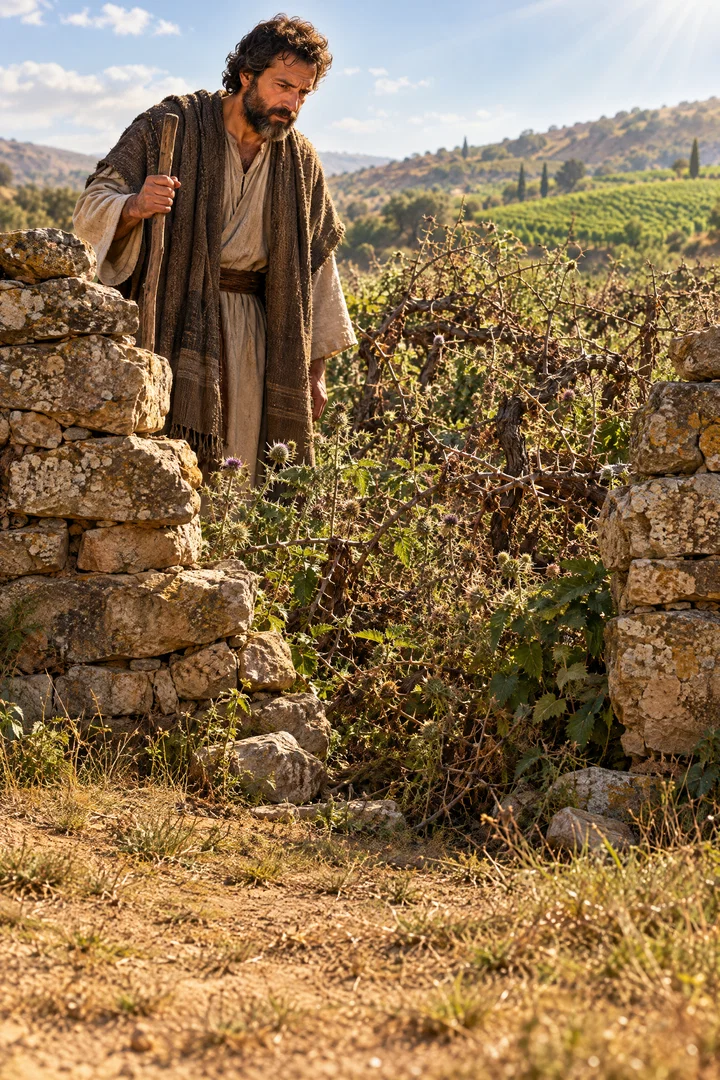
The verse describes looking upon the neglected field or vineyard of the lazy person, considering it well, and receiving instruction from what is seen.5T 181.2–3GW 277.2COL 343.3 That careful observation and thoughtful reflection teaches that idleness brings disorder and, as the surrounding verses warn, poverty, revealing the harm of idleness and the value of diligence.5T 181.2–3GW 277.2 The lesson learned therefore calls for diligence, disciplined habits, and useful work, showing that diligence is necessary and idleness has no biblical endorsement.5T 181.2–3COL 343.3 Spiritually, the sight of the sluggard gives instruction against spiritual sleep and idle hands that do nothing in Christian help work.Lt 152, 1901, par. 6 Folding the hands means professing to know the truth and to believe the final message of mercy is going to the world while remaining asleep and doing nothing, falling behind others with less light who are working actively in the light they have.Lt 152, 1901, par. 6
Sources
Pioneers and periodicals
9 sources
The verse belongs to the first division of Proverbs, chapters 1-24, a collection of sayings credited chiefly to Solomon and likely gathered by him or in his time.ST Oct 8, 1896
It teaches that instruction comes through careful looking, for seeing, considering well, and examining closely leads to wisdom and understanding.RH May 18, 1916RH Oct 4, 1864RH Nov 13, 1900ST May 17, 1910RH Sep 3, 1872
What is seen and considered in this way is the field of the slothful and the vineyard of the person lacking understanding, grown over with thorns, covered with nettles, with its stone wall broken down.RH Oct 4, 1864
The careful observation of that neglected vineyard, considering it and looking closely upon it, is what brings understanding of its lesson.RH May 18, 1916ST May 17, 1910RH May 27, 1915
The instruction so received forbids idleness and slovenliness and requires labor, industry, diligence and thrift, reproving laziness and lack of thrift.RH Oct 4, 1864RH Nov 13, 1900RH May 27, 1915
The neglected, overgrown field with its broken wall shows the outcome of inactivity as decline and ruin, with even a little sleep, a little slumber, and a little folding of the hands to sleep bringing poverty like a traveler and want like an armed person, while diligent labor enriches and the hand and soul of the diligent are made rich and fat.RH Oct 4, 1864RH Sep 3, 1872ST Nov 27, 1893
The overgrown land and broken wall reveal that desolation, and the everyday example urges waking from spiritual idleness to act faithfully in present duties by recognizing the consequences of inactivity.RH Sep 3, 1872ST Nov 27, 1893
The observation also calls for ordered, regular meditation, since thoughts shape character and mere good intentions left unpracticed leave the heart neglected like a thorn-covered field with a broken wall.
It likewise teaches the duty of mental work, since leaving a mind capable of useful work unused is slothful, and exercising the mind is as necessary as physical exercise for a healthy body.ST Apr 14, 1887
The desolation of an abandoned cotton plantation in Tahiti illustrates this ruin, with the former owner's death from alcohol connected to the decline of the plantation and its industry.ST Nov 27, 1893
Sources