Proverbs 31:20
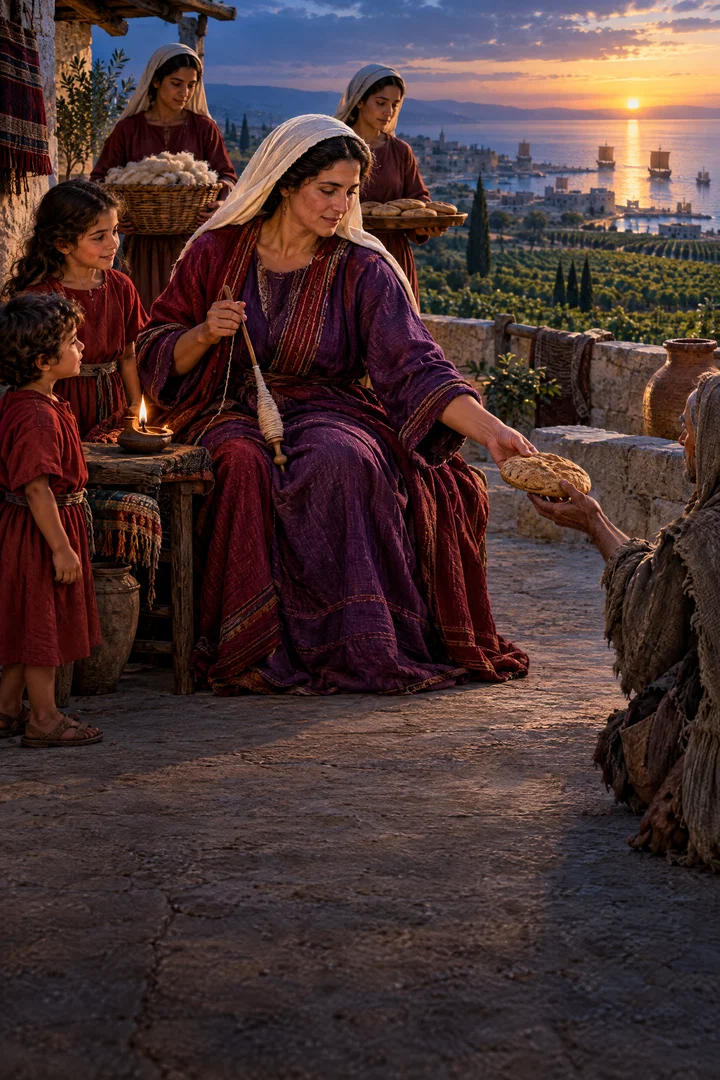
She stretcheth out her hand to the poor; yea, she reacheth forth her hands to the needy.
Translations
She stretches out her hand to the poor; yes, she reaches forth her hands to the needy.
She stretcheth out her hand to the poor; yea, she reacheth forth her hands to the needy.
(כ) She stretcheth out her hand to the poor;
Yea, she reacheth forth her hands to the needy.She stretcheth out her hand to the poor; yes, she reacheth forth her hands to the needy.
She spreadeth out her hand to the poor; yea, she reacheth forth her hands to the needy.
She stretcheth out her hand to the poor;
Yea, she reacheth forth her hands to the needy.Her hand she hath spread forth to the poor, Yea, her hands she sent forth to the needy.
She stretcheth out her hand to the afflicted, and she reacheth forth her hands to the needy.
Her palm, she spreadeth out to the oppressed, and, her hands, she extendeth to the needy:
Berean Standard Bible, Majority Standard Bible
She opens her arms to the poor
and reaches out her hands to the needy.She opens her arms to the poor;
yes, she extends her hands to the needy.Her hands are stretched out to the poor; yes, she is open-handed to those who are in need.
She stretcheth out her hand to the poore, and putteth foorth her hands to the needie.
Douay-Rheims (Challoner revision)
She hath opened her hand to the needy, and stretched out her hands to the poor.
Pictures
Cross-references
- Ezekiel 16:49
Behold, this was the iniquity of thy sister Sodom, pride, fulness of bread, and abundance of idleness was in her and in her daughters, neither did she strengthen the hand of the poor and needy.
Both texts connect treatment of the poor and needy with moral conduct.
- Acts 9:36-39
Now there was at Joppa a certain disciple named Tabitha, which by interpretation is called Dorcas: this woman was full of good works and almsdeeds which she did.
Dorcas is honored for making garments for the needy.
Commentary
Each commentary is drawn from primary sources: the writings of Ellen G. White and Adventist pioneers and periodicals. Each commentary is separate. Its own words are not a quotation; follow the references to read the source passages.
Ellen G. White
2 sources
The virtuous wife is pictured with hands extended outward to the poor and reaching toward the needy, making active compassion and generous relief part of wisdom itself, and such practical deeds are worthy of praise.ED 217.1–2 Her true sphere and right is found in practical, hands-on service that meets the wants of her own household.ST Jun 29, 1882
She is thoroughly trained in every department of domestic labor, able to cut, make and mend clothing, to prepare food in a wholesome and palatable manner, to wash, sweep and dust, and to do kitchen and garden work.ST Jun 29, 1882 When need arises she ministers with her own hands rather than depending on others.ST Jun 29, 1882 If called to be wife and mother she presides as a queen in her own domain, fully competent to guide and instruct her children and to direct her servants.ST Jun 29, 1882
She understands the mechanism of the human body and the principles of hygiene, diet and dress, labor and recreation, together with the best methods of treating disease.ST Jun 29, 1882 That knowledge enables her to care for her own children in sickness herself instead of leaving them to stranger nurses and physicians.ST Jun 29, 1882 Daughters are to be apprenticed to this work from nine or ten years old, taking a regular share in household duties and being held responsible for how they perform it.ST Jun 29, 1882 Inefficiency in these duties wrecks the happiness of families, while such useful labor also provides valuable physical exercise.ST Jun 29, 1882
Sources
Pioneers and periodicals
22 sources
She stretcheth out her hand to the poor is part of the portrait of the ideal virtuous, industrious wife and mother held up as an example to follow, showing practical household skill and faithful home duty to be essential and honorable even for those of high station.RH Jan 1, 1861RH Nov 11, 1902 She actively reaches out with open, generous hands in practical help to the poor and needy beyond her own household, giving with sympathy to those unable to help themselves rather than clinging selfishly to what she has.RH Nov 9, 1911ST Mar 4, 1903RH Jan 6, 1916RH Feb 1, 1906ST Oct 5, 1904 Loyalty to home and generosity to the wider world belong together, for her tender care devotes itself unselfishly to the uplift, comfort and welfare of others so that those in trouble find in her a friend and comforter.RH Sep 10, 1901RH Mar 2, 1916RH Aug 27, 1914 Such charity is the most prominent element and crowning glory of the model woman, bringing her praise as excelling all others in virtuous deeds.RH Nov 11, 1902 Her diligent work for her household stands in contrast to idleness and pleasure-seeking, and her reaching hands include ready work for those in need such as helping to clothe destitute children.RH Jan 1, 1861ST Oct 14, 1880
Setting and Virtuous Ideal
The verse belongs to the words of Lemuel in chapter 31, which are of later date.ST Oct 8, 1896 The passage in verses 10-31 presents an ideal, virtuous, industrious woman as an example to follow, showing that practical household duties and skill in them were considered essential and honorable for women, even those of high station. It is the portrait of the model wife and mother set before all who contemplate marriage, who is sympathetic, kind, faithful, wise and discreet, who commands her husband's confidence and wins more and more the hearts of husband and children, and who is enthroned as queen in heart and home.RH Nov 11, 1902
No nobler type of womanhood exists than in the home, for virginity is not more holy than marriage and a maiden is not more saintly or useful than a wife and mother.RH Nov 11, 1902 This model is seen in Sarah, Naomi, Hannah, and Eunice, and in women whose home influence has molded the character of truly great men and women, rather than in St. Agnes or the Virgin Mary.RH Nov 11, 1902 The passage describes a virtuous life in contrast to the destructive path of shame and sin.ST Oct 5, 1904 It describes a virtuous woman whose diligent work and care for her household stand in contrast to idleness and fashionable pleasure-seeking.RH Jan 1, 1861
The passage commends useful industry and opposes idleness as sinful, showing that the Sabbath is not meant to be a day of doing nothing but is to be devoted to God's service.RH Apr 3, 1900 It portrays a capable woman who systematically manages the household's provisions and sees that the family is well clothed and fed, in which her household work is one part of the marriage partnership and not charity or almsgiving between husband and wife.ST Apr 2, 1885 Her central calling is to make a happy home and to extend its tender, holy influence, while talents for work outside the home may also be used when God has given them.ST Apr 2, 1896 The passage as a whole is a record of God's use of women and instruction to them, and the verse points to the virtuous character readers are encouraged to seek, with a woman's care for the poor and needy illustrating the good she can do through her proper, gracious service.RH Aug 27, 1901
Hands to Poor and Needy
The worthy, virtuous woman gives generously to the poor and needy, actively reaching out with practical help to them.RH Nov 9, 1911ST Mar 4, 1903ST Oct 5, 1904 The ideal looks beyond her own household to the poor and needy in the wider world, for loyalty to home duties and generosity to others belong together.RH Mar 2, 1916 Her heart feels sympathy for the poor and needy, and she actively gives help to those unable to help themselves.RH Jan 6, 1916 Charity is the most prominent element and crowning glory of the model woman, shown by reaching out to the poor and needy and by kindness in speech.RH Nov 11, 1902 Charity is the best of all graces, bringing praise from her people and from her children and husband as excelling all others in virtuous deeds.RH Nov 11, 1902
She reaches out with open hands to help the poor and needy, and her hands do not cling to their gifts selfishly but share them with those in need.RH Feb 1, 1906 She actively helps with generous, sympathetic care beyond her own family, devoting herself unselfishly to the uplift, comfort, and welfare of others, so that people in trouble find in her a friend and comforter.RH Sep 10, 1901RH Aug 27, 1914 Her help includes lending ready assistance to work for those in need and helping clothe destitute children.ST Oct 14, 1880 As wife and mother she makes the fortune and happiness of husband and children and reaches all within her reach, securing competence in old age by thrift, prudence and tact.ST Dec 13, 1883 She restores her husband's spirit by cheerfulness and his health by tender care, wins him from bad company by counsel and love, molds children into noble men and women by example, precept and insight into character, and refines and elevates all around her, so that women emulating and assisting one another do more to regenerate the world than all statesmen or reformers.ST Dec 13, 1883
Wife means weaver, and the true wife weaves men's fortunes instead of feeding upon them and bringing them to decay.ST Mar 30, 1882 Her place and power is to make home wherever she is, stretching it far around her and shedding its quiet light for those otherwise homeless, a home better than houses ceiled with cedar or painted with vermilion, even when the stars are over her head and the glowworm in the cold grass is the fire at her feet.ST Mar 30, 1882 The true sphere of woman is practical, hands-on service to the wants of her household, thoroughly trained in every department of domestic labor to cut, make and mend clothing, prepare wholesome food, wash, sweep, dust, and do kitchen and garden work, to preside as queen in her domain, guide children and direct servants.ST Jun 29, 1882 She understands hygiene, diet, dress, labor, recreation and treatment of disease so she can nurse her own children, and daughters must be apprenticed from nine or ten years old with a regular, responsible share in duties, since inefficiency wrecks family happiness and useful labor gives valuable exercise.ST Jun 29, 1882
Stretching out the hand to the poor and needy begins at home by denying self to supply parents' needs, laying aside furs, silk and showy dress until a mother has better, warm clothing, refusing to wear anything more expensive than she wears, and helping a father pressed by expense.ST Apr 16, 1885 It learns in seeing fashionable display to think of father and home, bare walls and floors, and whether there is money enough for all.ST Apr 16, 1885 Stretching out the hands means practical, loving work with both hands for one's own household, moved by a loving heart and thoughtful head, rising early of one's own accord to provide a full, careful breakfast, cooking, baking, and setting the table quietly and cheerfully to surprise and relieve weary parents, so earnest everyday home service becomes pleasant and beautiful.ST Sep 18, 1893
Sources