Proverbs 6:11
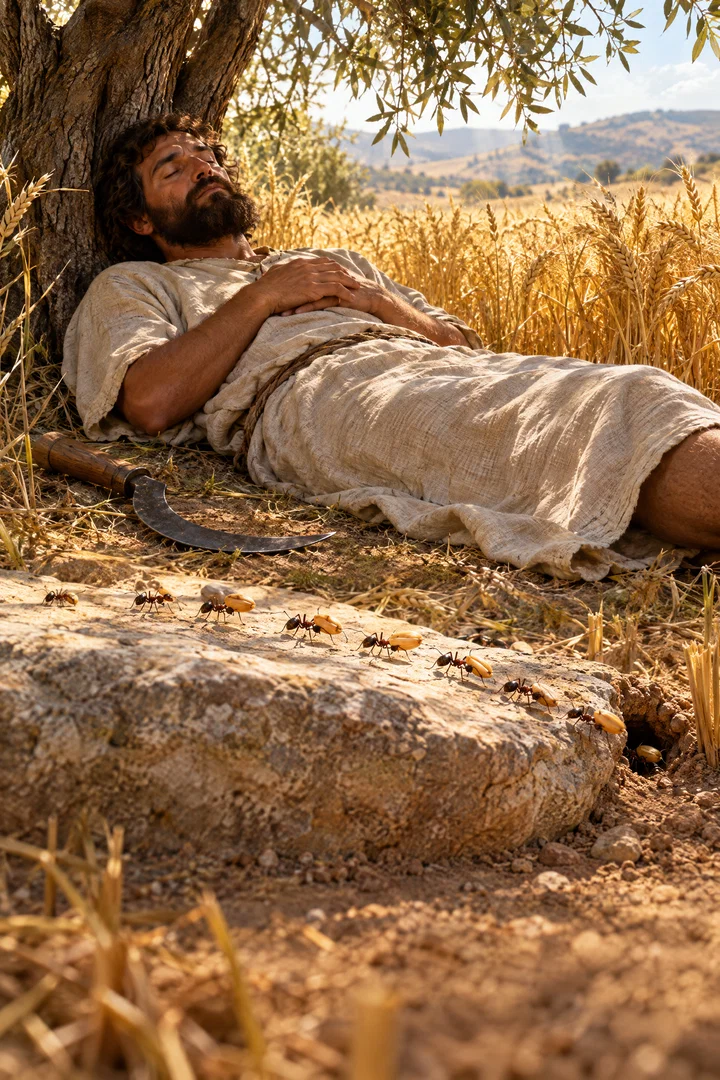
So shall thy poverty come as one that travelleth, and thy want as an armed man.
Translations
So shall your poverty come as one that travels, and your want as an armed man.
So shall thy poverty come as one that travelleth, and thy want as an armed man.
So shall thy poverty come as one that travelleth,
And thy want as an armed man.So shall thy poverty come as one that traveleth, and thy want as an armed man.
So shall thy poverty come as a robber, and thy want as an armed man.
So shall thy poverty come as a robber,
And thy want as an armed man.And thy poverty hath come as a traveller, And thy want as an armed man.
So shall thy poverty come as a roving plunderer, and thy penury as an armed man.
So shall come in, as a highwayman, thy poverty, and, thy want, as one armed with a shield.
Berean Standard Bible, Majority Standard Bible
and poverty will come upon you like a robber,
and need like a bandit.so your poverty will come as a robber,
and your scarcity as an armed man.Then loss will come on you like an outlaw, and your need like an armed man
Therefore thy pouertie commeth as one that trauaileth by the way, and thy necessitie like an armed man.
Douay-Rheims (Challoner revision)
And want shall come upon thee, as a traveller, and poverty as a man armed. But if thou be diligent, thy harvest shall come as a fountain, and want shall flee far from thee.
Pictures
Cross-references
- Proverbs 24:33-34
Yet a little sleep, a little slumber, a little folding of the hands to sleep:
Both warn that idleness and sleep bring poverty and sudden want.
- Proverbs 20:4
The sluggard will not plow by reason of the cold; therefore shall he beg in harvest, and have nothing.
Both describe laziness leading to poverty and want.
- Proverbs 20:13
Love not sleep, lest thou come to poverty; open thine eyes, and thou shalt be satisfied with bread.
Both warn that loving sleep leads to poverty.
- Proverbs 6:6
Go to the ant, thou sluggard; consider her ways, and be wise:
Urges the sluggard to learn from the ant.
- Proverbs 10:4
He becometh poor that dealeth with a slack hand: but the hand of the diligent maketh rich.
Both contrast slackness with diligence and their consequences.
- Proverbs 19:15
Slothfulness casteth into a deep sleep; and an idle soul shall suffer hunger.
Connects slothfulness with a deep sleep.
- Proverbs 21:25
The desire of the slothful killeth him; for his hands refuse to labour.
Says the slothful person’s desire brings harm.
Commentary
Each commentary is drawn from primary sources: the writings of Ellen G. White and Adventist pioneers and periodicals. Each commentary is separate. Its own words are not a quotation; follow the references to read the source passages.
Ellen G. White
11 sources
Laziness, idleness and inactivity bring poverty and need upon the sluggard who folds the hands and remains inactive.RH Jun 6, 1912Ms 39, 1912, par. 42T 308.1Lt 136, 1902, par. 7Lt 152, 1901, par. 6 That want comes suddenly and forcefully, like a traveler arriving and like an armed man overtaking who cannot be resisted.Ms 39, 1912, par. 4Lt 136, 1902, par. 7Lt 152, 1901, par. 61T 263.1Ms 4, 1865, par. 8 The folded hands and sleep picture remaining idle instead of acting.RH Jun 6, 1912Ms 39, 1912, par. 4Lt 136, 1902, par. 7Lt 152, 1901, par. 6 Industrious habits and frugality are therefore necessary, and wanting to support oneself rather than depend on others is a worthy ambition.2T 308.1
Spiritually, the sluggard pictures those asleep to their duty to serve, who fail to do the work they know they should do, including those who know the truth but fail to act on it.RH Jun 6, 1912Ms 39, 1912, par. 4Lt 136, 1902, par. 7 Sleeping instead of acting also warns against delaying repentance, for mercy's opportunity passes, leaving the unprepared without excuse and found wanting.1T 263.1 Wrong habits and unguided desires illustrate the armed man, for once they have become second nature they rise forcefully to aid temptation while reason and conscience may fail to restrain them.ST Jan 19, 1882
Neglecting needed duties such as sleep illustrates the sudden, forceful arrival, for after Bro. Andrews sacrificed necessary sleep for study, reading and labor, sleep overtook him with irresistible stupor when he needed to be alert and serve.TBC1872 79.1–81.1TCBMP 182.3–184.2 Mental dullness coming upon Brother Smith as his weakened nature recovers illustrates need arriving suddenly and forcefully like an armed man.Ms 4, 1865, par. 8 A sudden, severe cold that hemmed travelers in and delayed their move illustrates want arriving like an armed man.Lt 48, 1880, par. 2
Sources
Pioneers and periodicals
31 sources
Continued sleeping, slumbering, and idleness bring poverty and want upon the sluggard.RH May 18, 1916RH Feb 13, 1913RH May 31, 1870 Poverty comes upon him suddenly and inevitably as a traveler arrives unexpectedly, and want comes upon him forcefully and irresistibly as an armed man overtakes and overcomes.RH May 18, 1916RH Feb 13, 1913ST Nov 7, 1900 In contrast to the ant gathering and storing in summer and harvest, he is called to leave drowsy indifference, to keep laboring without delay, and to provide for his temporal needs and for those who depend on him.RH Feb 13, 1913RH Mar 21, 1912RH May 31, 1870 The same principle reaches beyond bodily idleness to idleness of mind and spirit, exposing sleep over important and eternal things that must be awakened to practical duty and energetic work in the cause of God.ST Nov 7, 1900RH Sep 3, 1872RH Jan 24, 1871ST Apr 14, 1887 Delay and complacency in this work leave men unready for the Lord's soon coming and for giving an account at the near Judgment, with no time to afford such sleep, lest those who sink back into it awake too late and be shut out.RH Feb 10, 1863ST Apr 15, 1903RH Mar 25, 1873
Sluggard's Poverty Foretold
Continued sleep, slumber, and idleness bring poverty and want upon the sluggard, and the warning belongs to a reproof that condemns idleness, sluggishness, dissipation, indolence, and lack of thrift as sin.RH May 18, 1916RH Feb 13, 1913ST Nov 7, 1900RH Apr 3, 1900RH May 27, 1915 Poverty comes as one that travels, arriving suddenly, unexpectedly, and inevitably, while want comes as an armed man, overtaking, overcoming, and striking with a force that cannot be resisted.RH May 18, 1916RH Feb 13, 1913RH May 31, 1870ST Sep 1, 1909RH Oct 28, 1858 Idleness itself moves slowly, yet poverty soon catches up and overtakes the lazy person, arriving swiftly and forcefully.ST Nov 7, 1900RH May 31, 1870ST Sep 1, 1909RH Sep 1, 1868ST Apr 13, 1882
In contrast to the ant gathering and storing food in summer and harvest as an example of diligence, foresight, and faithful service, the indolent are called to leave drowsy indifference behind.RH May 18, 1916RH Mar 21, 1912ST Apr 29, 1903 Time is not to be wasted, but labor is to be kept up despite small inconveniences, work is not to be delayed until tomorrow, and provision is to be made for temporal needs and for those who depend on the worker, since failure to work and provide harms the idle person and his family.RH Feb 13, 1913RH Mar 21, 1912RH May 31, 1870RH Jan 24, 1907 A life of active, cheerful labor is preferable to the sluggard's inaction.RH Mar 21, 1912RH Jan 24, 1907
Neglect brings concrete ruin, for sloth leaves a harvest ruined by weeds, pests, or flood, and failure to address faults brings disgrace and sorrow through one's children.RH Oct 28, 1858 Neglect of proper habits brings decline, with late hours weakening body and mind and bringing decay even in youth.RH Oct 28, 1858ST Nov 3, 1881 Poverty and want can arrive suddenly and swiftly, as when fire in a few hours left many homeless and dwellings reduced to ashes.RH Oct 28, 1858
Prayer does not replace action, for dangers must be worked to meet and faults worked to treat while heaven's help is sought.RH Oct 28, 1858 When a right thing is undertaken it must be carried through without being easily discouraged, with sloth, sleep, and fickleness resisted even though resistance is hard, bringing at the end the reward of knowing right has been done.RH Oct 28, 1858RH Apr 8, 1875 Inactivity brings poverty, want, and decline, while energetic activity brings new life, so decline from neglected duty is cured by energetic work, and even beginning late with small duties done with might revives the soul and prepares the way for a wider field.RH Sep 3, 1872RH Oct 28, 1858RH Apr 8, 1875
Spiritual Slumber and Application
The principle reaches beyond bodily laziness to laziness of mind and of spirit, with each kind of idleness bringing its own kind of poverty upon the idle.ST Nov 7, 1900 To leave a capable mind unused for any useful purpose is sloth, just as truly as to refuse to labor with the hands for the necessities of life, for using the mind is duty no less than bodily exercise.ST Apr 14, 1887
Spiritual sleep is sleeping over important and eternal things, letting precious time pass in self-indulgence, ease, and delay instead of staying awake and watchful and putting away sin.RH Jan 24, 1871 The sleep-like sluggard must be awakened to practical duty, since inactivity brings poverty and want while energetic activity brings new life, and decline from neglected duty is cured by energetic work in the cause of God.RH Sep 3, 1872 Even when it is late there is still work to be done with all one's might, beginning with small duties that revive the soul and prepare the way for a wider field, and this includes those who are asleep to their duty to serve.RH Jun 6, 1912RH Sep 3, 1872
Continued sleep and slumber bring poverty and want arriving suddenly like a traveler or an armed man, and so delay and complacency leave people unready for the Lord's soon coming.RH Feb 10, 1863 With the Judgment so near that no one can afford such sleep, each must soon give an account of stewardship to Him who judges righteously.RH Mar 25, 1873 Sleep-like delay wastes the working time and may leave people awakening too late and shut out.ST Apr 15, 1903 Those who briefly heed the message and then sink back into spiritual sleep are likened to the sluggard.RH Sep 9, 1858
Refusing instruction and choosing folly and breaking God's laws bring want and ruin arriving like a traveler and an armed man, seen in a broken life and lost manhood.ST Feb 26, 1902 What is put off does not disappear, for the longer repentance of sin is refused the more unhappy a person becomes.RH Feb 23, 1860 As impenitence continues and life's distractions fade with age, conscience and misery can break in suddenly and forcefully like an armed man.RH Feb 23, 1860
Spiritual poverty overtakes one who leaves the brotherly love and full hope of salvation held in 1844, journeys into a foreign land, and wastes the blessed portion given by the heavenly Father. Such a one becomes worldly-minded, a citizen of this world, ensnared and loaded down with cares unbecoming one living and hoping for a better inheritance, and filled with nothing better than husks until perishing with starvation. The condition is seen by serious reflection with deep shame and regret and confessed as sin before brethren and heaven, and it is met by being zealous and repenting immediately, placing lands and entire earthly substance anew on the consecrated altar to be used up in the cause of God under divine wisdom and providence, trusting there is bread enough and to spare in the heavenly Father's house.
Wrong habits and unguided desires, once they have become second nature, rise forcefully like an armed man to aid temptation, while reason and conscience may fail to restrain them.ST Jan 19, 1882 Temptations confronting those turning from sin and selfishness come upon a person like an armed man, requiring a fight that continues day after day as one temptation follows another.RH Sep 25, 1856 The same image of want arriving suddenly and forcefully like an armed man describes severe distress when trials are used to stir doubts about God's love and fears for the future, yet such trial has limits, and deliverance brings growth in patience, submission, humility, and penitence.RH Jul 8, 1858 Neglecting present opportunities and failing to act diligently can bring later poverty and hardship arriving suddenly and forcefully like a traveler or an armed man, as when opportunities to prepare for future difficulties and to support the defense of religious liberty are neglected.RH Sep 28, 1916
Idleness, sluggishness, habits of idleness, dissipation, indolence, and lack of thrift are condemned as sin, with poverty and want coming upon the idle suddenly and forcefully.RH Apr 3, 1900RH May 27, 1915RH Oct 12, 1869 The lesson of learning diligence from the ant is challenged when it is used to condemn children for sleeping longer or to praise rising immediately.ST Apr 17, 1879
Sources