Psalms 146:7
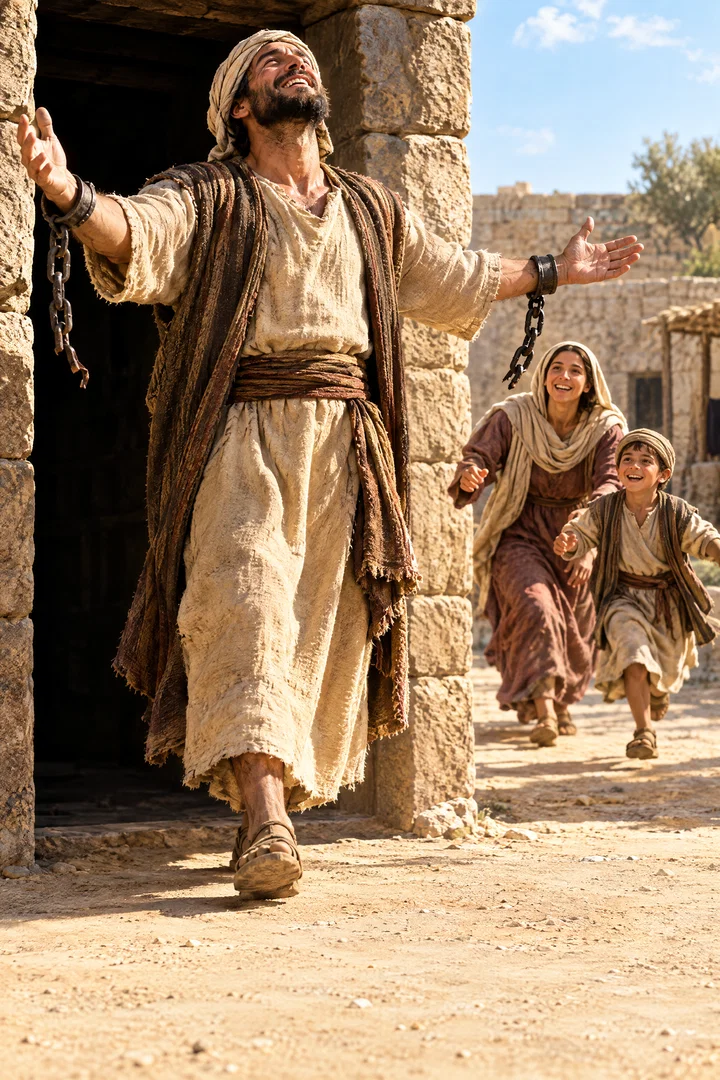
Which executeth judgment for the oppressed: which giveth food to the hungry. The LORD looseth the prisoners:
Translations
Which executes judgment for the oppressed: which gives food to the hungry. The LORD looses the prisoners:
Which executeth judgment for the oppressed: which giveth food to the hungry. The LORD looseth the prisoners:
Which executeth judgment for the oppressed:
Which giveth food to the hungry.
The Lord looseth the prisoners:Who executeth judgment for the oppressed: who giveth food to the hungry. The LORD looseth the prisoners:
Which executeth judgment for the oppressed; which giveth food to the hungry: the LORD looseth the prisoners;
Who executeth justice for the oppressed;
Who giveth food to the hungry.
Jehovah looseth the prisoners;Doing judgment for the oppressed, Giving bread to the hungry.
Who executeth judgment for the oppressed, who giveth bread to the hungry. Jehovah looseth the prisoners;
Who executeth justice for the oppressed, who giveth food to the famishing, Yahweh, who liberateth prisoners;
Berean Standard Bible, Majority Standard Bible
He executes justice for the oppressed
and gives food to the hungry.
The LORD sets the prisoners free,who executes justice for the oppressed;
who gives food to the hungry.
The LORD frees the prisoners.Who gives their rights to those who are crushed down; and gives food to those who are in need of it: the Lord makes the prisoners free;
Which executeth iustice for the oppressed: which giueth bread to the hungry: the Lord loseth the prisoners.
Douay-Rheims (Challoner revision)
Who keepeth truth for ever: who executeth judgment for them that suffer wrong: who giveth food to the hungry. The Lord looseth them that are fettered:
Pictures
Cross-references
- Isaiah 61:1
The Spirit of the Lord GOD is upon me; because the LORD hath anointed me to preach good tidings unto the meek; he hath sent me to bind up the brokenhearted, to proclaim liberty to the captives, and the opening of the prison to them that are bound;
Both announce good tidings to the meek and freedom for captives.
- Psalms 107:9
For he satisfieth the longing soul, and filleth the hungry soul with goodness.
God satisfies the hungry soul with goodness.
- Isaiah 55:1
Ho, every one that thirsteth, come ye to the waters, and he that hath no money; come ye, buy, and eat; yea, come, buy wine and milk without money and without price.
The thirsty are invited to receive freely.
Commentary
Each commentary is drawn from primary sources: the writings of Ellen G. White and Adventist pioneers and periodicals. Each commentary is separate. Its own words are not a quotation; follow the references to read the source passages.
Ellen G. White
4 sources
The Lord Himself executes justice for the oppressed, gives food to the hungry, and looses the prisoners.Ms 124, 1906, par. 4–6Ms 51, 1895, par. 10–11Lt 9, 1900, par. 4–618MR 226.1–2 These acts belong with His work as the God of Jacob who made heaven and earth and the sea and all that is in them, who keeps truth forever, who opens the eyes of the blind, raises those who are bowed down, and loves the righteous.Ms 124, 1906, par. 4–6Ms 51, 1895, par. 10–11 This help comes from the Lord, not from human rulers, princes and the son of man, in whom there is no help because their breath leaves them and their plans perish.Ms 51, 1895, par. 10–1118MR 226.1–2
Therefore happiness belongs to those who have Him for their help and put their hope in Him instead of trusting in princes.Ms 51, 1895, par. 10–11 For every tempted soul this means He can be depended on in all personal wants.Ms 124, 1906, par. 4–6 His holiness and justice are the standard for human decisions, and those who act under His supervision and take all decisions and plans to Him for approval are kept from unprincipled actions and from oppressing fellow workers by controlling their words and actions.Ms 51, 1895, par. 10–1118MR 226.1–2
It gives large encouragement to talk faith and practice faith, to refuse unbelief and a harsh spirit, and to let thank offerings and praise flow from grateful hearts.Ms 124, 1906, par. 4–6
Sources
Pioneers and periodicals
16 sources
The Lord vindicates the oppressed, feeds the hungry, and sets the prisoners free.RH Jan 31, 1856ST Oct 10, 1906RH Apr 22, 1858 In doing so he shows his justice as part of his love, mercy and truth, feeding both body and soul and breaking bonds and snares to bring hope and life without end to those threatened with death.RH Jun 28, 1906RH Jan 6, 1916 These acts are why trust belongs in God the Creator who keeps truth forever, rather than in mortal rulers and human power, for he is the dependable help when human help fails and uses his overruling power for the oppressed against the oppressor in nations as well as in individual lives.ST Dec 21, 1915ST Oct 13, 1898ST Oct 20, 1898RH Jul 4, 1865 The loosing of the prisoners is the resurrection of the dead held in the pit, where there is no thought, remembrance or praise of God, and Christ as the Lifegiver frees them from Satan's claim to give them conscious life again.ST Jul 29, 1875ST Aug 19, 1875ST May 6, 1897 That same opening of prison doors is the unchaining of the words of life from error and superstition, and it calls all to imitate God by uplifting the downtrodden, befriending the helpless and comforting prisoners while trusting him for the final outcome.ST Jul 16, 1885ST May 28, 1896
Setting and Merciful Acts
Psalm 146 belongs among the post-Davidic psalms connected with the return of the Jews from Babylon under Cyrus, expressing the mingled joy, sorrow, and anxiety of the returning exiles and pointing to the building and dedication of the second temple and the triumphs connected with it.RH Sep 7, 1916 Within that setting the verse sets forth three merciful acts of the Lord: He judges in favor of the oppressed, feeds the hungry, and stands as the prisoners' God to help and release those held in bonds.RH Jan 31, 1856ST Oct 10, 1906RH Apr 22, 1858 He thus acts on behalf of people in need by bringing justice to the oppressed, giving food to the hungry, and loosing prisoners.ST Oct 10, 1906RH Apr 22, 1858
In executing judgment for the oppressed He shows Himself just, and that executing of justice is one expression of His love, mercy, and truth. In giving food to the hungry the same God feeds both body and soul, and the body's recurring need for food and drink serves as a reminder of the need for spiritual blessings.RH Jun 28, 1906
In loosing prisoners He breaks bonds and snares, sets people free, and gives to the poor.RH Jan 6, 1916 He is hope for those trapped and threatened with death, giving them life without end.RH Jan 6, 1916 His blessing belongs to those whose greatness is gentleness and whose power is charity.RH Jan 6, 1916
Hope in God Alone
The deeds described — bringing justice to the oppressed, giving food to the hungry, and freeing prisoners — are the reason hope belongs in God rather than in human achievements, for God is the Creator, keeps truth forever, and remains a help when human power fails.ST Dec 21, 1915ST Oct 20, 1898 Unlike mortal rulers, who cannot be trusted for lasting help, the Lord acts for the oppressed, feeds the hungry, and frees prisoners, and these deeds present Him as the one in whom hope is to be placed.ST Dec 21, 1915ST Oct 20, 1898
He is the dependable source of help and relief from the dangers and oppressions of this world, bringing justice to the oppressed and providing food to the hungry.ST Oct 13, 1898 The wider passage of Psalm 146:3-10 teaches that the Christian is a pilgrim and citizen of another government rather than a political power in this world.ST May 10, 1905
God uses His power on the side of the oppressed and against the oppressor, and He will ultimately vindicate what is right.RH Jul 4, 1865 His overruling power directs national events as well as individual affairs, as seen in the North's eventual victory over the South and the suppression of the rebellion.RH Jul 4, 1865
Prisoners Freed and Applied
The loosing of prisoners means the dead held as prisoners in the pit, or sheol, which is the state of the dead.ST Jul 29, 1875 In that state there are no thoughts, no remembrance, and no praise of God.ST Jul 29, 1875 The release of those prisoners is the resurrection, which is the hope held out for the dead.ST Aug 19, 1875 This shows that the dead are without conscious existence and that their hope lies in being raised.ST Aug 19, 1875 The same freeing work belongs to Christ as the Lifegiver, who sets the dead free from Satan's claim, as was shown when Moses was raised from the dead.ST May 6, 1897
The opened prison doors also portray the recovery of Scripture, in which God unchains the words of life.ST Jul 16, 1885 By that recovery He frees people enslaved by error and superstition.ST Jul 16, 1885 The Lord who brings justice to the oppressed, provides food for the hungry, and releases prisoners is to be imitated by uplifting the downtrodden, befriending the helpless, and comforting prisoners.ST May 28, 1896 That human work is done while trusting God to bring the final outcome.ST May 28, 1896
Sources