Psalms 20:8
They are brought down and fallen: but we are risen, and stand upright.
Translations
American King James Version, King James Version
They are brought down and fallen: but we are risen, and stand upright.
They are brought down and fallen:
But we are risen, and stand upright.They are brought down and fallen: but we are raised, and stand upright.
They are bowed down and fallen: but we are risen, and stand upright.
They are bowed down and fallen;
But we are risen, and stand upright.They — they have bowed and have fallen, And we have risen and station ourselves upright.
They are bowed down and fallen; but we are risen and stand upright.
They, have bowed down and fallen, but, we, have arisen, and stand upright.
Berean Standard Bible, Majority Standard Bible
They collapse and fall,
but we rise up and stand firm.They are bowed down and fallen,
but we rise up, and stand upright.They are bent down and made low; but we have been lifted up.
They are brought downe and fallen, but we are risen, and stand vpright.
Douay-Rheims (Challoner revision)
They are bound, and have fallen; but we are risen, and are set upright. O Lord, save the king: and hear us in the day that we shall call upon thee.
Pictures
Cross-references
- 2 Samuel 10:13-19
And Joab drew nigh, and the people that were with him, unto the battle against the Syrians: and they fled before him.
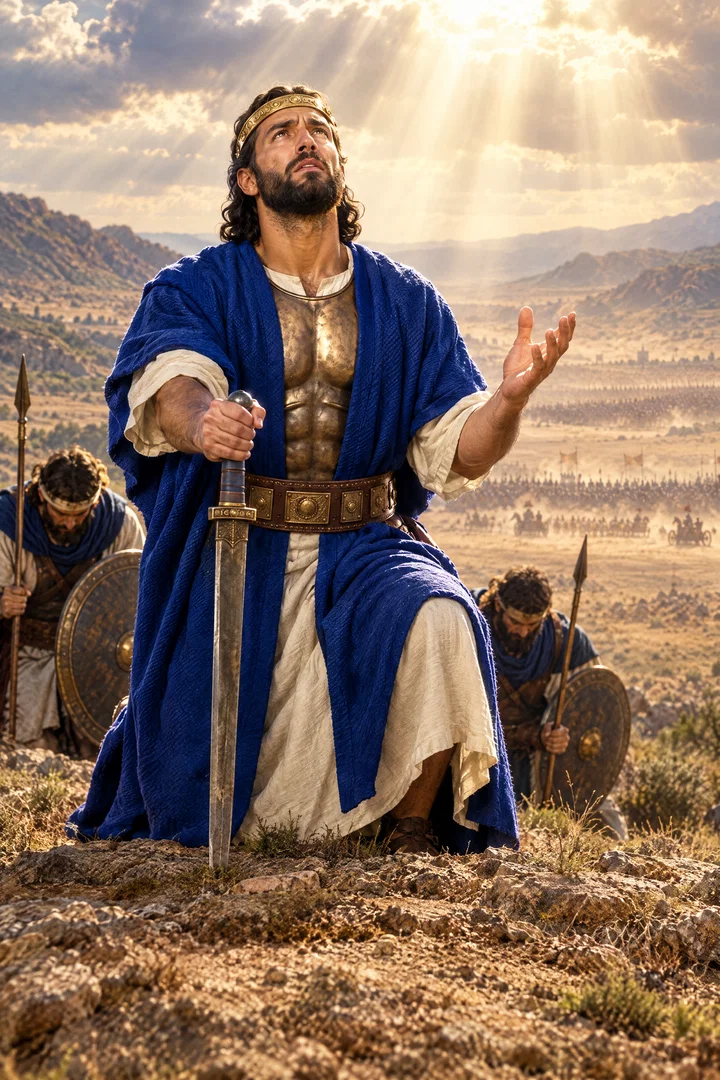
Israel’s enemies flee and are defeated, while Israel stands victorious.
Commentary
Each commentary is drawn from primary sources: the writings of Ellen G. White and Adventist pioneers and periodicals. Each commentary is separate. Its own words are not a quotation; follow the references to read the source passages.
Ellen G. White
1 source
The verse is a precious promise to be accepted.RH Aug 5, 1909 It is at the same time a warning to be believed.RH Aug 5, 1909 As such it calls God's people to wake up to spiritual peril.RH Aug 5, 1909 It directs them to take Scripture as their guide.RH Aug 5, 1909
Sources
Pioneers and periodicals
12 sources
Sung by David and his army before a perilous expedition against the Syrians, the verse declares that Israel's safety lies in trusting in the Lord rather than in chariots and horses.RH Apr 21, 1868 Those who trust in earthly strength, armies, arms, worldly policy and political power are bowed down and fallen in defeat, but those who remember the name of Jehovah their God are lifted up and stand upright, firm and victorious.RH Apr 21, 1868ST Mar 29, 1905ST Nov 28, 1900 This standing comes because Jehovah saves His anointed, answering from His holy heaven with the saving strength of His right hand, sending help from the sanctuary and strength out of Zion, granting the heart's desire and giving triumph in His salvation.ST Mar 29, 1905RH Apr 21, 1868 The warfare of the church is therefore not carnal, for she has no other King than Jesus Christ and must conquer only by His Word and power, never meddling with the policy of the world nor seeking its swords, prisons, treasures and political power, which utterly repudiates all union of church and state.ST Nov 28, 1900ST Sep 30, 1908ST Dec 7, 1904ST Nov 7, 1906 She is forbidden to expect thrones and mortal triumphs on earth but must follow the path of her King from lowliness through the cross to the crown, for when God's people turn aside to arms and civil power He punishes them, as the defeat of the Swiss Reformers at Cappel drove them back to the Word of God.ST Nov 28, 1900ST Sep 30, 1908ST Dec 7, 1904ST Feb 19, 1894ST Nov 7, 1906
Setting and Meaning
The verse is part of what David and his army sing before a dangerous expedition against the Syrians, where Israel trusts in the Lord rather than in chariots and horses.RH Apr 21, 1868 It belongs to the first book of the Psalms, Psalms 1 to 41. The psalm brings comfort and teaches trust and confidence in God.ST Mar 14, 1911 It is precious for meeting every phase of human experience, helping the soul in discouragement, strengthening in trial, giving solid comfort in grief, pointing out the dangers of sin, warning of transgression, and pointing to a God able and willing and anxious to save. Like many psalms it begins with a sense of great need and ends with triumph and confidence in God.
The verse contrasts opposite outcomes for opposite trusts.RH Apr 21, 1868ST Mar 29, 1905ST Sep 28, 1904 Those who trust in chariots and horses, in armies of the nations, earthly strength, arms, battle, worldly policy, swords, prisons, treasures and political power end bowed down, brought down and fallen in defeat and collapse.ST Mar 29, 1905ST Nov 28, 1900ST Sep 30, 1908ST Aug 10, 1915ST Sep 28, 1904 But those who trust in God and remember and make mention of the name of Jehovah their God are risen, lifted up and stand upright, firm and victorious.ST Mar 29, 1905ST Nov 28, 1900ST Sep 30, 1908ST Aug 10, 1915ST Sep 28, 1904 The enemy's defeat is set against Israel's standing firm.RH Apr 21, 1868
This standing comes because Jehovah saves His anointed, answering from His holy heaven with the saving strength of His right hand.ST Mar 29, 1905 He sends help from the sanctuary and strength out of Zion in the day of trouble, remembers offerings, grants the heart's desire, and fulfills counsel and petitions.ST Mar 29, 1905 He gives triumph in His salvation with banners set up in His name, leading to the prayer for Jehovah the King to save and answer when called.ST Mar 29, 1905 The verse thus shows the Lord has won the battle, with enemies defeated and brought low while His people rise and stand victorious.RH Apr 21, 1868 That victory is credited to God's work and word and not to military strength, and His past deliverances from Egypt and Canaan give His people confidence in His continuing power.RH Apr 21, 1868
Deliverance is not found in armed force because the God of Jacob is above all earthly armed forces and is not dependent on the arm of flesh, though He may at times use an army to deliver His people from trouble.ST Aug 10, 1915 Jacob alone by the brook on the night of wrestling was safer than Esau surrounded by his band of horsemen with spears and weapons of war.ST Aug 10, 1915 The reason is that the refuge chosen is the name of the Lord rather than horses.ST Aug 10, 1915
Call to the Church
The warfare of the church is not carnal, so her only strength is trust in Christ alone, in His Word and His power.ST Nov 28, 1900ST Sep 30, 1908ST Dec 7, 1904ST Feb 19, 1894ST Nov 7, 1906 She has no other King than Jesus Christ, and she conquers only by the Word of God, through the spiritual powers God has put within her and by the reign of her Head.ST Nov 28, 1900ST Sep 30, 1908ST Dec 7, 1904ST Nov 7, 1906 She must not meddle with the policy of the world, draw inspiration from it, or seek and call for its help in chariots and horses, armies, earthly strength, arms and battle, force, swords, prisons, treasures, wealth and political power.ST Nov 28, 1900ST Sep 30, 1908ST Dec 7, 1904ST Feb 19, 1894ST Nov 7, 1906 This utterly repudiates all union of church and state.ST Nov 7, 1906 When churches and people turn aside from God's way and appeal to arms and civil power, God punishes them.ST Dec 7, 1904ST Feb 19, 1894ST Nov 7, 1906 The defeat of the Swiss Reformers at Cappel proves this, for having forgotten that the warfare is not carnal they were punished and driven back into the primitive course, back to the Word of God.ST Dec 7, 1904ST Feb 19, 1894ST Nov 7, 1906
The verse forbids expecting thrones and mortal triumphs on earth.ST Nov 28, 1900ST Sep 30, 1908ST Dec 7, 1904ST Nov 7, 1906 It calls the church to follow the march and path of her King from the manger to the cross and from the cross to the crown, from lowliness through the cross to the crown.ST Nov 28, 1900ST Sep 30, 1908ST Dec 7, 1904ST Nov 7, 1906 It stands among the inspired words that serve as both precious promises to accept and warnings to believe.RH Aug 5, 1909 It calls God's people to wake up to spiritual peril and to take Scripture as their guide.RH Aug 5, 1909
Sources