Psalms 78:26
He caused an east wind to blow in the heaven: and by his power he brought in the south wind.
Translations
American King James Version, King James Version, Webster Bible
He caused an east wind to blow in the heaven: and by his power he brought in the south wind.
He caused an east wind to blow in the heaven:
And by his power he brought in the south wind.He caused the east wind to blow in the heaven: and by his power he guided the south wind.
He caused the east wind to blow in the heavens;
And by his power he guided the south wind.He causeth an east wind to journey in the heavens, And leadeth by His strength a south wind,
He caused the east wind to rise in the heavens, and by his strength he brought the south wind;
He let loose an east wind in the heavens, Then guided he, in his might, a south wind;
Berean Standard Bible, Majority Standard Bible
He stirred the east wind from the heavens
and drove the south wind by His might.He caused the east wind to blow in the sky.
By his power he guided the south wind.He sent an east wind from heaven, driving on the south wind by his power.
He caused the Eastwinde to passe in the heauen, and through his power he brought in the Southwinde.
Douay-Rheims (Challoner revision)
He removed the south wind from heaven: and by his power brought in the southwest wind.
Pictures
Cross-references
- Numbers 11:31
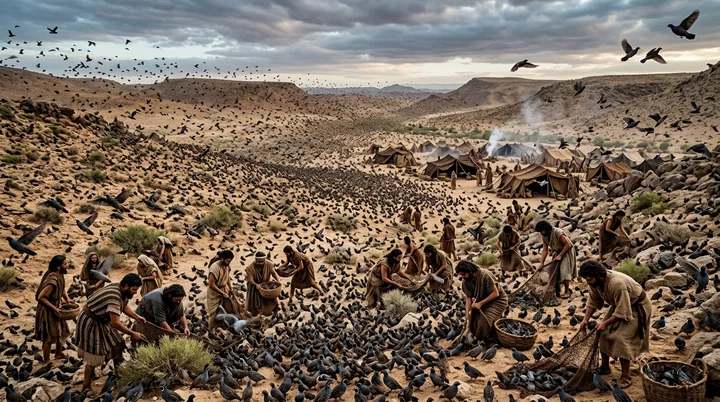
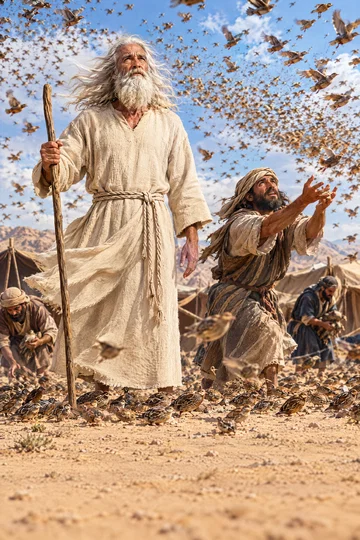
And there went forth a wind from the LORD, and brought quails from the sea, and let them fall by the camp, as it were a day’s journey on this side, and as it were a day’s journey on the other side, round about the camp, and as it were two cubits high upon the face of the earth.
A wind from the Lord brings quail to Israel.
- Exodus 16:2-15
And the whole congregation of the children of Israel murmured against Moses and Aaron in the wilderness:
God provides manna in the wilderness while Israel complains about food.
- Psalms 135:7
He causeth the vapours to ascend from the ends of the earth; he maketh lightnings for the rain; he bringeth the wind out of his treasuries.
Both describe God bringing forth and commanding the wind.
- Psalms 105:40
The people asked, and he brought quails, and satisfied them with the bread of heaven.
Both recount God providing quails and bread from heaven.
- Exodus 16:12-14
I have heard the murmurings of the children of Israel: speak unto them, saying, At even ye shall eat flesh, and in the morning ye shall be filled with bread; and ye shall know that I am the LORD your God.
contrasts first giving a year earlier
- Psalms 78:18-20
And they tempted God in their heart by asking meat for their lust.
Lustful demands and speech against God provoked the sending.
- Numbers 11:19-23
Ye shall not eat one day, nor two days, nor five days, neither ten days, nor twenty days;
God promises to provide Israel with meat.
- Psalms 147:18
He sendeth out his word, and melteth them: he causeth his wind to blow, and the waters flow.
God sends the wind by his power.
- Psalms 106
Praise ye the LORD. O give thanks unto the LORD; for he is good: for his mercy endureth for ever.
Both recount the events of Israel’s deliverance from Egypt.
- Psalms 114
When Israel went out of Egypt, the house of Jacob from a people of strange language;
Both recount God’s deliverance of Israel from Egypt and his mighty acts.
Commentary
Each commentary is drawn from primary sources: the writings of Ellen G. White and Adventist pioneers and periodicals. Each commentary is separate. Its own words are not a quotation; follow the references to read the source passages.
Ellen G. White
13 sources
God by His own power caused an east wind to blow in heaven and brought in the south wind to rain quail and feathered fowl as dust like the sand of the sea in and around the camp to satisfy craving for flesh.Ms 38, 1898, par. 20–21Ms 155, 1899, par. 1–7HLT1 52.3–53.1 He granted this demand after giving bread from heaven and water in the wilderness, though withholding flesh and feeding manna, angels' food, was working for their good to preserve health and lengthen life physically, mentally, and morally and to educate them into correct habits.Ms 38, 1898, par. 20–21Ms 103, 1898, par. 8Ms 155, 1899, par. 1–7 Israel did not believe or trust Him to give the best food, but despised, hated, and rejected manna and lusted and murmured in discontent for the flesh meats of Egypt to which appetite had accustomed them.Ms 38, 1898, par. 20–21Ms 103, 1898, par. 8Ms 155, 1899, par. 1–7 The flesh was given only for a short time in anger and judgment upon gluttony and lust, and while the meat was yet in their mouths wrath came in plague, disease, and death to thousands, slaying the fattest and chosen men.Ms 38, 1898, par. 20–21Ms 155, 1899, par. 1–7HLT1 52.3–53.1 Their course, part of a psalm recounting rich blessings met with poor return, stands as a warning not to forget God the source of strength, complain under trial, or defile the body by lust and self-indulgence, but to stay connected with Him and advance in the divine life.Ms 155, 1899, par. 1–7CT 457.213MR 265.2Ms 96, 1899, par. 21–22ST Nov 11, 1889
Wilderness Provision of Meat
Psalm 78 recounts the rich blessings God bestowed on Israel and the people's poor return for all those benefits.CT 457.213MR 265.2Ms 96, 1899, par. 21–22 God was working for Israel's good by withholding flesh and feeding them instead with manna, the bread from heaven, angels' food.Ms 103, 1898, par. 8Ms 155, 1899, par. 1–7 That was the very best food to preserve health and lengthen life physically, mentally, and morally, for flesh is not man's natural food but produces disease and shortens life.Ms 103, 1898, par. 8Ms 155, 1899, par. 1–7 His purpose in the wilderness was to educate Israel into correct habits so they would be a pure, holy, healthy people.Ms 155, 1899, par. 1–7
Despite this, Israel did not believe in God or trust in His salvation to give them the food that would best preserve health.Ms 38, 1898, par. 20–21Ms 155, 1899, par. 1–7 They despised, hated, and rejected manna, murmured that He could not furnish flesh in the wilderness, and encouraged earthly appetite.Ms 38, 1898, par. 20–21Ms 103, 1898, par. 8Ms 155, 1899, par. 1–7 They were not hungry but lusted, hankered, and murmured in discontent and dissatisfaction for meat and the flesh pots and flesh meats of Egypt to which they had become accustomed.Ms 103, 1898, par. 8Ms 155, 1899, par. 1–7HLT1 52.3–53.1MH 311.2Lt 47a, 1874, par. 21–22 They centered their thoughts on that food and craved food beyond the simple food God had given, just as people do now.Ms 103, 1898, par. 8Ms 155, 1899, par. 1–7
After giving bread from heaven and water in the wilderness, God by His own power caused an east wind to blow in the heaven and brought in the south wind to grant their demand for flesh.Ms 38, 1898, par. 20–21Ms 155, 1899, par. 1–7CH 111.1–2Lt 47a, 1874, par. 21–22 The winds carried quail and feathered fowl in vast abundance, raining flesh upon them as dust and like the sand of the sea to fall in and around their camp, satisfying their craving.Ms 38, 1898, par. 20–21Ms 155, 1899, par. 1–7HLT1 52.3–53.1CH 111.1–2 The flesh was granted only for a short time and in anger and judgment upon their gluttony and lust.Ms 155, 1899, par. 1–7HLT1 52.3–53.1CH 111.1–2MH 311.2 They ate and were filled, but while the meat was yet in their mouths the wrath of God came upon them in plague, disease, and death to thousands, slaying the fattest of them and smiting down the chosen men of Israel, ending in dissension, sickness, and death.Ms 38, 1898, par. 20–21Ms 155, 1899, par. 1–7HLT1 52.3–53.1CH 111.1–2MH 311.2
Lessons Against Lust and Distrust
The winds that brought flesh were set in motion against a background of one part of the people working constantly against a good God.Ms 38, 1898, par. 22 By disobedience they brought themselves into the condition that was the sure result of their own course of action.Ms 38, 1898, par. 22 Under rebuke and chastisement they repented, yet when temptation returned they fell again into self-indulgence and self-gratification.Ms 38, 1898, par. 22 The demand answered by those winds was a craving for food beyond the simple food God had given, an expression of dissatisfaction and indulgence of appetite.Ms 38, 1898, par. 22ST Sep 29, 1881
They were not hungry but lusted, because in Egypt they had become accustomed to flesh food.Ms 155, 1899, par. 1–7 God had withheld flesh because it is not man's natural food but produces disease and shortens life, and He purposed in the wilderness to educate them into correct habits so they would be a pure, holy, healthy people.Ms 155, 1899, par. 1–7 Instead He fed them with the very best food, manna, the bread from heaven, angels' food, which would have preserved health and lengthened life.Ms 155, 1899, par. 1–7 Because they did not believe in God nor trust in His salvation, and murmured that He could not furnish flesh in the wilderness, He gave them their own desire in anger by His own power causing an east wind and a south wind to bring feathered fowl in vast abundance like dust and like sand to fall in and around their camp.Ms 155, 1899, par. 1–7 They ate and were filled, but while the meat was yet in their mouths His wrath came upon them and slew the fattest of them and smote down the chosen men of Israel, and their fate stands as a warning against lust and defiling the body.Ms 155, 1899, par. 1–7
The same dealing shows God to have been the source of Israel's strength, whom they forgot when trials came and turned to complaining.ST Nov 11, 1889 The warning is not to complain and forget God when trials come.ST Nov 11, 1889 The lesson instead is to stay connected with the source of all wisdom and power, to fully receive truth of heavenly origin, to be sanctified through it, and to keep continually advancing in the divine life.ST Nov 11, 1889
Sources
Pioneers and periodicals
17 sources
Psalm 78 recounts Israel's journey from Egypt to the time of David to show God's leading, protecting, redeeming and restoring hand in making them a nation, with Christ Himself present as the Angel of God's presence to teach them the humble and trusting way.ST Jun 11, 1894ST Dec 5, 1911RH Mar 12, 1861ST Mar 25, 1913 The verse declares that by His own power God commanded the heavens and drove an east wind and a south wind to bring quails for flesh when Israel craved more than the simple manna He had divinely provided.ST Sep 29, 1881ST Nov 11, 1889ST Dec 17, 1912ST Jul 4, 1900RH Dec 21, 1905 That craving sprang from unbelief after great wonders, from weariness of God's appointed diet, doubting His goodness and power, looking back to Egypt and murmuring against Him and His leaders, until that murmuring generation wasted away and fell in the wilderness save Caleb and Joshua.ST Apr 22, 1889RH Jul 2, 1857RH Feb 28, 1856RH Sep 14, 1916ST Nov 29, 1883 Their wandering is written for admonition upon whom the ends of the world are come, warning those living in the last days against the same unbelief and against disease from wrong habits of eating and drinking.RH Dec 8, 1910RH Jul 2, 1857RH Sep 14, 1916 God's granting of flesh in displeasure does not prove it right, best, or His original design, any more than His permitting divorce or a king, and He gave their request but sent leanness of soul to warn against complaining in trial, looking back with divided heart, and forgetting the source of strength.ST Nov 11, 1889ST Apr 22, 1889RH May 14, 1867
Words and Historical Setting
Psalm 78 is a song recounting Israel's journeying, giving a brief outline of their history from leaving Egypt to the time of David.RH Mar 12, 1861ST Mar 25, 1913 It covers the leading events from Jacob's return from Padan-aram to the Exodus from Egypt, showing God's providence over His people in the making of a nation.ST Jun 11, 1894 That providence is seen in His leading, protecting, redeeming and restoring hand.ST Jun 11, 1894
The recounting sets forth God's care for Israel in the wilderness as part of teaching them the right, humble and trusting way. Those wonderful deliverances were wrought through Jesus Christ, the Angel of God's presence, who was with His people.ST Dec 5, 1911
The verse declares that God commands the winds, causing the east wind to blow in the heaven and by His power bringing in the south wind.ST Dec 17, 1912ST Jul 4, 1900 This is one example of His control over the natural world.ST Jul 4, 1900 It is proof that He was the source of their strength.ST Nov 11, 1889
The winds thus brought were part of His provision of food for Israel in the wilderness, carrying quail to answer the people's craving for food beyond the simple food He had given them.ST Sep 29, 1881ST Dec 17, 1912 They belong to the account of their dissatisfaction and indulgence of appetite in demanding flesh.ST Sep 29, 1881RH Dec 21, 1905 The manna itself was divine provision, not a natural supply of tamarisk sap.ST Dec 17, 1912 The granted desire for flesh brought disease and leanness of soul.RH Dec 21, 1905
The same control of the winds to aid His servants is seen when the south wind carried Paul and his companions from Troas toward Macedonia.ST Jun 21, 1883 That favorable wind is God's provision for their voyage.ST Jun 21, 1883
Rebellion, Judgment, and Warning
Psalm 78:26 stands in the recounting of Israel's deliverance from Egypt and journey through the desert to the promised land, with their frequent murmurings, rebellions and idolatries and the punishments by which they fell in the wilderness, written for learning and for admonition upon whom the ends of the world are come.RH Jul 2, 1857RH Feb 28, 1856 The root of those provocations was unbelief while God was doing a special work for them, for after seeing His wonders in Egypt and at the Red Sea they doubted His goodness and distrusted His ability to save.RH Jul 2, 1857RH Feb 28, 1856 They were discouraged because of the way, spoke against God and against those He chose to lead, and envied Moses and Aaron and gathered against them.RH Jul 2, 1857 They were made examples when judgment was immediately executed upon Dathan and Abiram, warning that those who do wickedly now will finally share as dreadful a punishment though judgment against an evil work is not speedily executed.RH Jul 2, 1857
On the exodus from Egypt across the wilderness, a journey requiring both endurance and faith to conquer a land densely populated with meat-eaters, God gave them a simple diet and purposely kept flesh from them to fit them for physical endurance.ST Nov 29, 1883 When Israel wickedly lusted for flesh, God sent it to them by wind, but they would have been better off without it.ST Nov 29, 1883 The wind bringing quails describes the second giving of quails, a year after the first giving in the Wilderness of Sin when quails came in the evening before manna fell in the morning.ST Apr 22, 1889 That second giving came after the mixed multitude grew weary of manna and lusted for the fish, cucumbers, melons, leeks, onions and garlic of Egypt, continually looking back with desire for things left behind.ST Apr 22, 1889 They doubted God's promises of a promised land of milk and honey and doubted His power to supply present food, so God gave them their request but sent leanness of soul.ST Apr 22, 1889 Starting the Christian life while looking back with longing shows a divided, double-minded, unstable heart lacking faith and consecration, prizing earth above heaven and temporal food above eternal life.ST Apr 22, 1889
The verse belongs to the telling of the sad and dreary years of the wanderings of the children of Israel in the wilderness when an unceasing train of funerals passed out of the camp.RH Sep 14, 1916 The winding course through the desert sands could be traced by the mounds marking the resting places of that murmuring and unbelieving race.RH Sep 14, 1916 This continued until all the generation of the men of war from twenty years old and upward were wasted out from among the host and their carcasses fell in the wilderness, save Caleb the son of Jephunneh and Joshua the son of Nun.RH Sep 14, 1916 The record of Israel's wilderness experiences is presented as an experience for people living in the last days.RH Dec 8, 1910 It stands as a warning to guard against disease caused by wrong habits of eating and drinking.RH Dec 8, 1910
Doctrine and Daily Application
The permission to eat animal flesh in the desert after the departure from Egypt does not prove that meat eating is right, best, or beneficial, nor that it was God's desire or design, for those who ate incurred His displeasure in the very use.RH May 14, 1867 As divorce was allowed though from the beginning it was not so, and as Israel was allowed to have a king though the request displeased Him, so God at times winked at conditions that were not best or desirable.RH May 14, 1867 Eating flesh was not allowed at first and was never part of the original design, and its use has never been proved beneficial to the human race.RH May 14, 1867
The verse exposes a people who complained when trials came and forgot the source of their strength.ST Nov 11, 1889 The lesson is not to complain and forget God when trials come, but to stay connected with the source of all wisdom and power.ST Nov 11, 1889 Truth of heavenly origin is to be fully received, its receiver to be sanctified through it, and the life to keep continually advancing in the divine life.ST Nov 11, 1889
The winds brought the second giving of quails, a year after the first giving in the Wilderness of Sin when quails came in the evening before manna fell in the morning.ST Apr 22, 1889 That later giving, recorded in Numbers 11, followed the weariness of the mixed multitude with manna and their lusting for the fish, cucumbers, melons, leeks, onions, and garlic of Egypt.ST Apr 22, 1889 They kept looking back with desire for things left behind, doubting the promises of a promised land of milk and honey and doubting present power to supply present food, so their request was granted but leanness of soul was sent with it.ST Apr 22, 1889 To begin the Christian life while looking back with longing is to show a divided, double-minded, unstable heart, lacking faith and consecration, prizing earth above heaven and temporal food above eternal life.ST Apr 22, 1889
Sources