Romans 2:19
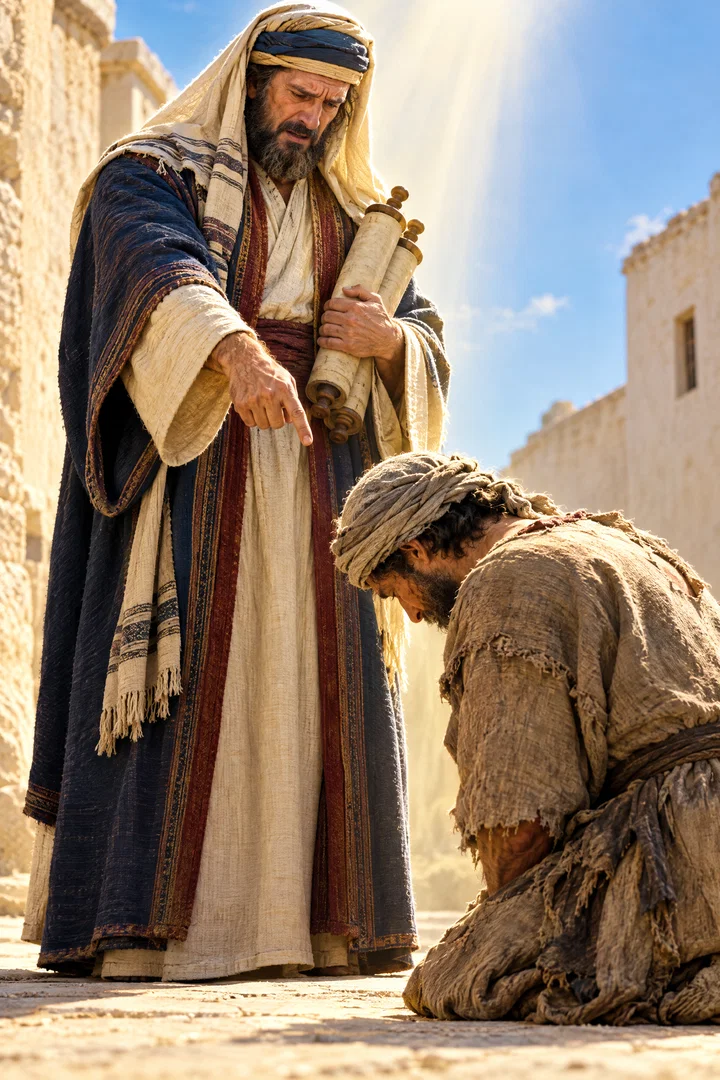
And art confident that thou thyself art a guide of the blind, a light of them which are in darkness,
Translations
And are confident that you yourself are a guide of the blind, a light of them which are in darkness,
And art confident that thou thyself art a guide of the blind, a light of them which are in darkness,
and art confident that thou thyself art a guide of the blind, a light of them which are in darkness,
And art confident that thou thyself art a guide of the blind, a light of them who are in darkness,
Revised Version, American Standard Version
and art confident that thou thyself art a guide of the blind, a light of them that are in darkness,
and hast confidence that thou thyself art a leader of blind ones, a light of those in darkness,
and hast confidence that thou thyself art a leader of the blind, a light of those who [ are] in darkness,
Art persuaded, moreover, that, thou thyself, art—a guide of the blind, a light of them that are in darkness,
if you are convinced that you are a guide for the blind, a light for those in darkness,
And you are convinced that you are a guide for the blind, a light for those in darkness,
and are confident that you yourself are a guide of the blind, a light to those who are in darkness,
In the belief that you are a guide to the blind, a light to those in the dark,
And persuadest thy selfe that thou art a guide of the blinde, a light of them which are in darkenesse,
Douay-Rheims (Challoner revision)
Art confident that thou thyself art a guide of the blind, a light of them that are in darkness,
Pictures
Cross-references
- Romans 3:10-12
As it is written, There is none righteous, no, not one:
Both texts expose the contrast between claimed guidance and humanity’s universal sinfulness.
- Romans 2:13
( For not the hearers of the law are just before God, but the doers of the law shall be justified.
Both show what the law requires.
- Romans 2:25-27
For circumcision verily profiteth, if thou keep the law: but if thou be a breaker of the law, thy circumcision is made uncircumcision.
Gentile keepers of the law are contrasted with Jewish breakers.
- Isaiah 6:9-10
And he said, Go, and tell this people, Hear ye indeed, but understand not; and see ye indeed, but perceive not.
Isaiah prophesies Israel’s blindness and failure to perceive.
Commentary
Each commentary is drawn from primary sources: the writings of Ellen G. White and Adventist pioneers and periodicals. Each commentary is separate. Its own words are not a quotation; follow the references to read the source passages.
Ellen G. White
7 sources
The verse portrays those called Jews who rest in the law and boast in God, who know His will and approve excellent things because instructed out of the law, having the form of knowledge and of the truth in the law, and who are confident they themselves are a guide of the blind, a light to those in darkness, an instructor of the foolish and a teacher of babes.Ms 47, 1901, par. 21–24Lt 9, 1892, par. 48–57Ms 52, 1898, par. 23–27 That confidence belongs to people who know the law and see themselves as guides for those in spiritual darkness.RH Jan 7, 1902 It is the confidence of religious leaders who regard themselves as guides while failing to respond rightly to entrusted truth.DA 61.2
The confidence was meant to rest on a sacred entrusting, for God committed to His Israel the most sacred truth ever committed to mortals and made His people repositories of His holy law, so that the light of His truth might shine to those living in the darkness of error in an evil time when iniquity abounds.Ms 10, 1899, par. 8 Yet the Jewish teachers had perverted God's law, so that even those most zealous for the law were breaking it themselves.Ms 132, 1902, par. 16 The same condition is having great light and great opportunities, line upon line and precept upon precept, while still cherishing idols in families and churches in small as well as large matters.Ms 52, 1898, par. 23–27 Such idols include pride in apparel, speech and deportment, which separate from God as the golden calf separated Israel.Ms 52, 1898, par. 23–27
The failure appears when priests extol their own piety and condemn Gentiles as sinners, yet the supposedly heathen wise men stand higher in God's sight and the guardians of Scripture show no sympathy for their search for the Messiah.DA 61.2 Merely hearing and acknowledging the authority of the law is not enough, for God requires fulfilling its requirements.Lt 9, 1892, par. 48–57 This includes the commandments touching the tongue that forbid irreverence toward God and uncharitable speech against neighbor, so speech gives evidence whether the law is treasured in the heart, for not the hearers of the law are just before God but the doers shall be justified.Lt 9, 1892, par. 48–57Ms 52, 1898, par. 23–27
The confidence becomes guilt and condemnation when one teaches another without teaching self, preaching against stealing, adultery and idolatry yet stealing, committing adultery and committing sacrilege.Ms 47, 1901, par. 21–24Lt 9, 1892, par. 48–57 Through breaking the law in this way the teacher dishonors God and causes His name to be blasphemed among the Gentiles and others to speak against Him.Ms 47, 1901, par. 21–24RH Jan 7, 1902 True standing is not outward in the flesh by letter and circumcision but inward, a Jew inwardly with circumcision of the heart in the spirit whose praise is not of men but of God.Ms 47, 1901, par. 21–24Lt 9, 1892, par. 48–57
In the perils of the last days no man is given the work of numbering Israel, reading the heart, or measuring ministering brethren, for the one found fault with may be more righteous before God.Ms 47, 1901, par. 21–24 The lesson therefore is to examine and correct one's own life rather than judge a brother.Ms 47, 1901, par. 21–24RH Jan 7, 1902 Each must take heed to self, crucify hasty temper and self-exaltation, put no stumbling block in a brother's way, and work out his own salvation, teaching self first with zeal according to knowledge.Ms 47, 1901, par. 21–24Ms 52, 1898, par. 23–27 Truth received in the heart transforms mind, heart and character and is shown in modest apparel distinct from the world and in good works, while reproof that brings only shame without repentance condemns, and those who claim the sacred trust while working iniquity disgrace the religion of Christ and God will not much longer endure them but will expose them.Ms 52, 1898, par. 23–27Ms 10, 1899, par. 8
Sources
Pioneers and periodicals
61 sources
Paul addresses the one called a Jew who rests on the law and knows God's will from instruction in it, and who is confident that he himself is a guide of the blind and a light to those in darkness because he has in the law the form of knowledge and of the truth.ST Apr 10, 1884RH Jan 19, 1860RH Feb 27, 1900ST Jan 28, 1886 The law in view is God's written moral law, the Ten Commandments including the Sabbath, holy and just and true and expressing His character and will.ST Apr 10, 1884RH Jan 19, 1860ST Jan 28, 1886ST Dec 20, 1905ST Apr 22, 1880 The words are reproof of those who boast in that law and teach others to keep it while breaking it themselves, stealing and committing adultery and dishonoring God while claiming to guide others.RH Jan 19, 1860RH Apr 8, 1909ST Sep 27, 1910ST Dec 12, 1895RH Dec 23, 1915 Merely possessing and hearing and teaching the law does not excuse transgression, for there is one rule of righteousness for Jew and Gentile alike, with all judged by works and all accountable to its judgment.RH Jan 19, 1860RH Feb 27, 1900RH Dec 23, 1915ST Jun 1, 1882RH Feb 18, 1873 That confidence belongs not to the professed Jew only but to every professed Christian who thinks himself qualified to instruct others, for to hold the truth as outward form without Christ leaves the life unchanged, while receiving Christ establishes the law in the heart through faith.ST Aug 6, 1912ST Oct 1, 1896ST Dec 12, 1895ST Jun 18, 1896
Context and Address
Romans 2:19 belongs to Paul's address to the one called a Jew, who bears that name, rests upon the law, glories in God, knows His will, and approves excellent things through instruction out of the law.ST Apr 10, 1884RH Feb 27, 1900ST Dec 12, 1895 It describes his confidence that knowledge of God's law makes him a guide for the blind and a light for people in darkness, connecting that confidence with knowing God's will and having instruction and knowledge of the truth in the law.ST Apr 10, 1884RH Feb 27, 1900ST Apr 25, 1900 The verse stands within the contrast between knowledge of right and wrong learned from the law that forbids theft and adultery as a law of truth, and responsibility to live by the law taught while seeking eternal life.ST Apr 10, 1884RH Jan 19, 1860 Jewish standing before God therefore depends not on ancestry or possession of the law but on character measured by obedience to it.RH Feb 27, 1900
The confidence stated is that he himself is a guide of the blind and a light to those in darkness, joined with being an instructor of the foolish and a teacher of babes, because he has in the law the form of knowledge and of the truth.ST Dec 12, 1895ST Dec 12, 1895ST Dec 12, 1895 After the case of the heathen and then the case made general, the charge becomes direct and personal.ST Dec 12, 1895 This confidence rests on the law's perfect pattern of knowledge and truth, which expresses God's character, teaches truth, and enables sound judgment between good and evil and between excellent things.RH Jan 19, 1860ST Jan 28, 1886ST Apr 25, 1900 The surrounding questions about teaching self, stealing, adultery, sacrilege, and dishonoring God by breaking the law while boasting of the law prove he teaches another without teaching himself, so that the name of God is blasphemed among the Gentiles through him.RH Jan 19, 1860ST Dec 12, 1895ST Jul 1, 1880ST Dec 12, 1895 Possessing and teaching that moral law, identified as the Ten Commandments and as God's will, does not excuse breaking it.RH Jan 19, 1860ST Jan 28, 1886ST Jul 1, 1880
The epistle was written by Paul in A.D. 58 from Corinth and sent by Phebe from Cenchrea to the Christian church at Rome, made up of Gentiles who had embraced the gospel and Jews who believed in Jesus as Messiah yet kept many prejudices.RH Oct 19, 1916 Within his purpose to instruct converts in the truths of the gospel, to strengthen their faith, and to correct misapprehensions arising from the mixed membership, the verse states the confident Jewish claim to teach and enlighten others.RH Oct 19, 1916 That misapprehension lay where Jewish believers hesitated to receive uncircumcised Gentile converts as equals and Gentile believers despised Jewish ceremonial scruples, showing that the rites and ceremonies of the Mosaic law are ended by the gospel and that salvation is open equally to Jew and Gentile.RH Oct 19, 1916 The verse is part of Paul's appeal to the believers in Rome written years and years after the resurrection of Christ, in which he still stands by the law, admitting no change or revocation, calling for obedience to its letter and spirit while urging faith in Jesus and ever insisting on the binding claims of the law.ST May 20, 1908
The Law in View
The law in question is God's written moral law, the Ten Commandments, not the ceremonial law of Moses and not merely abstract principles.RH Jan 19, 1860ST Dec 20, 1905ST Apr 22, 1880RH Aug 18, 1863RH Apr 21, 1851 Its commands are identified by the prohibitions against stealing and adultery with sacrilege and like precepts, including the fourth commandment concerning the Sabbath, and it is the law of which circumcision profits only if kept.RH Jan 19, 1860ST Dec 20, 1905ST Apr 22, 1880RH Aug 18, 1863ST Mar 24, 1887 Possessing and teaching that law gives knowledge and truth and grounds the claim to guide the blind and bring light to those in darkness, yet it does not excuse breaking it.RH Jan 19, 1860ST Dec 20, 1905ST Apr 22, 1880RH Aug 18, 1863
The law is a law of truth and a perfect pattern of knowledge and truth that expresses God's character, teaches truth, and enables sound judgment between good and evil.ST Apr 10, 1884ST Jan 28, 1886ST Jun 18, 1894 It is identical with the will and Father's will of God in its value, universality, and holiness, holy and just and true, and the divine will is learned only in it.ST Apr 10, 1884ST Aug 5, 1875ST Jun 18, 1894ST Aug 21, 1884 Obedience to the law that forbids theft and adultery is required in seeking eternal life, human works must conform to it because all shall be rewarded according to works, and keeping it honors God's government and authority.ST Apr 10, 1884ST Jan 28, 1886ST Aug 21, 1884
The law discussed is God's written moral law, distinct from the gospel.RH Jul 12, 1870 The reference to guides of the blind and lights for those in darkness belongs to the address to people who rested in that law, not to a teaching that nature gives people the gospel.RH Jul 12, 1870
What is possessed is only the outward form of knowledge and of the truth in the law when separated from Christ, without its essence, deeper meanings, heart, and life.ST Oct 1, 1896ST Sep 4, 1907ST Jun 18, 1894ST Nov 8, 1910 The law outside Christ considered merely as a code is a dead form, while Christ embodies what the law says and makes it living reality, having the law in His heart with His life as the law in living characters.ST Jun 18, 1894ST Jul 9, 1896 Receiving Christ gives the life of God's character to reflect, while following the law as external form without seeing its spiritual character produces formalism.ST Sep 4, 1907ST Jul 9, 1896
The law's principles were known among the nations through moral principles handed down by tradition reaching back to a revelation made to and for the whole human race, with its work written in hearts through conscience, even though they did not receive it at Mount Sinai as Israel did.RH Mar 7, 1871 Remaining ignorance is wilful rejection, because the nations once knew God and did not glorify Him as God and did not like to retain God in their knowledge, and putting away the knowledge of God and selfishly forgetting His word and obligation does not impair the validity of the word nor lessen obligation, since a moral government must make its requirements known to those answerable to it and citizens remain bound even when they wilfully stay ignorant.RH Mar 7, 1871
Profession Without Obedience
The verse belongs to a rebuke of those who boast in God's law and undertake to teach others to keep it while breaking it themselves, teaching another without teaching themselves.RH Apr 8, 1909ST Sep 27, 1910ST Dec 12, 1895ST Nov 25, 1908ST Dec 20, 1905 The proof lies in the questions that follow about stealing and committing adultery and committing sacrilege, and about dishonoring God by breaking the law while boasting of the law.RH Jan 19, 1860ST Dec 12, 1895ST Dec 20, 1905ST Apr 22, 1880RH Mar 17, 1874 That charge reaches professed keepers who take what God has set apart for His service, so their conduct makes their profession false and brings dishonor upon God's name before those who observe it.RH Apr 8, 1909ST Dec 12, 1895ST Nov 25, 1908 Through such inconsistency the name of God is blasphemed among the Gentiles.RH Jan 7, 1902ST Dec 12, 1895
Possessing and hearing and teaching that law does not excuse breaking it, for the law in view is the moral law with its commands against stealing and adultery.RH Jan 19, 1860ST Dec 20, 1905ST Apr 22, 1880RH Mar 17, 1874RH Nov 22, 1853 Standing before God depends not on ancestry or possession of the law but on character measured by obedience, so hearing without keeping leaves guilt on the same level as the Gentiles.RH Feb 27, 1900ST Oct 1, 1885RH Nov 22, 1853 The claim to guide the blind and enlighten darkness does not exempt anyone from shared accountability under its judgment, since Jews like Gentiles are accountable to the same law and are sinners under it.RH Feb 27, 1900ST Oct 1, 1885RH Nov 22, 1853 The claim is empty if the truth is only on the lips, for the law must guide the teacher's own conduct, and outward religious standing does not make him faithful when his life contradicts what he teaches.RH Dec 23, 1915RH Mar 17, 1874 Obedience to the law is obedience to the truth and is connected with receiving eternal life.RH Mar 17, 1874
Teaching others has power only when it is lived from personal experience, for a bad experience undermines even the teacher's best efforts, while teaching that expresses the heart's own experience has power.RH Jan 7, 1902RH Dec 23, 1915 Teachers must therefore practice what they teach, because breaking the law dishonors God and causes others to speak against Him.RH Jan 7, 1902RH Dec 23, 1915 The lesson is to examine and correct one's own life rather than judge a brother.RH Jan 7, 1902ST Apr 22, 1880
A person may regard himself as a guide to the blind and a light to those in darkness because he knows the truth, yet remain unchanged by it and share the same sinful nature as the world.RH Mar 24, 1910ST Mar 20, 1907ST Aug 19, 1897 Knowing the truth in form only does not give it a place in the affections or allow it to sanctify the life.RH Mar 24, 1910ST Mar 20, 1907 It can remain only outward, an outfit without infit, an ear-through-ear-into-air religion rather than ear-to-heart, pleasant sounds to which no sense is given.RH Mar 24, 1910 Greater privilege brings greater responsibility, so inconsistency between claim and conduct makes the sin more serious.RH Mar 24, 1910ST Nov 4, 1880
Jew and Gentile Alike
Israel held God's law, oracles and testimony for a time, and through them those gifts were handed down to others.RH Dec 13, 1853RH Aug 23, 1870ST Jul 1, 1875RH Dec 21, 1869RH Dec 24, 1861 That charge as keepers for a season never made the moral law exclusive to the Jewish people as owners.RH Aug 23, 1870ST Jul 1, 1875RH Dec 21, 1869RH Dec 24, 1861 The people of God including those whose hearts are circumcised are the true Israel, yet changing who belongs to Israel does not change God's moral law.RH Dec 21, 1869
There is one law for all people, a rule of righteousness for Gentiles as well as Jews and the basis of the Abrahamic covenant, and Christ as judge judges by that law.ST Jun 1, 1882RH Feb 18, 1873 Romans 2 proves directly that Gentiles sustain the same relation to the law that the Jews did, having its work written in their hearts even without the written law, and are condemned by it as violators when they break it.RH Feb 3, 1852ST Aug 12, 1875RH May 27, 1875 Together with Romans 3 and Galatians 3 it shows Jews and Gentiles alike are under sin and accountable to judgment, exposing wrongdoing in those who claimed knowledge while violating it.RH May 27, 1875RH Mar 1, 1864 The ten precepts are therefore binding on Gentiles and not merely an obligation of the old covenant, contradicting the claim drawn from the silence of Acts 15 that they are not binding on Gentiles, and they are the law of Christ established by Christ and the apostles.ST Aug 12, 1875RH May 27, 1875
God is not partial and favors no people more than others, with no special blessings for one nation whether called Jews, Israelites, Anglo-Saxons, Englishmen or anything else that He does not have for others.ST Jul 23, 1896 He has no special regard for literal descendants of Jacob, so descent and religious advantages do not make them more acceptable to God or give a claim apart from faith in Christ.RH Mar 13, 1856RH Jan 19, 1860 His purposes and promises are fulfilled without restoring the division between Jews and Gentiles that Christ broke down.RH Jan 19, 1860 To claim such national favoritism is a direct denial of the gospel of grace whose call is whosoever.ST Jul 23, 1896 Only the promise obtains the inheritance, the same subject carried out in Romans 9-11, and Israel after the flesh without Christ's righteousness is as Gentiles, separate from Christ, while obedience is the only mark of an Israelite indeed and an heir of God.ST Jul 9, 1896ST Jul 9, 1896 Law-breaking makes circumcision uncircumcision, for Israel did not attain to the law of righteousness because they did not accept Christ through whom alone its righteousness can be obtained.ST Jul 9, 1896
In contrast to the Jew who rejected Christ yet was confident he was a guide of the blind and a light to those in darkness while making great pretensions about the law and transgressing it himself, Gentiles who accepted Christ through faith become doers of that same law, keeping its righteousness and fulfilling it while unbelieving Jews continually break it, proving the Ten Commandments bind converted Gentiles and not Jews only.ST Sep 27, 1910 The requirement that circumcision profits only if the law is kept identifies the law Paul means and applies to Abraham, concluding that he kept the Sabbath including the seventh day.ST Oct 7, 1880
Even the heathen who know not God have had a fair chance in this life, so no probation after death is needed or just.ST Jul 12, 1883 The invisible things of God are plainly manifest from creation and may be learned from things made, leaving them without excuse.ST Jul 12, 1883 Those who do not recognize the Creator are in that condition because they chose not to retain God in knowledge but followed their own desires, and to grant a second probation would lower God's government and compromise with sin while only making hardened hearts more obdurate.ST Jul 12, 1883
The threatened punishment for sin declared in Romans 2 is death by complete extinction of life, not unending conscious misery, for where Paul would have the most fitting occasion to picture eternal torture if it were true he only declares they are worthy of death.RH Jan 7, 1873 No one completely obeys the law because human weakness prevents the law from making fallen people perfect, and the law exposes transgression and guilt.ST Sep 27, 1883 That law held by the Jew is the law of Ten Commandments, the form of truth teaching the will of God, pointing out sin and condemning transgressors, and therefore it is the law by which no flesh is justified and which has no power to justify a sinner.ST Aug 26, 1897ST Aug 21, 1884 Yet all shall be rewarded according to works, keeping it honors God's government and authority, and forgiveness of past sin makes prevention of future sin equally necessary.ST Aug 21, 1884
Faith and Present Application
The law held in outward form by the one confident of guiding the blind and lighting those in darkness is confirmed by Christ's teaching and by His life and death, and it is established in the Christian's heart through faith.ST Aug 6, 1912 That same possession identifies the Father's will with God's law, so that Jesus' mission stands as a declaration of allegiance to that law.ST Aug 5, 1875 The Father's law is therefore the standard by which the Saviour's doctrines are tested.ST Aug 5, 1875RH Mar 29, 1864
The confidence of being a guide of the blind and a light to those in darkness is not to be set aside as belonging only to a professed Jew.ST Dec 12, 1895 It belongs to professed Christians, to everyone who professes to know the Lord no matter by what name he is called, and to everyone who thinks himself fully qualified to instruct others in the way of the Lord.ST Dec 12, 1895 At heart all men are the same, and all are to be judged by one and the same standard, so that knowledge and high profession do not in themselves commend anyone to God.ST Jun 18, 1896 Obedience to God's law is the only mark of an Israelite indeed and an heir of God.ST Jun 18, 1896
That outward possession can remain an outfit without infit, an ear-through-ear-into-air religion rather than ear-to-heart, pleasant sounds to which no sense is given.RH Mar 24, 1910 Like Israel's lighted camp beside Egypt's felt darkness, and like Judas dipping in the same dish with Jesus, the blind spot lies next to best vision and the hour nearest light is darkest.RH Mar 24, 1910 To be bodily beside Christ with no Christ inside brings no hope of glory but shame as great as the opportunity for glory.RH Mar 24, 1910 The depth and force of the fall are measured from its height.RH Mar 24, 1910
Sources