Song of Solomon 1:5
I am black, but comely, O ye daughters of Jerusalem, as the tents of Kedar, as the curtains of Solomon.
Translations
I am black, but comely, O you daughters of Jerusalem, as the tents of Kedar, as the curtains of Solomon.
King James Version, Webster Bible, Revised Version
I am black, but comely, O ye daughters of Jerusalem, as the tents of Kedar, as the curtains of Solomon.
I am black, but comely, O ye daughters of Jerusalem,
As the tents of Kedar, as the curtains of Solomon.I am black, but comely,
O ye daughters of Jerusalem,
As the tents of Kedar,
As the curtains of Solomon.Dark [am] I, and comely, daughters of Jerusalem, As tents of Kedar, as curtains of Solomon.
I am black, but comely, daughters of Jerusalem, As the tents of Kedar, As the curtains of Solomon.
[SHE] Swarthy, I am but comely, ye daughters of Jerusalem. [THEY] Like the tents of Kedar, like the curtains of Solomon.
Berean Standard Bible, Majority Standard Bible
I am dark, yet lovely, O daughters of Jerusalem,
like the tents of Kedar, like the curtains of Solomon.I am dark, but lovely,
you daughters of Jerusalem,
like Kedar’s tents,
like Solomon’s curtains.I am dark, but fair of form, O daughters of Jerusalem, as the tents of Kedar, as the curtains of Solomon.
Regard ye me not because I am blacke: for the sunne hath looked vpon mee. The sonnes of my mother were angry against mee: they made me the keeper of ye vines: but I kept not mine owne vine.
Douay-Rheims (Challoner revision)
I am black but beautiful, O ye daughters of Jerusalem, as the tents of Cedar, as the curtains of Solomon.
Pictures
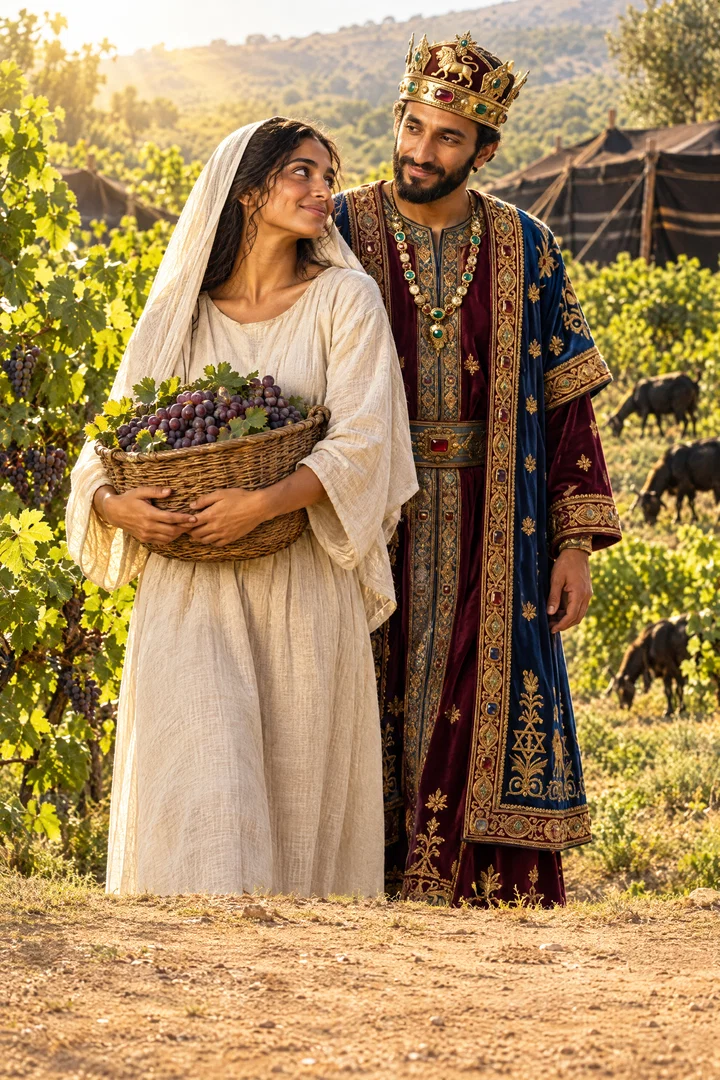
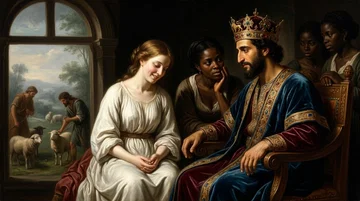
Commentary
Each commentary is drawn from primary sources: the writings of Ellen G. White and Adventist pioneers and periodicals. Each commentary is separate. Its own words are not a quotation; follow the references to read the source passages.
Pioneers and periodicals
9 sources
The book is an Oriental love poem written in vivid, warm imagery and in the figurative language of the East, regarded as a parable picturing Christ and His church.ST May 24, 1910ST Jul 29, 1908ST Sep 15, 1909 The comparison to the tents of Kedar refers to a dark appearance, for those tents were black and made of goats' hair, a familiar feature of Bedouin life east of the Jordan.RH May 20, 1902 The speaker is the church addressing the daughters of Jerusalem, who represent nominal churches.RH Oct 30, 1860
The verse presents Christ as the heavenly Bridegroom and the pure church as His bride, showing His wonderful love and their close and enduring union, with Solomon's experiences serving as types of Christ and the church.RH May 11, 1916ST May 24, 1910ST Jul 29, 1908ST Sep 15, 1909 She is darkened in condition yet comely, and will come to a state of perfection and favor in God's sight.RH Oct 30, 1860 From Abraham to the present the church's answering love is often unfaithful and unsteady, so her countenance is at one time dark like the tents of Kedar and at another beautiful like the daughters of Jerusalem and fair like the curtains of Solomon, proving her variable as the wind and changeable as the weather, carried about by the slightest circumstances.ST May 24, 1910RH Jun 11, 1901
The verse also portrays the spiritual experience of a believing, loving soul, which grows comelier in Christ's sight as it draws nearer to communion with Him while appearing blacker, that is less attractive, to the world, so that favor with God may bring disfavor from worldly people and shining in God's sight matters more than worldly approval.RH May 11, 1916RH Jun 4, 1857 Its blackness and beauty express a condition that can be transformed, with blackness becoming beauty, applied to the longing for Christ to make a person holy.RH Aug 14, 1868
Sources