Song of Solomon 1:8
If thou know not, O thou fairest among women, go thy way forth by the footsteps of the flock, and feed thy kids beside the shepherds’ tents.
Translations
If you know not, O you fairest among women, go your way forth by the footsteps of the flock, and feed your kids beside the shepherds’ tents.
King James Version, Revised Version
If thou know not, O thou fairest among women, go thy way forth by the footsteps of the flock, and feed thy kids beside the shepherds’ tents.
KJV Cambridge Paragraph Bible, American Standard Version
If thou know not, O thou fairest among women,
Go thy way forth by the footsteps of the flock,
And feed thy kids beside the shepherds’ tents.If thou knowest not, O thou fairest among women, go forth by the footsteps of the flock, and feed thy kids beside the shepherds tents.
If thou knowest not, O fair among women, Get thee forth by the traces of the flock, And feed thy kids by the shepherds' dwellings!
If thou know not, thou fairest among women, Go thy way forth by the footsteps of the flock, And feed thy kids beside the shepherds' booths.
[HE] If thou know not of thyself, most beautiful among women! get thee forth in the footsteps of the flock, and pasture thy kids by the huts of the shepherds. …
Berean Standard Bible, Majority Standard Bible
If you do not know, O fairest of women,
follow the tracks of the flock,
and graze your young goats
near the tents of the shepherds.If you don’t know, most beautiful among women,
follow the tracks of the sheep.
Graze your young goats beside the shepherds’ tents.If you have not knowledge, O most beautiful among women, go on your way in the footsteps of the flock, and give your young goats food by the tents of the keepers.
I haue compared thee, O my loue, to the troupe of horses in the charets of Pharaoh.
Douay-Rheims (Challoner revision)
If thou know not thyself, O fairest among women, go forth, and follow after the steps of the flocks, and feed thy kids beside the tents of the shepherds.
Pictures
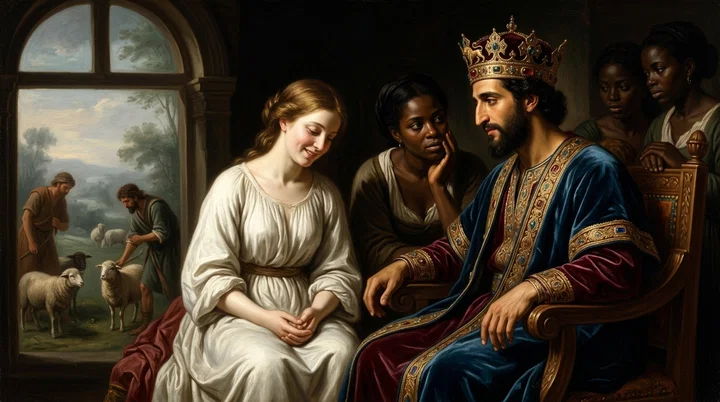
Commentary
Each commentary is drawn from primary sources: the writings of Ellen G. White and Adventist pioneers and periodicals. Each commentary is separate. Its own words are not a quotation; follow the references to read the source passages.
Pioneers and periodicals
6 sources
The verse comes from one of the one thousand and five songs or poems written by Solomon.ST May 24, 1910 The book is an Oriental love poem formed as a dialogue between various parties and filled with vivid, warm, Oriental imagery.ST May 24, 1910ST Sep 15, 1909 It is a poetical picture of Christ as the heavenly Bridegroom and the church as His bride, with the beloved and her companions to be read as pictures of Christ and the church.RH May 11, 1916ST May 24, 1910ST Sep 15, 1909 It also portrays the spiritual experience of a believing, loving soul through the bride's love for the king.RH May 11, 1916 It shows His wonderful love and hers in response, though hers is often wanting in faithfulness and constancy.ST May 24, 1910 It is to be read alone with God while keeping its picture of Christ and His church in mind.ST May 24, 1910
The verse is Christ's answer to the church, directing her to go forth by the footsteps of the flock and feed her young beside the shepherds' tents.RH Oct 30, 1860 The footsteps of the flock present a path to follow, where walking in the steps of faithful people gives practical examples of meekness and shows its comfort when tested.RH Apr 10, 1866 Following the flock's footsteps means staying on the path followed by God's people, which is the historic observance of the seventh-day Sabbath followed by the saints from the beginning and interrupted only by human presumption and neglect.RH Nov 1, 1853
Sources