Translations
American King James Version, Bible in Basic English
For, see, the winter is past, the rain is over and gone;
King James Version, Revised Version
For, lo, the winter is past, the rain is over and gone;
For lo, the winter is past,
The rain is over and gone;For lo, the winter is past, the rain is over and gone.
For, lo, the winter is past;
The rain is over and gone;For lo, the winter hath passed by, The rain hath passed away — it hath gone.
For behold, the winter is past, The rain is over, it is gone:
For lo, the winter, is past,—the rain, is over, [and] gone;
Berean Standard Bible, Majority Standard Bible
For now the winter is past;
the rain is over and gone.For behold, the winter is past.
The rain is over and gone.For beholde, winter is past: the raine is changed, and is gone away.
Douay-Rheims (Challoner revision)
For winter is now past, the rain is over and gone.
Pictures

Commentary
Each commentary is drawn from primary sources: the writings of Ellen G. White and Adventist pioneers and periodicals. Each commentary is separate. Its own words are not a quotation; follow the references to read the source passages.
Ellen G. White
2 sources
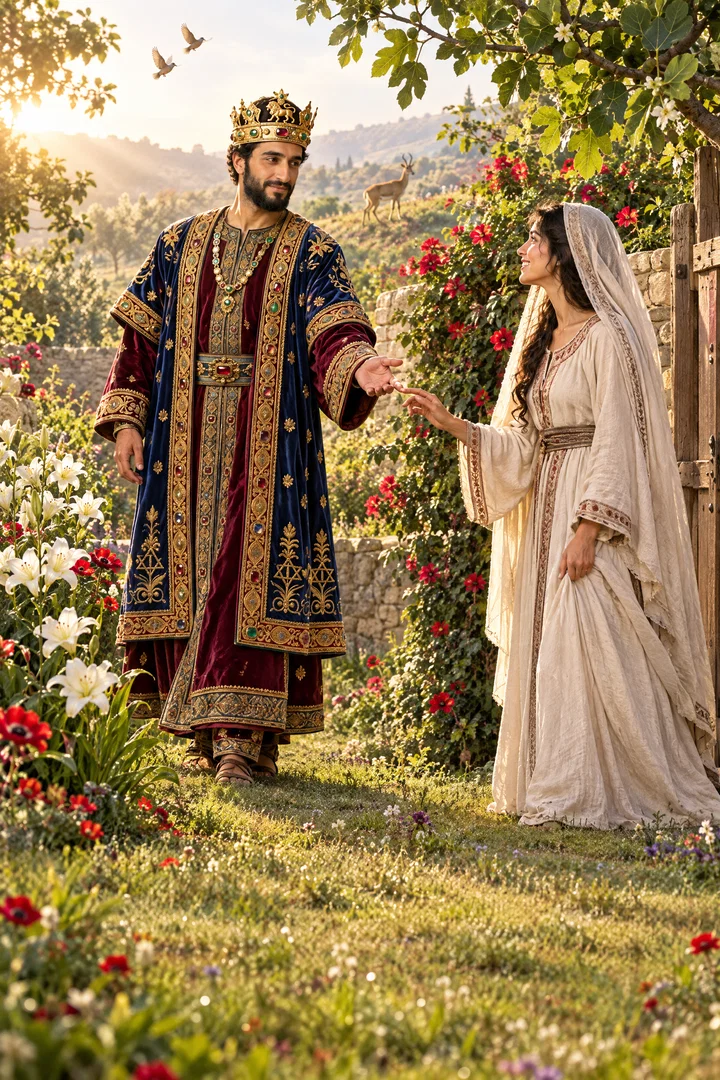
The declaration marks the arrival of spring, when winter has ended and the rainy season has passed.ST Dec 21, 1915PP 537.3 It belongs to a poetic picture of renewed life breaking forth with the coming of spring.ST Dec 21, 1915 The scene is set after winter is past and the latter rain is over, at the fresh beginning of spring.PP 537.3
The rain that is finished is the latter rain, whose ending opens that fresh spring beginning.PP 537.3 That season is the season of the Passover in Abib, corresponding to late March and early April.PP 537.3
Sources
Pioneers and periodicals
20 sources
The verse announces that winter is finished and the rainy season is over and gone, marking the arrival of spring as a season of renewal and growth when nature awakens and the earth blooms and flourishes.RH May 11, 1916RH Apr 29, 1909RH Jun 8, 1916 It belongs to a poetic picture of Christ and His church in warm figurative language, showing His love for her and her response, which is often wanting in faithfulness and constancy.ST May 24, 1910ST Jul 29, 1908ST Sep 15, 1909 The passing of winter and rain, followed by the signs of spring, is a promised sign of the Bridegroom's approach, pointing to the Lord's return for which the church waits in longing and counts the days while watching and working faithfully.ST Mar 29, 1883RH Dec 26, 1865RH Jul 10, 1913 The ending of winter illustrates the hope that the curse of the earth and the effects of the fall will also pass, leaving the whole earth in an eternal spring of perpetual verdure where sorrow and danger are gone and everlasting joy begins.RH Feb 11, 1862RH May 20, 1862 The returning flowers of spring point to the resurrection and the hope of immortality.RH Feb 9, 1860
Spring Setting and Imagery
The cold season is finished and the rainy season is over and gone, and that ending marks the arrival of spring.ST Dec 21, 1915RH May 11, 1916RH Apr 29, 1909RH Jun 8, 1916 It is a season of change, renewal and growth, when nature awakens and the earth begins to bloom and flourish.RH May 11, 1916RH Apr 29, 1909RH Jun 8, 1916 The picture is poetic, portraying renewed life breaking out with the coming of spring.ST Dec 21, 1915ST Feb 8, 1905ST Feb 10, 1881
The fuller spring scene brings buds, flowers and new growth appearing on the earth.ST Feb 8, 1905 Flowers open and trees and vines put forth their growth, as seen in Galilee at that season.ST Feb 8, 1905ST Feb 10, 1881 The change of seasons and the life and fruitfulness of the earth stand under God's care and command.ST Feb 8, 1905 The almond with its early blossoms gave notice that winter was passing and that flowers and birdsong would soon follow, so the image carries the welcome nearness of spring.RH Aug 8, 1912
The budding fig tree marks the end of the winter rains and the return of summer.ST Nov 22, 1910 In Syria that change of season is dependable, coming without being stopped or altered once it has been announced.ST Nov 22, 1910 The picture therefore conveys certainty and shows how signs can declare that an announced event is near.ST Nov 22, 1910 This is the only passage that could suggest recognizing winter by the budding of trees as summer comes, yet it does not teach that winter is known from summer only by that sign.ST Jul 17, 1907
Christ and His Return
The Song is a poetic picture and parable of Christ and His church, told in the warm figurative language of the East.ST May 24, 1910ST Jul 29, 1908ST Sep 15, 1909 It sets forth Christ's love for His church together with the church's response to that love, within a spring scene where winter and rain pass away and a new season arrives.ST May 24, 1910ST Jul 29, 1908ST Sep 15, 1909 That response is often wanting in faithfulness and constancy.ST May 24, 1910
The passing of winter and rain, followed by the signs of spring, is a promised sign of the Bridegroom's approach.ST Mar 29, 1883RH Dec 26, 1865RH Jul 10, 1913 Applied to the church, it points to the Lord's return, for which she waits in longing and counts the days until the change to renewal comes.ST Mar 29, 1883RH Dec 26, 1865 The bride eagerly counts the days until this sign of the promised return appears, and while waiting she watches and works faithfully for Him.RH Jul 10, 1913
Future Hope and Application
The passing of winter and rain is a picture of temporary conditions giving way to renewed life, showing that the curse upon the earth and the effects of the fall will also pass until the whole earth is left in an eternal spring of perpetual verdure.RH Feb 11, 1862 The ending of winter and rain pictures a time of adversity passing, for after the earthly sojourn and the time of indignation the saints will enter the spring of Paradise restored, where sorrow and danger are gone and everlasting joy begins.RH May 20, 1862 The arrival of spring after winter and rain is seen in the returning flowers, which point to the resurrection and the hope of immortality.RH Feb 9, 1860
The passing of winter also describes the present advance of God's truth as a change of spiritual climate, in which the moral darkness overspreading the true and honest in heart is fast clearing away.RH Nov 5, 1872 This clearing marks God's presence with His people and the rapid spread of His truth through the length and breadth of the earth, gathering a few here and a few there into the safety of Sabbath keeping from the merciless storm ready to burst upon an ungodly world.RH Nov 5, 1872 The passing of the season warns that opportunity passes as well, so that if a decision to study is postponed through the winter, the chance may be gone and a year lost.RH Nov 24, 1910
Sources