Song of Solomon 5:6
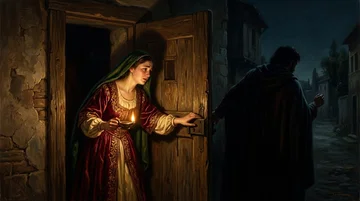
I opened to my beloved; but my beloved had withdrawn himself, and was gone: my soul failed when he spake: I sought him, but I could not find him; I called him, but he gave me no answer.
Translations
American King James Version, Webster Bible
I opened to my beloved; but my beloved had withdrawn himself, and was gone: my soul failed when he spoke: I sought him, but I could not find him; I called him, but he gave me no answer.
I opened to my beloved; but my beloved had withdrawn himself, and was gone: my soul failed when he spake: I sought him, but I could not find him; I called him, but he gave me no answer.
I opened to my beloved;
But my beloved had withdrawn himself, and was gone:
My soul failed when he spake:
I sought him, but I could not find him;
I called him, but he gave me no answer.I opened to my beloved; but my beloved had withdrawn himself, and was gone. My soul had failed me when he spake: I sought him, but I could not find him; I called him, but he gave me no answer.
I opened to my beloved;
But my beloved had withdrawn himself, and was gone.
My soul had failed me when he spake:
I sought him, but I could not find him;
I called him, but he gave me no answer.I opened to my beloved, But my beloved withdrew — he passed on, My soul went forth when he spake, I sought him, and found him not. I called him, and he answered me not.
I opened to my beloved; But my beloved had withdrawn himself; he was gone: My soul went forth when he spoke. I sought him, but I found him not; I called him, but he gave me no answer.
I myself, opened to my beloved, but, my beloved, had turned away, had passed on,—My soul, had gone out when he spake, I sought him, but found him not, I called him, but he answered not.
I opened for my beloved,
but he had turned and gone.
My heart sank at his departure.
I sought him, but did not find him.
I called, but he did not answer.I opened for my beloved, but he had turned and gone. My heart sank at his departure. I sought him but did not find him. I called, but he did not answer.
I opened to my beloved;
but my beloved left, and had gone away.
My heart went out when he spoke.
I looked for him, but I didn’t find him.
I called him, but he didn’t answer.I made the door open to my loved one; but my loved one had taken himself away, and was gone, my soul was feeble when his back was turned on me; I went after him, but I did not come near him; I said his name, but he gave me no answer.
I opened to my welbeloued: but my welbeloued was gone, and past: mine heart was gone when hee did speake: I sought him, but I coulde not finde him: I called him, but hee answered mee not.
Douay-Rheims (Challoner revision)
I opened the bolt of my door to my beloved: but he had turned aside, and was gone. My soul melted when he spoke: I sought him, and found him not: I called, and he did not answer me.
Pictures

Cross-references
- Revelation 3:20
Behold, I stand at the door, and knock: if any man hear my voice, and open the door, I will come in to him, and will sup with him, and he with me.
Christ knocks and calls for the heart to open to him.
- Song of Solomon 5:2
I sleep, but my heart waketh: it is the voice of my beloved that knocketh, saying, Open to me, my sister, my love, my dove, my undefiled: for my head is filled with dew, and my locks with the drops of the night.
The image of the beloved knocking, with dew on his locks, is echoed.
Commentary
Each commentary is drawn from primary sources: the writings of Ellen G. White and Adventist pioneers and periodicals. Each commentary is separate. Its own words are not a quotation; follow the references to read the source passages.
Pioneers and periodicals
11 sources
The verse belongs to an Oriental love poem that sets forth in warm Eastern coloring the love of Christ for his church, with Solomon's experiences typical of Christ and his church.ST Sep 15, 1909 Its surrounding passage represents a former arrangement in which people knocked and the door was opened to them, in contrast with the present call in which Christ knocks and people must open to him.RH Nov 6, 1856 The beloved is Christ who has withdrawn himself and is gone, and the speaker is the church seeking him without finding him and calling him without receiving an answer, expressing his wonderful love met by a response that can lack faithfulness and constancy.ST May 24, 1910
The verse portrays the Laodicean church finally opening to Christ after he has stood at the door and knocked, only to find that he has withdrawn and is gone because of its delay in responding, as a solemn warning to open before it is too late.RH Oct 30, 1860 It shows that some within the church who lack the wedding garment will realize their condition too late, rising to open to the Beloved only after he has withdrawn, with their seeking and calling receiving no answer.RH Nov 6, 1856 It means the Lord knocked for admittance while the church was too indolent to arise, and by the moment she opened he was gone.RH Jun 11, 1901
It presents one changeable state of the church from Abraham to the present day, variable as the wind, asleep one moment and seeking the next, unmoved by his loud voice over the hills and then won by his soft whisper of love.RH Jun 11, 1901 The verse warns that when people grow indifferent and keep Jesus shut out, he may withdraw so that their later seeking and calling find no answer, making their condition a warning that the decisive moment has come and the choice is a matter of life or death.RH Apr 8, 1858 It shows the soul responding to the beloved but finding him gone, then seeking and calling without an answer, which applies to a sinner who, after hearing God and recognizing the danger of sin, seeks Christ but does not find him at once, searching and asking where he is.ST Aug 1, 1878
The verse shows the distress of a soul when the beloved has withdrawn, and applied to Christ his absence leaves a sad and fearful vacancy in the heart, while feeling that loss is a consolation because it shows the soul knows its need of him.RH Mar 21, 1854 It warns that if Christ's people do not open to him at once, he may withdraw so that they seek without finding and call without receiving an answer, that God's patience has limits, and that delayed repentance can leave people unready when the time of probation is ending.RH Jun 25, 1857 It shows the beloved withdrawing after the speaker opens too late, leaving her to seek without finding and call without receiving an answer, warning that Christ may withdraw from a heart that does not respond when he knocks and calls, that his presence must not be presumed, and that the heart should be opened to him without delay.RH Dec 4, 1856
Sources