Ā-ôr'tā, n.
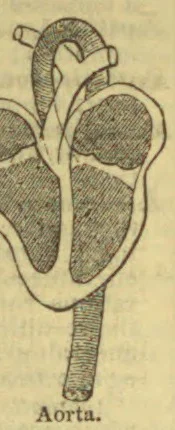
n. [N. Lat. aorta, Gr. ἀορτή, from ἀείρειν, to lift, heave.] (Anat.) The great artery, or trunk of the arterial system, proceeding from the left ventricle of the heart, and giving origin to all the arteries, except the pulmonary arteries.
☞ It first rises, when it is called the ascending aorta; then makes a great curve, when it gives off branches to the head and upper extremities; then proceeds downward, and is called the descending aorta, giving off branches to the trunk. It finally divides into the two iliacs, which supply the pelvis and lower extremities.