4 entries under this word

Bück

Bück, n.

noun

[L. Ger. büke, probably from böke, book, beech, because formerly lye was usually made of the ashes of this tree; Dan. byge, Sw. byk, H. Ger. bauche, bäuche, beuche. It. bucato, Prov. Sp. bugada, Fr. buée, Prov. Fr. buie, lye.]

  1. Lye in which cloth is soaked in the operation of bleaching; the liquor in which clothes are washed.
  2. The cloth or clothes soaked or washed; a wash of clothes. Shak.
Bück, v. t.

verbtransitive

[L. Ger. büken, Dan. bygge, Sw. byka, H. Ger. bauchen, bäuchen, beuchen, O. Fr. buer. See supra.]

  1. To soak or steep in lye, a process in bleaching; to wash or steep in lye or suds. Shak.
  2. (Mining.) To break up or pulverize, as ores.

Bŭck, n.

noun

[A-S. bucca, unc, D. bok, Icel. bokki, Sw. boch, Dan. buk, O. H. Ger. pocch, M. H. Ger. boc, N. H. Ger. bock, L. Lat. buccus, Fr. bouc, Pr. boc, Sp. bogue (It. becco), Ir. buch, poc, W. buch, Corn. bukh, Armor. buch, bouch. The root is perhaps contained in Ger. bochen, to beat.]

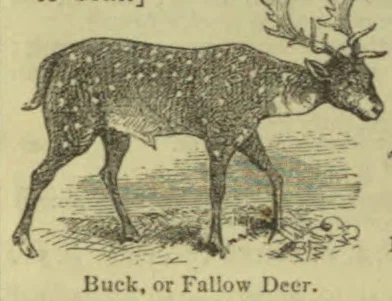
Buck, or Fallow Deer.

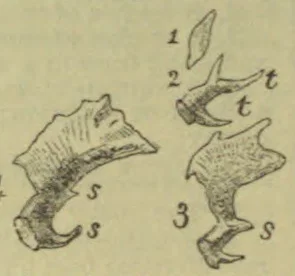
1, dag of pricket, or buck-fawn, of second year; 2, horn of sorel, or of third year; 3, horn of sore, or of fourth year; 4, horn of buck, or of fifth year and after; t, tines; s s s, snags.

Sense 1. The male of the fallow deer, of the goat, the sheep, the rabbit, and hare.

Sense 2. A gay, dashing young fellow. “The leading bucks of the day.” Thackeray.

Three numbered sketches depict anatomical structures with parts marked by the letters t and s.
An engraved illustration of a buck, or fallow deer, standing in a field.
Buck, or Fallow Deer.

Bŭck, v. i.

verbintransitive

To copulate as bucks and does.