Buoy1, n.
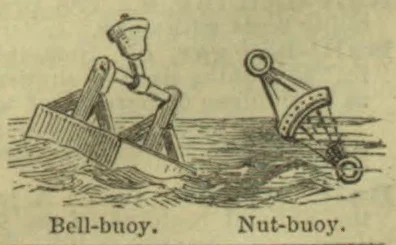
(bwŏy, or bwōy), n. [D. boei, boei, buoy, fetter; L. Ger. boie, boje; M. H. Ger. boije; O. Fr. boye, N. Fr. bouée, a buoy; Sp. boya; O. Fr. buie, a fetter, Pr. boia, O. It. boja, Lat. boja. “Boje genus vinculorum tam ferrea quam lignea.” Festus.] A float; especially a floating mark to point out the position of objects beneath the water, as anchors, shoals, rocks, &c.
☞ “Buoys are of various kinds; as, can-buoys, in the form of a cone; nut or nun-buoys, which are large in the middle, and tapering nearly to a point at each end; cable-buoys, empty casks employed to buoy up the cable in rocky anchorage; life-buoy, a buoy intended to support persons who have fallen into the water, until a boat can be dispatched to save them.
To stream the buoy, to let it fall by the ship’s side into the water, before letting go the anchor. Totten.
☞ “On board of ship, where the word buoy is always occurring, it is called a boy, though the slow, correct pronunciation is bwōy.” Smart.