Cām'el, n.
n. [A-S. camell, O. Fr. camel, chamel, cameau, N. Fr. chameau, Pr. camel, Catalan camell, Sp. camello, Pg. camelo, It. cammello, Lat. camelus, Gr. κάμηλος, Heb. gāmāl, Ar. gamal, jamal, jemel.]
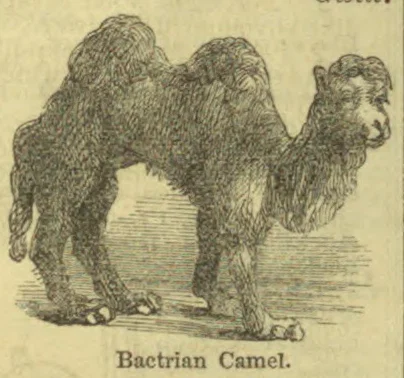
- (Zoöl.) A large quadruped of the ruminant (or cud-chewing) order, used in Asia and Africa for carrying burdens and for riding. It is without horns; the hoofs are small and situated at the extremities of the toes, and the weight of the animal is made to rest on a callous sole behind it. The dromedary (C. dromedarius), or Arabian camel, has one bunch on the back, while the Bactrian camel (C. Bactrianus) has two. The llama, alpaca, and vicuna of South America, belong to a related genus.
- (Naut.) A contrivance for lifting ships over shoals or bars. It consists of large boxes or half-ships, rendered air-tight, which are arranged on each side of the ship to be lifted, and then filled with water so that they sink to a suitable depth. The necessary connections with the ship being made, the water is pumped out from the camels, and they rise by their buoyancy, lifting the ship with them. Buchanan.