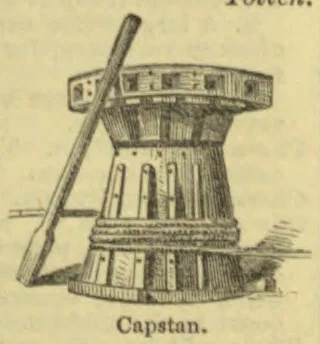
Căp’stan, n.
n. [Fr. cabestan, Sp. cabestrante, cabrestante, from cabestrar, to bind with a halter, from cabestro, halter, chain, from Lat. capistrum, halter.] (Naut.) A strong, massy column of timber, formed somewhat like a truncated cone, and having its upper extremity pierced to receive bars, or levers, for winding a rope round it, to raise great weights, or to exert great power; principally used in ships for heaving in cables, as when raising an anchor, or warping; — sometimes written capstern, but improperly.