Căs'tle1, n.
(kăs'l), n. [A-S. castell, castel, Pr. castel, castell, O. Fr. chastel, It. & Pg. castello, O. Sp. castiello, N. Sp. castillo, N. Fr. château, from Lat. castellum, dim. of castrum, a fortified place, castle.]
Sense 1. A fortified residence, especially that of a prince or nobleman; a fortress.
The house of every one is to him as his castle and fortress, as well for his defense against injury and violence, as for his repose. Cole.
Our castle's strength will laugh a siege to scorn. Shak.
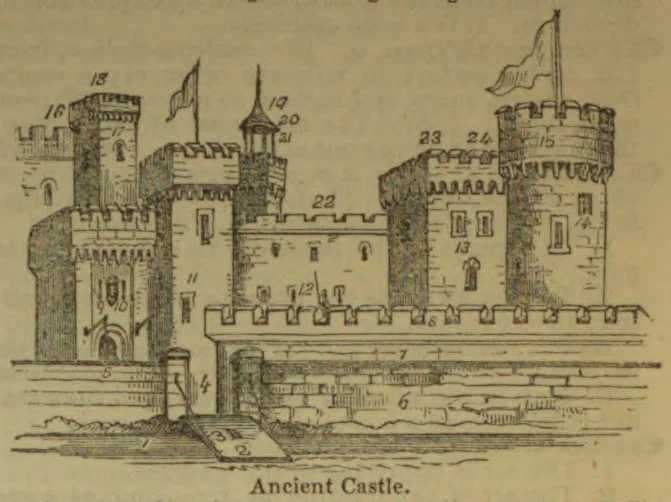
Ancient Castle.
1, moat; 2, draw-bridge; 3, wicket; 4, sally-port; 5, portcullis; 6, outer walls; 7, parapet; 8, rampart; 9, loopholes; 10, escutcheon; 11, bulwark; 12, sentinel; 13, magazine; 14, a cell; 15, donjon or keep; 16, barracks; 17, barbican; 18, watchman; 19, turret; 20, chapel; 21, belfry; 22, state court; 23, merlons; 24, embrasures.
Sense 2. A piece, made to represent a castle, used in the game of chess.
Castle in the air, a visionary project; a scheme that has no solid foundation;—sometimes called a castle in Spain (Fr. château en Espagne).—Castle influence, political influence of the court. [Ireland.]
Synonyms—Fortress; fortification; citadel; stronghold. See FORTRESS.