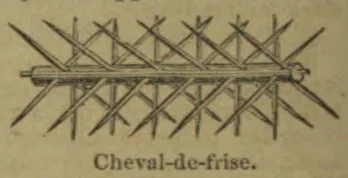
Che-vāl'-de-frīse or CHEVAUX-DE-FRISE, n.
n.; pl. CHEVAUX-DE-FRISE (shēvō-də-frēz). [Fr., from cheval, horse, and Frise, Friesland. Cf. Ger. Spanischer reiter, Spanish rider or horseman, equivalent to cheval-de-frise. It is also called a turnpike, or tourniquet.] (Mil.) A piece of timber traversed with wooden spikes, pointed with iron, five or six feet long, used to defend a passage, stop a breach, or make a retrenchment to stop cavalry. “The obstructions of chain, boom, and chevaux-de-frise.” W. Irving.