4 entries under this word

Date

Dāte, n.

noun

n. [Fr. date, f., Pr. data, dada, Sp., Pg., & It. data, L. Lat. data, datum, from Lat. datus, -a, -um, given, p. p. of dare, to give.]

  1. That addition to a writing, inscription, coin, &c., which specifies the time when it was given or executed; as, the date of a letter, of a will, of a deed, &c.
  2. The point of time in which a transaction or occurrence takes place; precise period; epoch; as, the date of a battle.

He at once, Draws the long series of eventful time, So fixed the dates of being, so disposed To every living soul of every kind. The field of motion, and the hour of rest. Akenside. 3. End; conclusion. [Rare.] What time would spare, from steel receives its date. Pope. 4. Duration; continuance. “Through his life's whole date.” Chapman. — Bearing date, having the date named on the face of it; — said of a writing.
Dāte, v. t.

verbtransitive

[imp. & p. p. DATED; p. pr. & vb. n. DATING.] [Fr. dater, Sp. datar. See supra.]

  1. To note the time of writing or executing; to express in an instrument the period of its execution; as, to date a letter, a bond, a deed, or a charter.
  2. To note or fix the time of, as of an event or transaction; as, to date the fulfillment of a prophecy.
  3. To refer to as a starting point or origin; as, to date a disease, or a calamity, from a certain cause.

Dāte, v. i.

verbintransitive

v. i. 1. To have beginning; — with from. The Batavian republic dates from the successes of the French arms. E. Everett. 2. To have a date; — with at or on.

Dāte, n.

noun

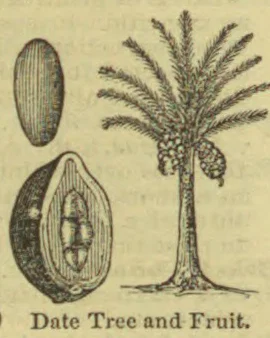
n. [Fr. datte, It. dattero, dattilo, Sp. & Pr. dātil, Ger. dattel, from Lat. dactylus, Gr. δάκτυλος, a finger, a date, from the fancied resemblance of this fruit to the finger.] (Bot.) The fruit of the date-palm.

☞ This fruit is somewhat in the shape of an acorn, containing a soft pulp, sweet, excellent, and wholesome, and inclosing a hard kernel.

A date palm tree is shown beside an intact date and a cut-open fruit.
Date Tree and Fruit.