Dĭf'fer-ĕn'tial1, a.
a. [Fr. différentiel, It. differenziale, Sp. diferencial. See DIFFERENCE.]
- Creating a difference; discriminating; special; as differential duties. “For whom he procured differential favors.” Motley.
- (Math.) Pertaining to a differential, or to differentials.
- (Mech.) (a.) Differing in amount or in the producing force; — said of motions or effects. (b.) Intended to produce or indicate difference of motion or effect; — said of machinery, &c.
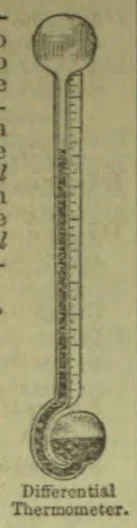
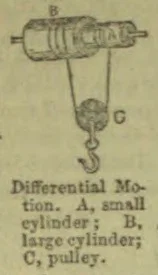
Differential calculus. See CALCULUS.—Differential co-efficient, the limit of the ratio of the increment of a function of a variable to the increment of the variable itself, when these increments are indefinitely small.—Differential coupling, a form of slip-coupling used in light machinery to regulate at pleasure the velocity of the connected shaft.—Differential gear, a combination of wheel-work by which a motion is produced equal to the difference between two other motions.—Differential motion, an adjustment by which a single combination is made to produce such a velocity-ratio as would by ordinary arrangements require a considerable train of mechanism.—Differential screw, a compound screw by which a motion is produced equal to the difference of the motions of the component screws.—Differential thermometer, a thermometer for measuring very small differences of temperature.