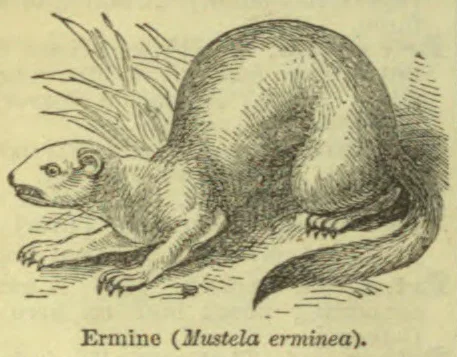
Ẽr'mĭne, n.
n. [Pr. ermin, ermini, O. Fr. erme, ermine, N. Fr. hermine, Sp. armiño, Pg. arminho, It. armellino, ermellino, O. H. Ger. harmo, harmin, harmelin, N. H. Ger., Dan., & Sw. hermelin, D. hermelyn, L. Lat. armelinus, armellina, hermellina, and pellis Armenia, the fur of the Armenian rat, mus Armenius, s. Ponticus, because these animals are found in Armenia.]
Sense 1. (Zoöl.) An animal of the genus Mustela (M. erminea), allied to the weasel; an inhabitant of northern climates, in Europe and America. In winter, the fur is white, but the tip of the tail is of the most intense black throughout the year. W. Baird.
Sense 2. The fur of the ermine, as prepared for ornamental purposes by having the black arranged in tufts, at regular intervals, throughout the white; — as, a cape of ermine; a state robe lined with ermine.
Sense 3. The dignity of judges and magistrates, whose state robes, lined with ermine, are regarded as emblematical of purity. Chatham.
Sense 4. (Her.) One of the furs used in blazonry, represented by a field argent, with small spots sable, of the shape represented in the cut. Barrington.