Fāte, n.
n. [Lat. fatum, a prophetic declaration, oracle, what is ordained by the gods, destiny, fate, from fari, to speak; O. Fr. & Pr. fat, O. Sp. & It. fato, Pg. fado, N. Sp. hado.]
Sense 1. A decree or word pronounced by God; a fixed sentence by which the order of things is prescribed; hence, inevitable necessity; destiny supposed to be independent of a divine origination or control.
Necessity or chance
Approach not me; and what I will is fate. Milton.
Sense 2. Appointed lot; allotted life; arranged or predetermined event; especially, final lot; death; destruction.
Tell me what fates attend the Duke of Suffolk. Shak.
Yet still he chose the longest way to fate. Dryden.
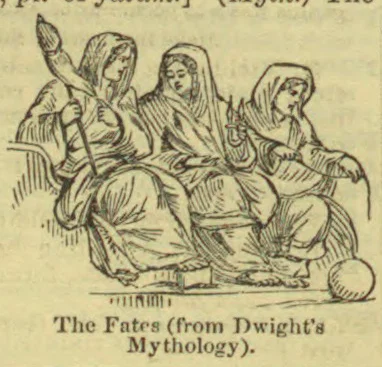
Sense 3. (pl.) [Lat. Fata, pl. of fatum.] (Myth.) The three goddesses, sometimes called the Destinies, or Parcæ, who were supposed to determine the course of human life, and are represented, one as holding the distaff, a second as spinning, and the third as cutting the thread.
Synonyms—Destiny; lot; doom; fortune; chance.