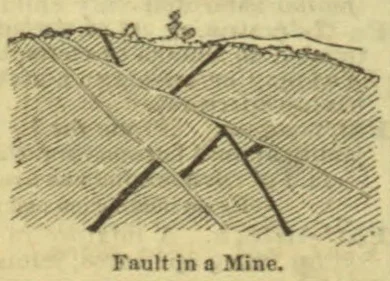
Fault1, n.
n. [O. Fr. faute, falte, N. Fr. faute; It., Sp., & Pg. falta, from Sp. & Pg. faltar, It. faltare, to be deficient, to want, to fail; Lat. as if fallitare, v. freq. from fallere, to deceive, to be concealed. Cf. FAIL and DEFAULT.]
Sense 1. Defect; want; absence; lack; default.
One, it pleases me, for fault of a better, to call my friend. Shak.
Sense 2. Any thing that fails, is wanting, or that impairs excellence; a failing; a defect; a blemish.
As patches set upon a little breach Discredit more in hiding of the fault. Shak.
Sense 3. A moral failing; a defect or dereliction from duty; a deviation from propriety; an offense less serious than a crime.
Sense 4. (Geol. & Min-ing.) A displacement of strata or veins at a fissure, so that they are not continuous, and the operations of the miner are interrupted.
Sense 5. (Hunting.) A lost scent.
Ceasing their clamorous cry till they have singled, With much ado, the cold fault clearly out. Shak.
At fault, unable to find the scent and continue chase; hence, in trouble or embarrassment, and unable to proceed; puzzled; thrown off the track. — To find fault, to find reason for blaming or complaining; to express dissatisfaction; to complain; — followed by with before the thing complained of.
Synonyms— Error; blemish; defect; imperfection; weakness; blunder; failing; vice. — FAULT, FAILING, FOIBLE. A fault is positive, something definite and marked which impairs excellence; a failing is negative, some weakness or falling short in a man's character, disposition, or habits; a foible is a less important weakness, which we overlook or smile at. A man may have many failings, and yet commit but few faults; or his faults and failings may be few, while his foibles are obvious to all. “I have failings in common with every human being, besides my own peculiar faults; but of avarice I have generally held myself guiltless.” Fox. “Presumption and self-applause are the foibles of mankind.” Waterland.