3 entries under this word

Fawn

Fawn, n.

noun

n. [Fr. faon, O. Fr. fan, faon, feon, the young one of any beast, for fedon, from Lat. fētus, that is or was filled with young. Cf. O. D. vegn, veynt, a youth.] 1. A young fallow deer; a buck or doe of the first year. 2. The young of an animal; a whelp. [Obs.] She [the tigress] . . . followeth the quest after her fawns. Holland. Fawn, v. i. [Fr. faonner, O. Fr. faoner, feoner, to bring forth a fawn or young. See supra.] To bring forth a fawn. Bullokar.
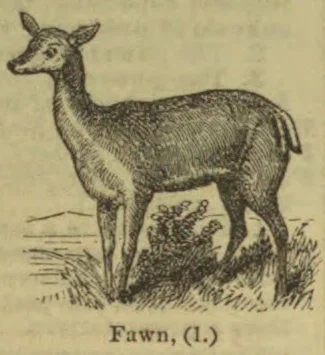
An engraved illustration of a fawn standing in grass.
Fawn, (1.)

Fawn, v. i.

verbintransitive

[imp. & p. p. FAWNED; p. pr. & vb. n. FAWNING.] [O. Eng. fawhne, A-S. fägniian, fägenian, fägenian, fahnenian, to rejoice, flatter, wheedle. See FAIN.] 1. To court favor by low cringing, frisking, and the like, as a dog. You showed your teeth like apes, and fawned like hounds. Shak. 2. To court servilely; to cringe and bow to gain favor; to flatter meanly; — often followed by on or upon. Thou dost bend, and pray, and fawn for him. Shak. My love, forbear to fawn upon their frowns. Shak. Thou with trembling fear, Or like a fawning parasite, obeyest. Milton.

Fawn, n.

noun

A servile cringe or bow; mean flattery; sycophancy. Shak.