Fōrge1, n.
n. [Fr. forge, Sp. & Pg. forja, Prov. It. forgia, Pr. farga, Sp. also fragua, from Lat. fabrica, the work-shop of a faber or artisan who works in hard materials, forger, smith.]
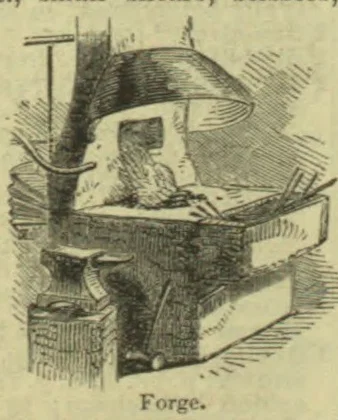
Sense 1. A place or establishment where iron or other metals are wrought by heating and hammering; especially, a furnace, or a shop with its furnace, &c., where iron is heated and wrought; a smithy; also, the works where iron is rendered malleable by puddling and shingling; a shingling-mill.
Sense 2. A work-shop; a place where any thing is produced, shaped, or devised.
In the quick forge and working-house of thought. Shak.
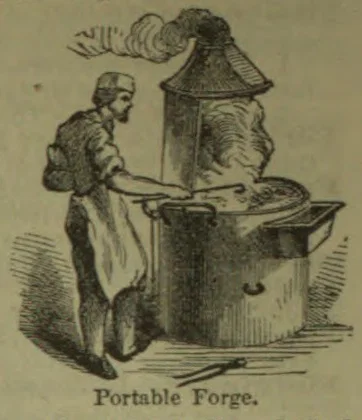
Portable forge, a light and compact blacksmith’s forge, with bellows, &c., that may be moved from place to place;—much used in iron ship-building, boiler-work, &c.
Sense 3. The act of beating or working iron or steel; the manufacture of metallic bodies. [Obs.]
In the greater bodies the forge was easy. Bacon.