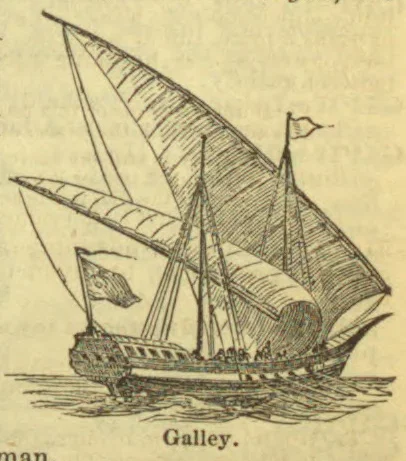
Găl'ley, n.
n.; pl. GĂL'LEYS. [O. Fr. galie, galée, Pr. galea, galé, galeya, Pg. galé, It. & O. Sp. galea, L. Lat. galea, galeida, M. H. Ger. galē, galie, galeide; N. Fr. galère, Pr., It., & Sp. galera; Cf. Lat. galea, helmet, diminutive galeola, a hollow vessel, shaped like a helmet, galerum, or galerus, a helmet-like covering for the head, and Ar. khaliyah, bee-hive, a large ship.
- (Naut.) (a.) A low, flat-built vessel, with one deck, and navigated with sails and oars; formerly used in the Mediterranean—often rowed by slaves. (b.) A light, open boat, used on the Thames by custom-house officers, press-gangs, and for pleasure. (c.) The cook-room or kitchen of a ship of war, answering to the caboose of a merchantman.
- (Chem.) An oblong reverberatory furnace, with a row of retorts whose necks protrude through lateral openings. Nicholson.
- (Print.) A frame which receives the types from the composing-stick. [Written also gally.]