4 entries under this word

Gore

Gōre, n.

noun

n. [A-S. gor, gore, dirt, dung, Icel. & Dan. gor, Sw. gorr, O. H. Ger. gor, dung, W. gor, gore, pus, gargar, gore, Ir. & Gael. cear, ceara, blood, gore. Cf. CRUOR and CHAR, n.]

  1. Blood; thick or clotted blood; especially, blood that after effusion has become inspissated. Milton.
  2. Dirt; mud. [Obs.] Bp. Fisher.

Gōre, n.

noun

n. [Scot. gore, goir, gare; Icel. geiri, D. geer, N. H. Ger. gehre, M. H. Ger. gēre, O. H. Ger. kéro, O. Fries. gāre, from A-S. gār, O. Sax. gēr, Icel. geir, Ger. ger, dart, lance.] 1. A wedge-shaped or triangular piece of cloth, canvas, &c., sewed into a garment, sail, &c., to give greater width at a particular part. Chaucer.

  1. A slip or triangular piece of land. Cowell.
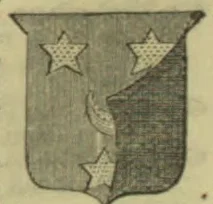
  2. (Her.) An abatement denoting a coward. It consists of two arch lines, meeting in an acute angle in the fesse point.
A shield-shaped emblem divided into two fields, with three stars and a diagonal band.

Gōre, v. t.

verbtransitive

v. t. [imp. & p. p. GORED; p. pr. & vb. n. GORING.] [A-S. gār, spear. See supra, and cf. GAR.] To penetrate with a pointed instrument, as a spear; to pierce; to stab.

The low stumps shall gore His dainty feet. Coleridge.

Gōre, v. t.

verbtransitive

v. t. To cut in a triangular form; to piece with a gore.