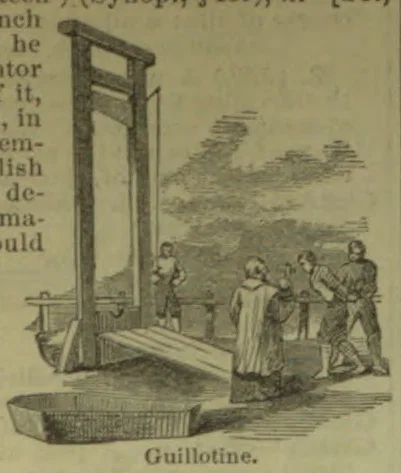
Guĭl'lo-tine'1, n.
(gĭl'lo-teen') (Synop., § 130), n. [Fr., from Guillotin, a French physician, though he was neither the inventor nor the introducer of it, but merely proposed, in the Constituent Assembly of 1789, to abolish the usual mode of decapitation, and use machinery which would dispense with the ax or sword. The instrument was invented by Dr. Antoine Louis, in 1792, and was at first called Louison or Louisette; but this name was soon superseded by that of Guillotine, first used in a satirical song published in a royalist newspaper of the day.] An engine or machine for beheading a person by the stroke of a heavy ax or cutter, which is raised by a cord and let fall upon the neck of the victim.