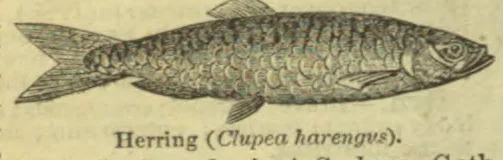
Hĕr'ring, n.
n. [A-S. & N. H. Ger. hēring, hering, M. H. Ger. herinc, O. H. Ger. herinch, harinc, D. haring; whence Fr. hareng, Pr. arene, Sp. arenque, It. aringa: either allied to Lat. halec, halæx, alec, alex, fish-pickle, fish-brine, or more probably from O. H. Ger. heri, hari, N. H. Ger. heer, O. Sax. heri, A-S. here, Goth. harjis, army, multitude, because they usually appear in large numbers.] (Ichth.) A fish of the genus Clupea (C. harengus). Herrings move in vast shoals, coming from high northern latitudes in the spring, to the shores of Europe and America, where they are taken and salted in great quantities.
Herring (Clupea harengus).
King of the herrings (Ichth.), a cartilaginous fish (Chimaera monstrosa), allied to the sturgeon, which follows the shoals of herring. The males of the species have a spinous disk in front of the eyes; whence the name.