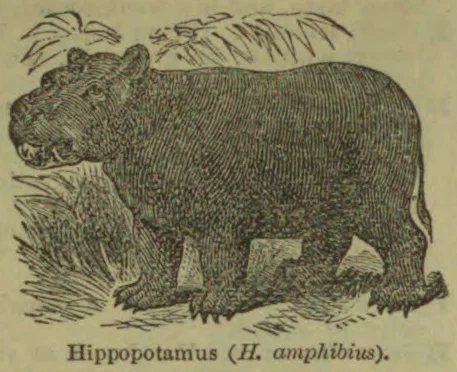
Hĭp′po-pŏt′a-mŭs, n.
n.; Eng. pl. HĬP′PO-PŎT′A-MŬS-ES; Lat. pl. HĬP′PO-PŎT′A-MĬ. [Lat. hippopotamus, Gr. ἱπποπόταμος, from ἵππος, horse, and ποταμός, river; Fr. hippopotame.] (Zoöl.) A pachydermatous mammal allied to the hog, having a thick and square head, a very large muzzle, small eyes and ears, thick and heavy body, short legs terminated by four toes, a short tail, two ventral dugs, skin without hair, except at the extremity of the tail. It inhabits nearly the whole of Africa, and has been found of the length of seventeen feet. It delights in the water, but feeds on herbage on land. There are several species.