(ind'yan, or in'di-an), n.
- (Geog.) A native or inhabitant of the Indies; as, an East Indian, or West Indian.
- One of the aboriginal inhabitants of America; — so called originally from the idea, on the part of Columbus and the early navigators, of the identity of America with India.
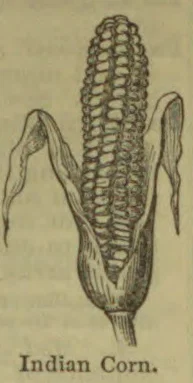
Indian bay (Bot.), a plant of the genus Laurus (L. Indicus). — Indian berry, a plant, the Cocculus Indicus. See COCCULUS INDICUS. — Indian bread, a plant of the genus Jatropha. See CASSAVA. — Indian corn, a plant of the genus Zea (Z. mays); the maize, a native of America. See CORN. — Indian cress, nasturtium. See NASTURTIUM. — Indian cucumber, a plant of the genus Medeola (M. Virginica), common in woods in the United States, having a root shaped like a cucumber, which is said to possess diuretic properties. — Indian currant, a plant of the genus Symphoricarpos (S. vulgaris), bearing small red berries. It is common in the State of New York. Gray. — Indian fig. (Bot.) (a.) The banian. See BANIAN. (b.) The prickly pear. — Indian file, single file; arrangement of persons in a row following one after another, the usual way among Indians of traversing woods, &c. — Indian grass, a coarse, high grass (Sorghum nutans), common in the southern portions of the United States; wood-grass. Gray. — Indian hemp. (a.) A plant of the genus Apocynum (A. cannabinum), having a milky juice and a tough, fibrous bark, whence the name. The root is used in medicine, and is both emetic and cathartic in properties. (b.) The variety of common hemp (Cannabis Indica), from which hashish is obtained. — Indian ink, a substance brought chiefly from China, used for water colors. It is in rolls, or in square cakes, and consists of lamp-black and animal glue; — called also India ink. It was formerly supposed to be made from the ink-bag of the Sepia, or cuttle-fish; and hence drawings in India ink are called drawings in sepia. — Indian millet. See DOURA. Indian ox (Zool.), a variety of ox (Bos Indicus), of ash-gray or milk-white color, having a deep-waved dewlap, and generally a hump on its back. It varies in size from that of a mastiff to that of an ordinary bull. It is found in Southern Asia, and in Africa from Abyssinia to the Cape of Good Hope, and though sometimes used under the saddle, and in harness, is generally regarded as a sacred animal. Bennett. — Indian physic (Bot.), a plant of two species of the genus Gillenia (G. trifoliata, and G. stipulacea), common in the United States, the roots of which are used in medicine as a mild emetic; — called also American ipecac. Gray. — Indian pipe, a plant of the genus Monotropa (M. uniflora), having a solitary upright stem and bract-like leaves, of a pure white color and waxen appearance, with a single similarly colorless nodding flower. It is found in dark woods at the roots of trees, and turns black on being gathered. Eng. Cyc. — Indian plantain, a plant of several species of the genus Cacalia. It is a tall herb with composite white flowers, common through the United States in rich woods. Gray. — Indian poke, a plant usually known as the white hellebore. — Indian red, a species of ocher, a very fine, purple earth, of a firm, compact texture, and great weight. Hill. — Indian rice (Bot.), a reed-like water grass. See RICE. — Indian rubber, caoutchouc, a substance of extraordinary elasticity; — called also elastic gum, or gum elastic, and India rubber. It is produced by incision from several trees of different genera. See CAOUTCHOUC. — Indian shot (Bot.), a plant of the genus Canna (C. Indica). — Indian summer, a period of warm and pleasant weather occurring late in autumn. See SUMMER. — Indian tobacco (Bot.), a species of Lobelia. See LOBELIA. — Indian turnip, an American plant of the genus Arisæma (or Arum of Linnæus). A. triphyllum has a wrinkled farinaceous root resembling a small turnip, but with a very acrid juice. — Indian yellow, a yellow coloring matter composed of magnesia and euxanthic acid, and used in water-color painting.