Kēy1, n.
(kē), n. [O. Eng. keye, kaie, A-S. cæg, cæge.]
Sense 1. A fastener; that which fastens; as a piece of wood in the frame of a building, or in a chain.
Sense 2. An instrument which serves to shut or open a lock by being inserted into it, and made, by turning, to push its bolt one way or the other.
Sense 3. Hence, an instrument which is used by being inserted and turned; as, a watch-key, bed-key, turning-key, and the like.
Sense 4. That which serves as a means to unlock a secret or mystery, or to disclose any thing difficult; a guide; a solution; an explanation; as, a key to a riddle; a key to mathematical problems.
Sense 5. That which serves to lock up and make fast; as, (a.) (Arch.) A piece of wood let into another across the grain to prevent warping; also, a piece of wood used as a wedge; also, the last board of a floor when laid down. Gwilt. (b.) (Masonry.) The highest central stone of an arch; the key-stone. Gwilt. (c.) (Mach.) A piece of wood or metal, often wedge-shaped, placed in coincident slots or mortises, to hold parts together; a cotter. [See Illust. of Cotter.]
Sense 6. (Mus.) (a.) A lever of wood, or ivory, or metal, in an organ, piano-forte, or other like instrument, struck or pressed by the fingers in playing the instrument. (b.) The fundamental tone of a movement to which its modulations are referred, and with which it commences and ends; key-note. “Warbling of one song, both in one key.” Shak.
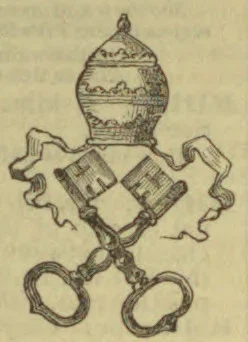
Key of a position, or country (Mil.), a point the possession of which gives the control of that position or country. — Power of the keys (Eccl.), the authority of the ministry in Christian churches to administer the discipline of the church, and to grant or withhold its privileges; — so called from the declaration of Christ to St. Peter. Hook. “I will give unto thee the keys of the kingdom of heaven.” Matt. xvi. 19.