Knight1, n.
(nīt), n. [A-S. cniht, cneoht, a boy, youth, attendant, military follower, D. & Ger. knecht; Sw. kneckt, Dan. knegt, knigt, knave at cards; Gael. & Ir. cniecht.]
Sense 1. A young servant or follower; a military attendant; a follower.
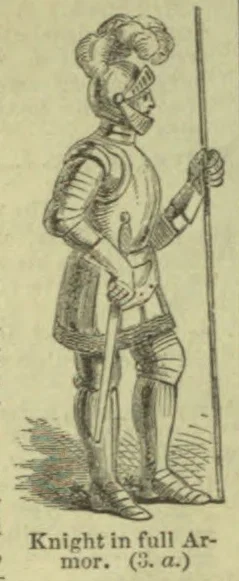
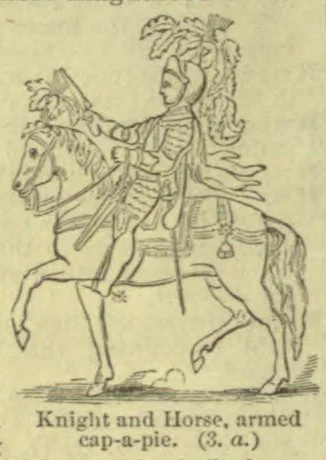
Sense 2. A young man when admitted to the privilege of bearing arms; hence, one of a certain chivalric or feudal rank; a champion.
Did I for this my country bring, To help their knight against their king? Denham.
Sense 3. (a.) One admitted, in feudal times, to a certain military rank, with special and appropriate ceremonies. (b.) One on whom knighthood is conferred by the sovereign, entitling him to be addressed as Sir; as, Sir John. [Eng.]
Knights, by their oaths, should right poor ladies' harms. Shak.
Formerly, when the name was not known, it was customary to say Sir Knight.
Sense 4. A piece used in the game of chess, usually bearing a horse's head.
Sense 5. A playing-card bearing the figure of a knight; the knave or jack. [Obs.]
Knight of the post, properly one who gained his living by giving false evidence on trials, or false bail; hence, a sharper in general. Nares. “A knight of the post, quoth he, for so I am termed; a fellow that will swear you any thing for twelve pence.” Shak.—Knight of the shire, in England, one of the representatives of a county in Parliament, in distinction from the representative of such cities or towns as are counties in themselves. Eng. Cyc.—Knight's fee (Eng. Feud. Law), a portion of land held by custom to be sufficient to support a knight so that he might render service as such to the king. Brande.—Knights of the Round Table (Early Eng. Hist.), knights belonging to a celebrated order instituted by King Arthur, and whose exploits and adventures form the subjects of many ballads, and much of the early romantic poetry of England. The members of the order are said to have been forty in number, and to have derived their name from their custom of sitting about a large, round, marble table, in order to avoid all distinctions of rank. Brande.