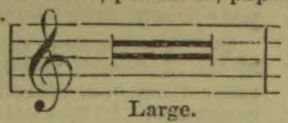
Lär'ge1, a.
[compar. LARGER; superl. LARGEST.] [Fr. large, Pr. larg, larc, Sp., Pg., & It. largo, Lat. largus.]
Sense 1. Having great size; big; bulky; extended; great; — and specifically, (a.) Wide, extensive, broad; — said of surface or area; as, a large field, plain, river, expanse. (b.) Abundant; plentiful; copious; ample; — said of quantity; as, a large supply of provisions; also, with reference to number, numerous; populous; as, a large assembly; a large city. (c.) Bulky; huge; enormous; — said in reference to size; as, a large ox, tree, ship, &c. (d.) Unexpended; abundant; — said with reference to time or day.
We have yet large day, for scarce the sun Hath finished half his journey. Milton.
(e.) Diffuse; free; full; — said with reference to language, style, and the like.
I might be very large on the importance and advantages of education. Felton.
(f.) Liberal; far-sighted; comprehensive; — said of the mind. (g.) Generous; noble; — said of the heart or affections.
Sense 2. Free; unembarrassed.
Of burdens all he set the Paynims large. Fairfax.
Sense 3. (Naut.) Crossing the line of a ship's course in a favorable direction, particularly on the beam or quarter; — said of the wind.