Lār'ynx, n.
(Synop., § 130), n. [Gr. λάρυγξ, gen. λάρυγος.] (Anat.) The upper part of the trachea or windpipe, constituting the organ of voice.
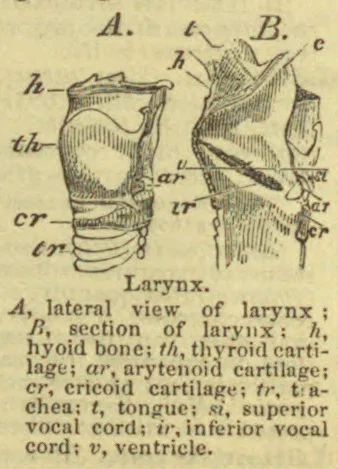
A, lateral view of larynx; B, section of larynx; h, hyoid bone; th, thyroid cartilage; ar, arytenoid cartilage; cr, cricoid cartilage; tr, trachea; t, tongue; si, superior vocal cord; ir, inferior vocal cord; v, ventricle.
It consists of five cartilaginous pieces which, are acted upon by numerous muscles; viz., the thyroid cartilage, formed of two broad plates united at the front, and attached to the os hyoides, or hyoid bone. This cartilage constitutes the protuberance known as Adam's apple: below this, the cricoid cartilage, a ring supporting the arytenoid cartilages behind: from these proceed the superior and inferior ligaments of the glottis, the inferior being also called the vocal cords: above the glottis plays the epiglottis, a tongue-shaped flap secured in front to the thyroid cartilage.
Inferior larynx, a glottis-like structure found in birds at the lower end of the trachea, where it divides to the two sides. It is their special organ of sound.