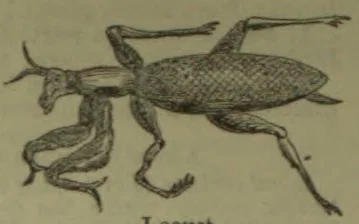
Lō'cust, n.
n. [N. Lat. locusta, from Lat. locusta, locust, grasshopper, equivalent to Ger. heuschrecke; so called from the resemblance of its branches to the legs of a flying locust; Fr. locuste, locustier, It. locusto, Ger. heuschreckenbaum.]
Sense 1. (Entom.) A jumping orthopterous insect, like the grasshopper, from which it is distinguished by the shortness of its antennae, and by having only three joints in each foot, as seen from above.
☞ The locust generally has a greater power of flight than the grasshopper. The migratory locust (Locusta migratoria of Linnæus) is the most injurious European species. These insects are at times so numerous in Africa and the south of Asia as to devour every green thing; and when they migrate, they fly in an immense cloud. In the United States the harvest-fly (Cicada) is improperly called locust. Harris.