Lŭng, n.
n. [A-S. lunge, pl. lungen, Icel. lûnga, Sw. lunga, O. H. Ger. lungâ, lúngina, lunginna, lungunna, N. H. Ger. & Dan. lunge, D. long.]
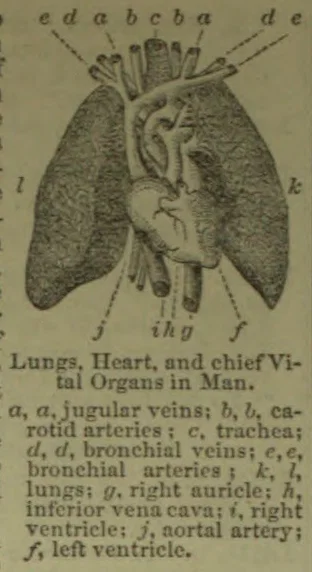
Sense 1. (Anat.) One of the two organs of respiration in an air-breathing animal, each of which occupies its cavity in the thorax. The lungs are composed of delicate cells or cavities, in which the air-tubes terminate, and in the walls of which the blood-vessels are distributed in an exceedingly fine net-work. They are expanded by the dilatation of the thorax, or chest, in consequence of which the air rushes in to fill the cells, from which it is then expelled by the expiratory movements, the constant play serving to aërate the blood, and expel excrementitious matter.
Sense 2. (pl.) (a.) A person having a strong voice. (b.) An alchemist’s attendant, who puffed his coals. [Obs. and cant.] B. Jonson.