Oil1, n.
n. [O. Fr. oile, ouille, ole, N. Fr. huile, Pr. ol, oli, Sp. & Pg. oleo, O. Sp. & It. olio, Lat. oleum, Gr. ἔλαιον; A-S. ele, æle, īl; O. Sax. olig, O. Fries., D., & Dan. olie, Sw. olja, Icel. olia, O. H. Ger. olei, N. H. Ger. öl, Goth. alew; W. olew, Ir. ola, Gael. ola, oladh, ùilleadh.] An unctuous substance expressed or drawn from various animal and vegetable substances. It has been found to consist of a base, called glycerine (a sweet and thick sirupy fluid), united with different animal and vegetable acids. Common animal oils contain stearic, margaric, and oleic acids in combination with glycerine, forming stearate of glycerine, margarate of glycerine, and oleate of glycerine; the first being what is called stearine, the second margarine, and the third oleine or elaine. Stearine and margarine prevail in the solid fats, and oleine in the liquid oils. The vegetable oils contain other acids united to the glycerine; thus, palm oil contains palmitate of glycerine, &c. In making soaps of oil or fat, the glycerine is replaced by soda or potash, the acids of oils taking these bases as a substitute.
The word is often joined with other words denoting its use or origin, as lamp-oil, coal-oil, linseed-oil, and the like.
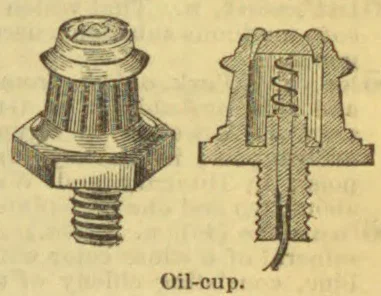
Oil-box. (Mach.) See OIL-CUP. — Oil-cellar, a reservoir for a lubricator, in the lower part of a journal-box. — Oil-cock, a cock between an oil-cup and the part to be lubricated. — Oil-cup, a cup at the top of an oil-hole, sometimes furnished with a wick, or machinery to feed the lubricator into the oil-hole; — called also oil-box. — Oil-hole, a passage to conduct a lubricator. — Oil-pump, a pump to force a lubricator into an oil-hole, against steam or other pressure. — Oil of talc, a nostrum famous in its day as a cosmetic, probably because that mineral, when calcined, became very white, and was thought a fit substitute for ceruse.
He should have brought me some fresh oil of talc; These ceruses are common. Massinger.
— Oil of vitriol, sulphuric acid. — Oil of wine, either of two oils obtained by the action of sulphuric acid on alcohol. — Ethereal oil of wine, œnanthic ether. Graham. — To burn the midnight oil, to study by artificial light till midnight, or till late in the night.