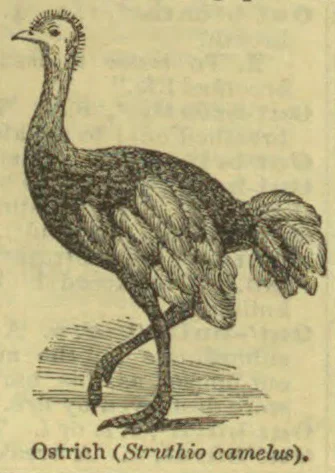
Ōs'trich, n.
n. [Formerly written also estrich.] [O. Fr. ostruche, ostr uce, N. Fr. autruche, Sp. avestruz, Pg. abestruz, from Lat. avis struthio; Pr. estrus, estruci, struci, It. struzzo, L. Lat. strucio, from Lat. struthio, an ostrich; Gr. στρουθός, a small bird, ὁ μέγας στρουθός, the large bird, i. e., the ostrich; Ger. strausz, D. struis, Sw. struss, Dan. struds.] (Ornith.) A large bird, nearly ten feet high (Struthio camelus), having a long, and nearly bare, neck, stout, long legs, with only two toes, and short wings, with long, soft plumes in the place of feathers. It is well formed for running, and is said to surpass horses in speed, upon the sandy plains where it is found. It lives on grain and vegetables, and is noted for swallowing, on a larger scale than other graminivorous birds, bits of metal or stone to aid in digestion. The plumes of the wing are highly valued as ornaments. The bird is a native of Africa and Arabia.
American ostrich, a large bird of the genus Rhea (R. Americana), resembling the ostrich. It is a native of South America.