Phre-nŏl'o-gy, n.
n. [Fr. phrénologie, It. & Sp. frenologia, from Gr. φρήν, φρενός, the mind, and λόγος, discourse.] 1. The science of the special functions of the parts of the brain, or of the supposed connection between the various faculties of the mind and their special organs in the brain. 2. In popular usage, the theory of Gall, that the mental faculties are shown on the surface of the head or skull; craniology.
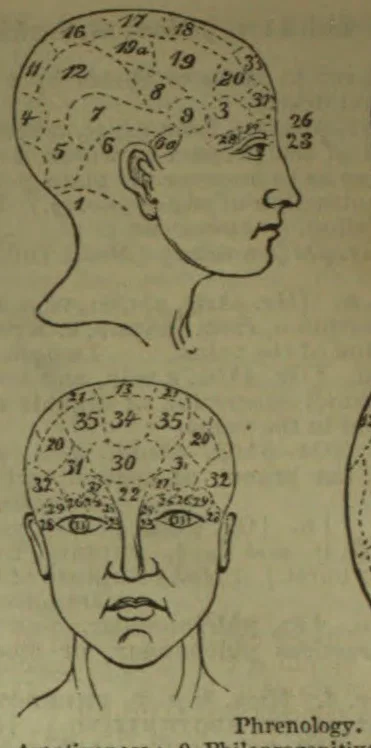
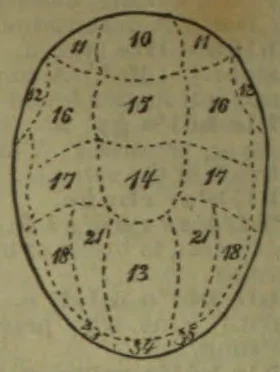
1, Amativeness; 2, Philoprogenitiveness; 3, Concentrativeness; 3a, Inhabitiveness; 4, Adhesiveness; 5, Combativeness; 6, Destructiveness; 6a, Alimentiveness; 7, Secretiveness; 8, Acquisitiveness; 9, Constructiveness; 10, Self-esteem; 11, Love of approbation; 12, Cautiousness; 13, Benevolence; 14, Veneration; 15, Firmness; 16, Conscientiousness; 17, Hope; 18, Wonder; 19, Ideality; 19a, (Not determined); 20, Wit; 21, Imitation; 22, Individuality; 23, Form; 24, Size; 25, Weight; 26, Coloring; 27, Locality; 28, Number; 29, Order; 30, Eventuality; 31, Time; 32, Tune; 33, Language; 34, Comparison; 35, Causality.