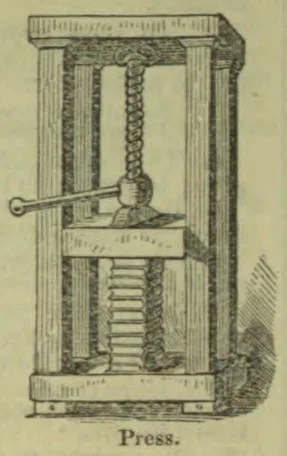
Prĕss1, v. t.
v. t. [imp. & p. p. PRESSED (prĕst); p. pr. & vb. n. PRESSING.] [Fr. presser, It. pressare, from Lat. pressare, to press, from premere, pressum, to press; D. & Ger. pressen, Dan. presse, Sw. prissa.]
Sense 1. To urge with force or weight; to crowd or compel by a gradual and continued exertion; to squeeze; to crush; to compress; as, we press the ground with the feet when we walk; we press the couch on which we repose; we press substances with the hands, fingers, or arms; the smith presses iron with his vise.
Sense 2. To squeeze in order to extract the juice or contents of; to express liquor from.
From sweet kernels pressed, She tempers dulcet creams. Milton.
Sense 3. To squeeze in or with suitable instruments, in order to make smooth, as to press paper, cloth, and the like.
Sense 4. To embrace closely; to hug.
Leucothoe shook And pressed Palemon closer in her arms. Pope.
Sense 5. To oppress; to bow down; to distress; to straiten. [Obs.]
O, my lord, press not a fallen man. Shak.
Sense 6. To urge with earnestness or importunity; to exercise very powerful or irresistible influence upon or over; to constrain; to force; to compel.
He pressed a letter upon me, within this hour, to deliver to you. Dryden.
Paul was pressed in spirit, and testified to the Jews that Jesus was Christ. Acts xviii. 5.
Sense 7. To drive with violence; to hurry; to urge on; as, to press a horse in motion, or in a race.
Sense 8. To inculcate with earnestness; to urge; to enforce; as, to press divine truth on an audience.
Sense 9. To force into service, particularly into naval service; to impress.
The peaceful peasant to the wars is pressed. Dryden.
☞ Press differs from drive and strike in usually denoting a slow or continued application of force; whereas drive and strike denote a sudden impulse of force.