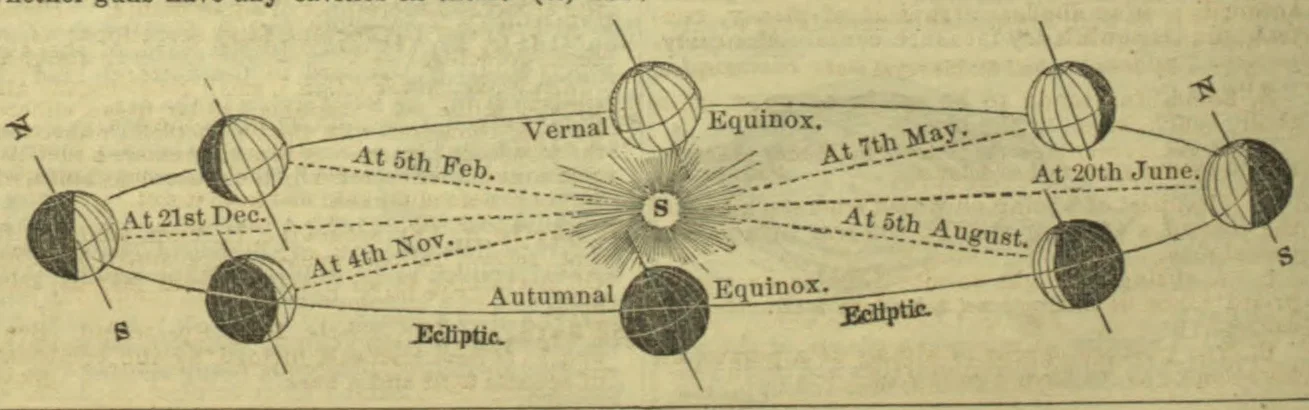
Sēa'son1, n.
(sē'z'n), n. [Fr. saison, O. Fr. saison, seson, Pr. & Sp. sazon, from Lat. satio, a sowing, a planting, from serere, satum, to sow, plant; hence satio, also equivalent to tempus sationis, and afterward equivalent to satio verna, æstiva, autumnalis; It. stagione, Sp. estacion, from Lat. statio, station.]
Sense 1. One of the four divisions of the year, spring, summer, autumn, winter; hence, a period of the year, as marked by its characteristics of temperature, moisture, conditions of nature, and the like.
We saw, in six days' traveling, the several seasons of the year in their beauty. Addison.
Sense 2. Hence, a period of time, especially as regards its fitness for any thing contemplated or done; a suitable or convenient time; proper conjuncture.
The season prime for sweetest scents and airs. Milton.
Sense 3. A certain period of time not very long; a while; a time.
Thou shalt be blind, not seeing the sun for a season. Acts xiii. 11.
Sense 4. That which seasons, or gives relish or flavor; seasoning. [Obs.]
You lack the season of all nature—sleep. Shak.
In season, in good time, or sufficiently early for the purpose. — Out of season, beyond or out of the proper time, or the usual or appointed time.